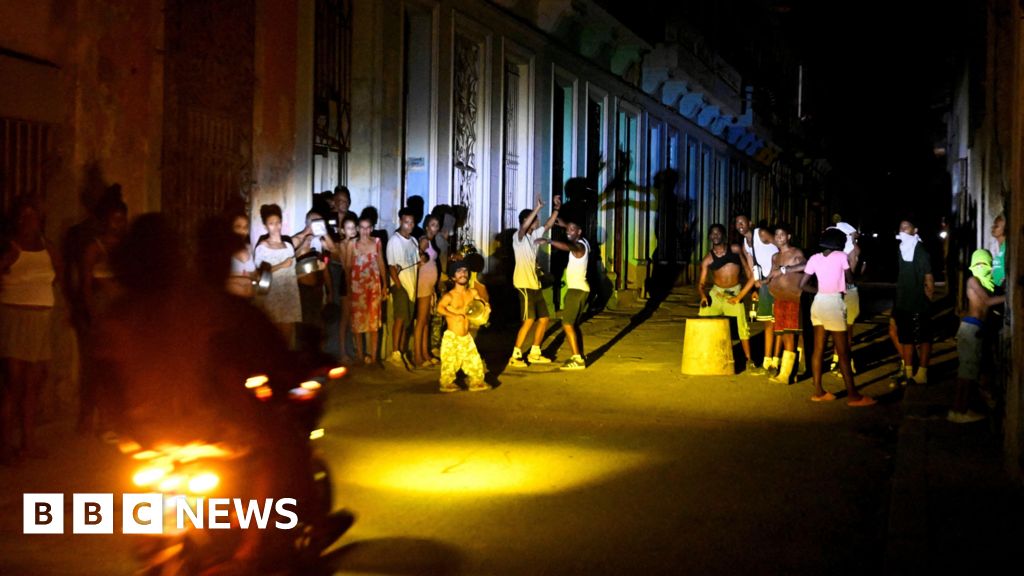
More than 10 million people lost power after Cuba's national electrical grid collapsed for the second time in a week; the island has experienced three major blackouts this month. Officials blame chronic fuel shortages worsened by a US fuel blockade that cuts off foreign oil needed to run power stations; restoration is prioritising hospitals and water systems. The outages have sparked rare public protests and an arson attack on a Communist Party office, raising political risk as US pressure reportedly links embargo relief to removal of President Miguel Díaz-Canel while limited bilateral talks are underway.
This shock magnifies two structural, investable themes: accelerated decentralised power (solar + batteries + gensets) in small-island/low-capital grids, and higher operational/sanctions risk in regional shipping and fuel logistics. In comparable island crises, off-grid deployments and genset purchases typically accelerate within 6–24 months as governments and NGOs shift CAPEX from centralized repairs to resilient, distributed capacity; that implies low-double digit revenue upside for suppliers serving Latin America/Caribbean over the next 12 months.
Sanctions-driven fuel shortfalls increase incentives for opaque ship-to-ship transfers and secondary sanction risk, which raises insurance premiums and counterparty due-diligence costs for tanker owners, brokers and correspondent banks. Expect a discrete widening in freight and P&I risk premia over weeks–months, and episodic spikes if enforcement actions or seizures occur — this is transmissible to listed tanker names and banks with heavy Caribbean L/C exposure.
Politically, the event is a short-run riser of geopolitical tail risk: a 0–10% implied increase in the probability of US pressure/escalatory actions (over 1–6 months) will compress risky EM assets and bid havens; conversely, a negotiated fuel corridor or timely humanitarian relief would reverse the move quickly. The path dependency is high: markets will move sharply on either a hard enforcement episode or credible de‑escalation, so positions should be sized for event risk.
Practical consequence: tilt toward specific suppliers of decentralised power and gensets, hedge EM credit exposure, and buy tactical geopolitical insurance via defense/precious-metals exposures. Avoid large structural long positions in Caribbean sovereign credit or shipping without hedges — tail events can produce fast, non-linear losses.
AI-powered research, real-time alerts, and portfolio analytics for institutional investors.
Request DemoOverall Sentiment
strongly negative
Sentiment Score
-0.60
