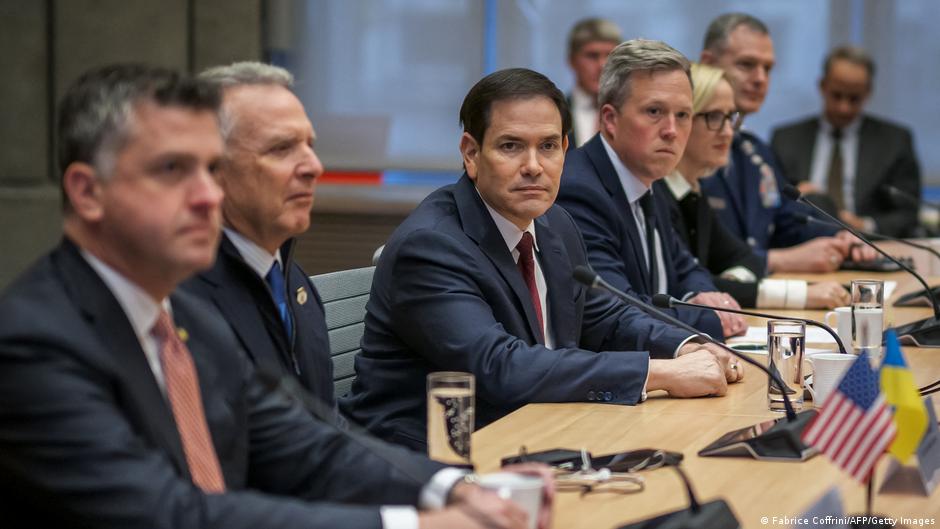
Negotiations in Geneva produced an updated peace-framework draft but exposed significant divergences: European delegations pushed back on US proposals that would cap Ukraine's forces and require territorial concessions, submitting a counter-proposal allowing up to 800,000 peacetime troops versus the US 600,000 cap and linking NATO accession to full consensus. The draft also contemplates a US security guarantee akin to Article 5, limits on permanent NATO troop stationing, and financial compensation sourced from frozen Russian sovereign assets; political uncertainty remains high with a contested Thursday deadline and continued battlefield violence, keeping sanctions and energy-market risks elevated.
Market structure is shifting toward sustained defense and energy premium while beneficiaries face policy and legal execution risk; expect defense primes (e.g., LMT/RTX/NOC) to gain pricing power for 6–18 months as procurement cycles accelerate, while European airlines, travel operators and banks with Russia exposure will see margin compression and higher funding costs. Competitive dynamics favor large integrated oil & gas exporters and LNG shippers able to redirect flows; small midstream/utilities in Europe face downside if TTF spreads stay >$5/MMBtu for winter. Cross-asset: expect safe-haven flows into USD, gold (GLD), and long-dated USTs (TLT) on headline shocks, with oil (Brent/USO) upside volatility of +10–30% under escalation and implied vol spikes across energy/defense options.
Tail risks include a breakdown that triggers sanctions escalation or a major energy cutoff—modeled as 5–20% GDP shock to vulnerable EU economies and a >$20/bbl instantaneous oil jump; conversely a credible peace deal within 30 days could erase 50–70% of risk premia. Hidden dependencies: payouts from frozen Russian sovereign assets require multi-year litigation and legislative action—this uncertainty amplifies bank counterparty risk and delays capital recycling into reconstruction. Key catalysts: formal NATO accession language, winter gas storage trajectories (check TTF % of seasonal capacity), and battlefield events—each can move markets within 48–72 hours.
Trade implications: favor 3–4% overweights in defense equities (LMT/RTX/NOC) and energy (XLE or USO) via 3–9 month call spreads; hedge with 1–2% TLT/GLD. Pair trades: long LMT vs short AAL (dollar-neutral) to capture relative repricing. Options: buy 3-month oil straddles and 6–9 month calls on LMT sized to 1–2% portfolio vega exposure. Rotate out of EU regional banks and travel/leisure (-2% to -4%) into energy/defense over next 2–6 weeks, re-evaluate after Geneva text or a material battlefield event.
AI-powered research, real-time alerts, and portfolio analytics for institutional investors.
Request DemoOverall Sentiment
mildly negative
Sentiment Score
-0.25
