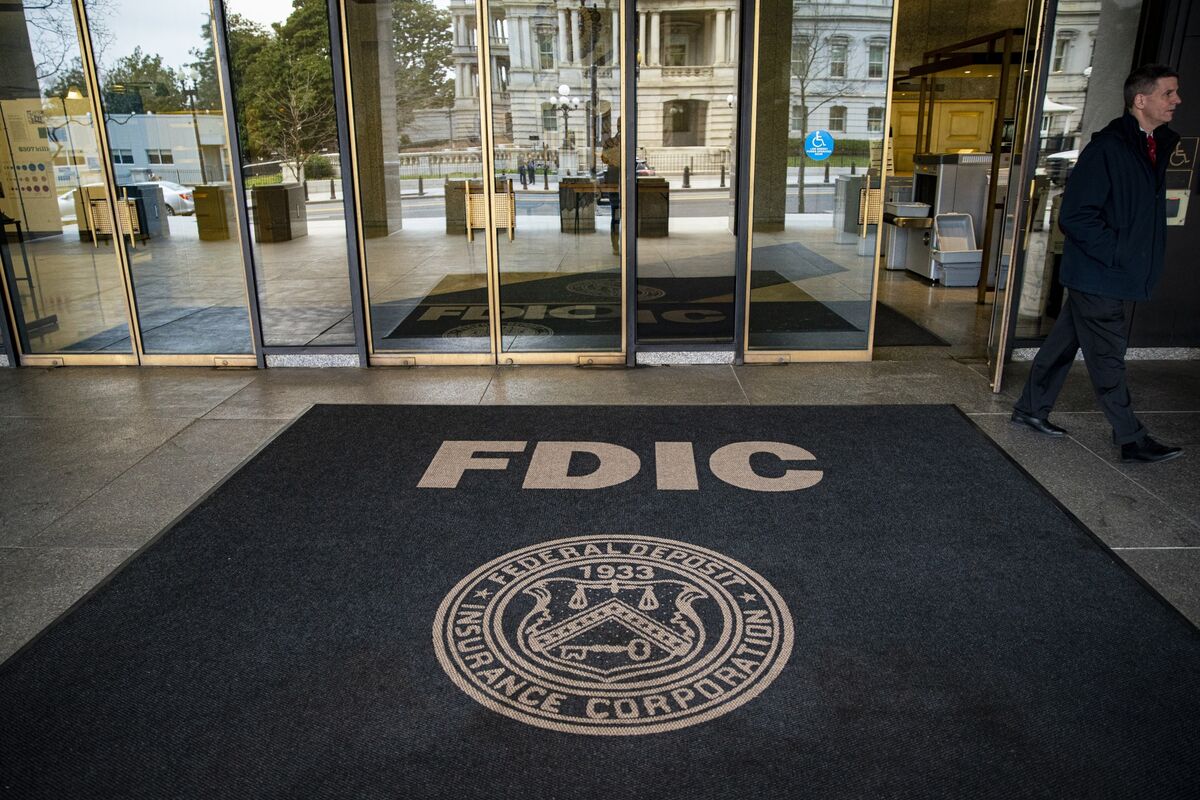
The FDIC announced guidelines for banks and their fintech subsidiaries issuing stablecoins, outlining requirements for reserve assets, redemptions, permissible activities and capital. The guidance signals tighter regulatory oversight of bank-backed stablecoins and may force changes to product plans, partnerships and capital/operational frameworks across banks and fintechs active in digital payments.
Putting firm-level stablecoin issuance rules behind a bank charter rewrites where short-term digital dollar demand will reside: incumbent custodians and banks will see incremental HQLA demand (think: each $1bn of issued stablecoins implies ~$0.9bn of short-duration liquid assets on balance sheet) and therefore a durable bid into Treasury bills and reverse-repo markets. That bid is rate-sensitive — if banks are forced to hold Treasuries/overnight repo, expect modest compression in 1-3M bill yields over 6-18 months relative to OIS, with most impact concentrated at the very short end of the curve.
Competitive advantage will accrue to institutions that already operate custody, settlement and tokenization rails (low marginal cost to plug a stablecoin product) and to banks with excess CRR-style liquidity capacity; pure-play crypto issuers without bank backing face both a cost and trust disadvantage. Second-order, vendors that supply ledger, KYC and bank-integration middleware (payments processors, custody software) will see outsized RFP flow and M&A activity — consolidation is a likely outcome within 12-24 months as incumbents buy capability rather than build.
Key risks: regulatory backstop timelines and capital treatment are the gating factors — expect a public comment window (60-120 days) and a 6-18 month implementation runway; a material tightening of capital or unfamiliar risk-weighting could make issuance uneconomic and reverse flows rapidly. Monitor forward guidance from the FDIC/Fed, short-term Treasury bill tail at auctions, and bank deposit re-pricing: a sudden increase in deposit beta or wholesale funding needs would flip the story quickly.
Contrarian read: market consensus treats this as purely pro-bank, but it actually bifurcates outcomes — large custodians gain sticky fee annuities, while a subset of agile fintechs that partner rather than compete can capture the fastest growth; positioning should therefore favor custody/rails optionality over binary crypto-native winners.
AI-powered research, real-time alerts, and portfolio analytics for institutional investors.
Request DemoOverall Sentiment
neutral
Sentiment Score
0.00
