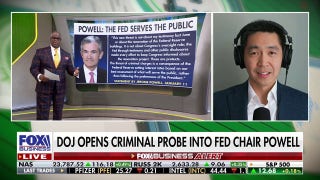
The Trump administration has opened a criminal DOJ probe into Federal Reserve Chair Jerome Powell over his congressional testimony about cost overruns on a $2.5 billion Fed headquarters renovation, a project due in 2027 and financed by the central bank. Prominent Republicans and Democrats alike have condemned the investigation as a threat to Fed and DOJ independence, with several GOP senators warning they will block or withhold confirmation of future Fed nominees — including the next chair — until the matter is resolved, creating elevated political risk around Fed leadership and potentially complicating monetary policy credibility ahead of Powell’s term expiration in May.
Market structure: The DOJ probe into Powell raises policy-risk premia that widen financing spreads and push risk-off flows into duration and safe-haven assets near term. Winners: long-duration Treasuries, gold (GLD), and volatility products; losers: rate-sensitive banks/financials (XLF, KRE) and cyclicals if political interference raises uncertainty. Expect Treasury implied vol to rise meaningfully (order of +25-50% vs. prior 30-day average) in the next 30 days.
Risk assessment: Tail risks include a forced Powell exit or a successful installation of a politicized Fed chair that could swing the 10-yr yield +/-75bps and spike equity volatility >30% intramonth. Immediate window (days) = event-driven volatility; short-term (weeks–months) = nomination fights and Senate blocking risk through May; long-term (quarters) = potential structural repricing of Fed independence that could affect term premia. Hidden dependencies: bank balance-sheet reliance on yield curve, repo plumbing, and FX reserve flows if USD dynamics shift.
Trade implications: Trade the volatility — buy protection and selective duration: overweight TLT (2–3%) and buy 3-month 10‑yr futures straddles (size 0.5–1% notional) to capture moves either way. Short XLF/KRE (1–2%) or buy 3-month 10% OTM puts on BAC/JPM as financials are most sensitive to policy uncertainty; long GLD (1–2%) as hedge. Use tight stop-losses (8–10%) and tiered exits tied to Senate votes or DOJ developments (30–60 day windows).
Contrarian angles: The bipartisan backlash (Tillis, Murkowski, Hill) makes a clean politicization of the Fed less likely — the market may be overstating structural damage. If Senate asserts independence, expect a rapid compression in volatility and a relief rally in banks; consider selling overpriced IV in bank options after a 10–15% selloff. Historical parallel: 2019 Powell political noise caused short-lived volatility but no sustained derangement of policy; treat positions as event-driven, not secular until May.
AI-powered research, real-time alerts, and portfolio analytics for institutional investors.
Request DemoOverall Sentiment
moderately negative
Sentiment Score
-0.50
