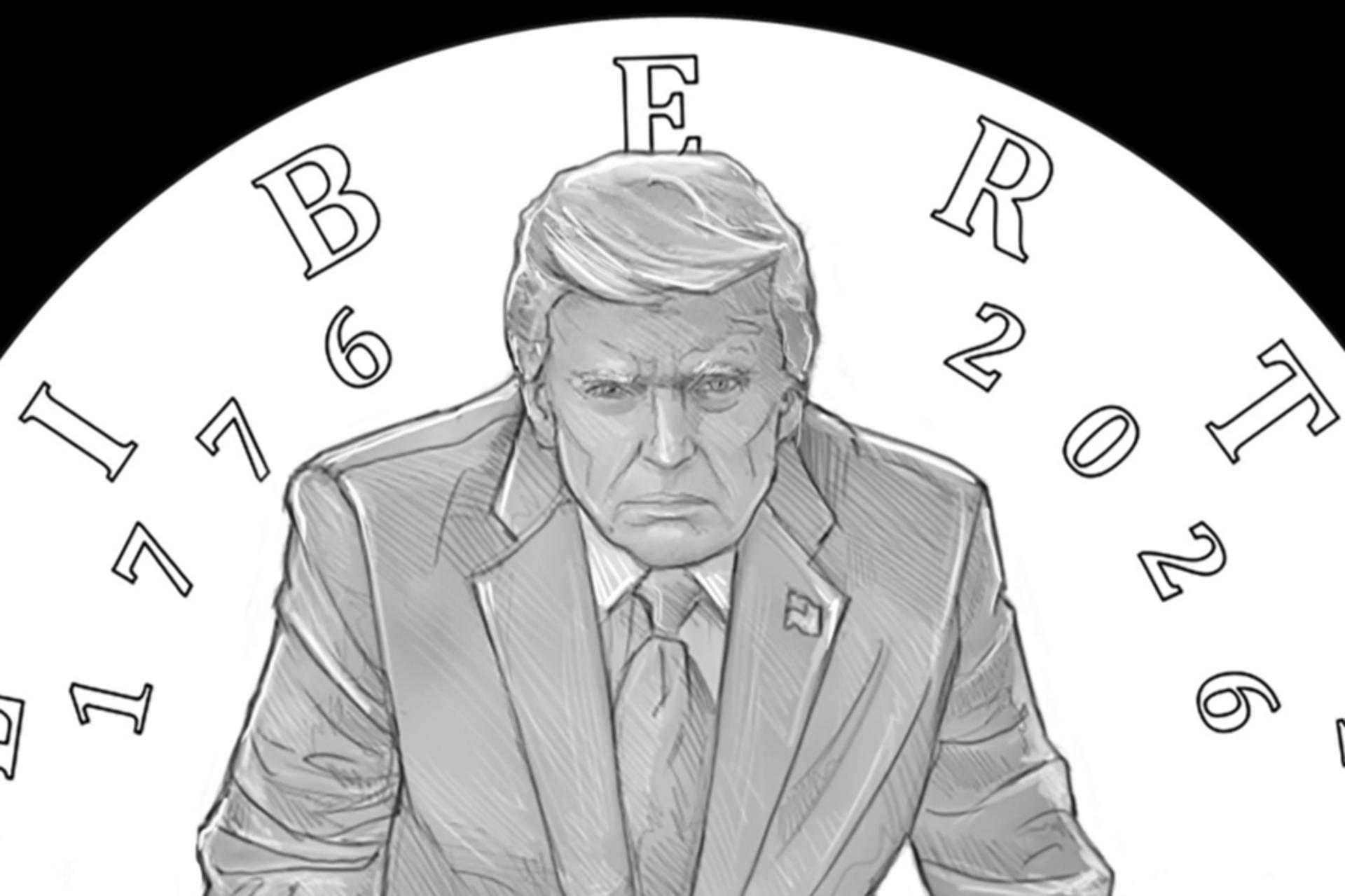
Key event: the Treasury announced President Donald Trump’s signature will appear on future U.S. paper currency as part of the 250th anniversary program—the first time a sitting president’s signature will be used. Related initiatives detailed include commemorative coins (including a 24K gold coin and proposed $1 coin), large banners and name changes on federal buildings and institutions (Kennedy Center, U.S. Institute of Peace) that are facing legal challenges, and plans for two “Trump class” battleships with construction slated for the early 2030s. Fiscal measures cited include 'Trump Accounts' seeded with $1,000 for babies born 2025–2029 (launch slated for July 4) and a paid “gold card” immigration program priced at $1M (individual) / $2M (corporate) with a $5M 'Platinum' tier; these actions are politically significant but largely symbolic and unlikely to move markets materially.
Proliferation of a political brand into federal assets functions like a targeted marketing campaign funded by the state; the immediate economic effect is small, but the secondary effects compound over years via merchandise, commemoratives, and tourism-related licensing where margins are high. Expect incremental non-tax revenues in the low hundreds of millions spread across multiple agencies over a multi-year horizon — a sum that can materially move niche suppliers (minting, signage, specialty printing) but not broad GDP.
Defense procurement signaling (even aspirational programs slated for the 2030s) acts as a directional cue to Capitol Hill appropriators and contractors: yards with heavy surface combatant capability can see tender pipelines extend, shifting capital allocation decisions today despite multi-year build timelines. Shipbuilding is capital- and labor-intensive; order expectations can lift steel, turbine, and specialty welding demand forecasts for subcontractors, compressing their available capacity and pushing up input prices within 12–36 months if programs get funded.
Symbolic politicization of currency and federal venues raises a modest but persistent political-risk premium that will show up episodically in FX and safe‑haven flows around litigation or key rollout dates. Markets will likely price short-term volatility spikes (days–weeks) and persistent risk premia (months) into gold and long-duration Treasuries rather than trigger sustained USD structural weakness absent broader macro policy shifts.
The dominant near-term fragility is legal: multiple lawsuits create binary event risk that can reset local revenue expectations (museums, federal leases, naming-rights contracts) and force write-downs or settlements. Monitor docket timelines as latent catalysts; the most tradable moves will be concentrated in regional hospitality, specialty minting suppliers, and defense suppliers with near-term bid opportunities rather than broad-index exposure.
AI-powered research, real-time alerts, and portfolio analytics for institutional investors.
Request DemoOverall Sentiment
neutral
Sentiment Score
0.00
