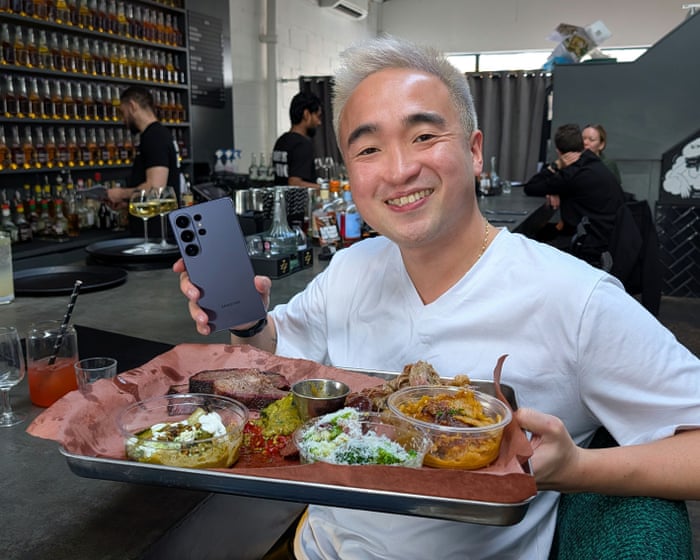
Samsung launched the Galaxy S26 Ultra with AI-powered Photo Assist and a 10x Optical Quality Zoom aimed at improving low-light food and restaurant photography for creators. Creator Ed Tan reports faster editing (retouches in ~2 seconds versus minutes) and credible daylight restorations, though images carry a visible Galaxy AI watermark and require a network/Samsung account. The feature set could modestly boost premium device appeal among content creators and social-media-focused consumers, but is unlikely to have material near-term impact on Samsung's stock or the broader smartphone market.
This handset-level AI is a classic enabling technology: small incremental improvements in capture/edit latency (seconds vs minutes) compound into much larger increases in content volume and quality from hundreds of thousands of semi-pro creators. Expect a step-change in supply of platform-ready visual content within 6–18 months as creators shift time from post-production to production, increasing weekly post frequency by an estimated 20–50% for power users and raising engagement per creator. That amplifies ad inventory and shop-conversion opportunities for dominant social platforms but also accelerates obsolescence of entry-to-mid-level interchangeable-lens camera demand over a 2–4 year window, pressuring OEMs relying on consumer DSLR replacement cycles.
Second-order supply effects: demand for premium image sensors and on-device AI chips rises, benefitting suppliers that can secure wafer/camera-module capacity quickly; conversely, small accessory makers (LED rigs, mid-tier tripods, back-office mobile-edit app firms) face revenue compression as creators don’t need extra hardware or lengthy edits. Regulatory and trust risks are non-trivial: visible watermarks reduce deception but create a two-tier creator market (AI-enhanced vs unedited) that could invite disclosure rules or platform labeling – a policy catalyst that could temper adoption or drive feature parity costs for smaller OEMs.
Timing and reversal signals: initial consumer pull is immediate (days–weeks) at launch, but durable industry effects manifest over quarters to years as creator habits shift and platforms monetize the extra content. Reversal risks include conspicuous AI artifacts, heavy watermarking that depresses engagement, or a credible authenticity backlash that reduces audience trust — any of which could shave 30–50% off expected incremental engagement gains within 3–9 months. Monitor platform retention metrics, sensor/module orderbooks, and any regulatory guidance on AI-generated content as primary catalysts.
AI-powered research, real-time alerts, and portfolio analytics for institutional investors.
Request DemoOverall Sentiment
mildly positive
Sentiment Score
0.30
