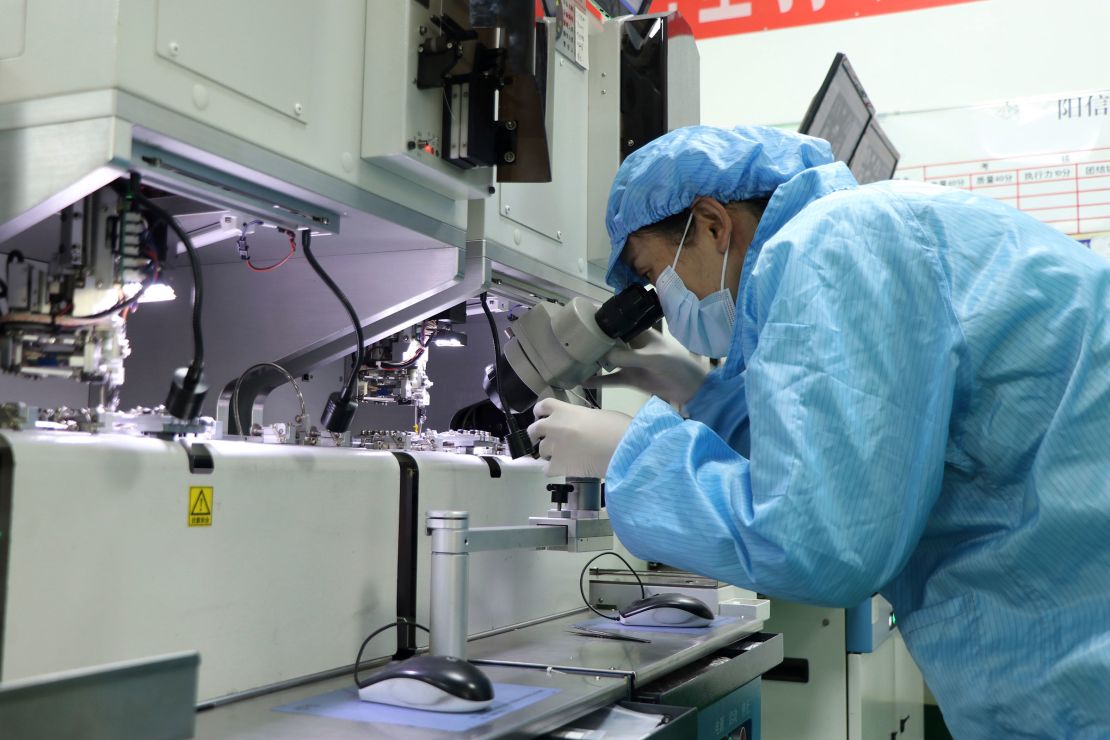
The Trump administration has rescinded export restrictions on critical chip design software, ethane, and jet engines to China, confirmed by companies like Synopsys, Cadence, and Siemens, as part of a recent trade agreement aimed at de-escalating tensions. This move, reciprocated by China's approval of rare earth exports, is particularly significant for China's semiconductor industry, which heavily relies on US-made Electronic Design Automation (EDA) software. While signaling a step towards implementing a broader trade deal and easing bilateral friction, the agreement notably does not address the still-high tariffs between the two nations, and the current trade truce is set to expire in August.
The U.S. administration's decision to rescind export restrictions on critical chip design software, ethane, and jet engines to China marks a significant, albeit potentially temporary, de-escalation in trade hostilities. This move directly benefits Electronic Design Automation (EDA) leaders Synopsys, Cadence, and Siemens, which collectively control 70% of the Chinese market, as they can resume sales and support to a critical customer base. The action is part of a reciprocal agreement formalized in London, where China committed to approving exports of rare earths, a market where it holds 90% of global processing capacity. While this development provides immediate relief for affected U.S. exporters, such as GE Aerospace and ethane producers who sent nearly 50% of their exports to China last year, significant structural risks remain. The agreement does not address the substantial tariffs still in place—with U.S. tariffs on Chinese goods cited at around 55%—and the overarching trade truce is set to expire in August, casting uncertainty on the durability of this diplomatic progress.
AI-powered research, real-time alerts, and portfolio analytics for institutional investors.
Overall Sentiment
Positive
Sentiment Score
0.70
Ticker Sentiment
