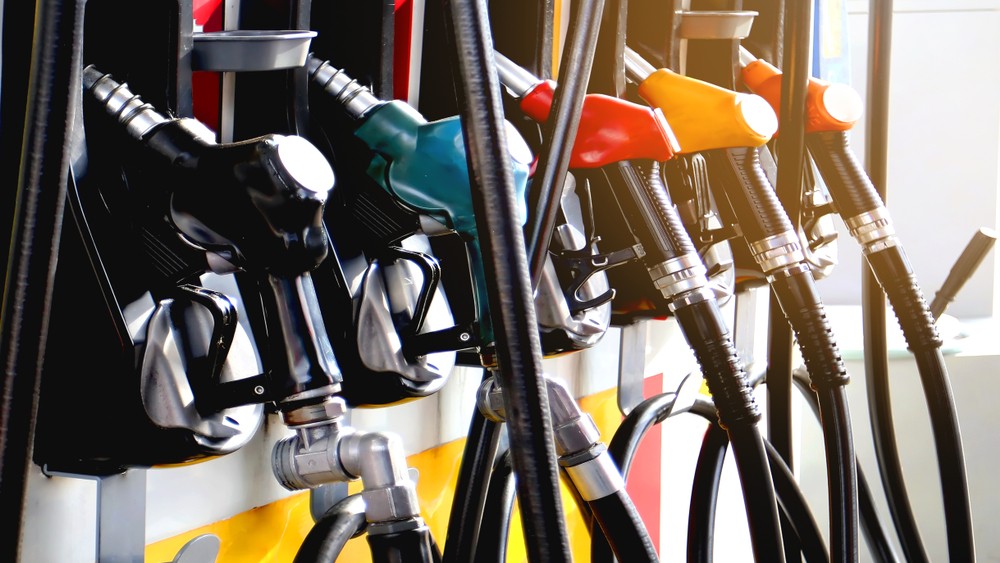
California retail gasoline prices hit $6.114 per gallon, the highest since 2023, and analysts warned they could rise to $6.50-$7.00, while diesel could approach $8.50-$9.00. The state is dependent on imported crude, with the last tanker from the Middle East arriving at the end of April and no near-term arrivals expected amid Strait of Hormuz traffic paralysis. The article frames the supply shock as a geopolitical and energy-market disruption likely to keep fuel prices elevated for an extended period.
California is a high-beta node in the refined-product chain, so the immediate market impact is less about crude direction and more about regional crack spreads and logistics optionality. When inland and imported barrels are constrained simultaneously, the scarcity rent migrates to refiners with Gulf Coast or Pacific-linked distribution, while independent marketers and west-coast exposed airline/fleet buyers absorb the shock. The second-order effect is margin compression for consumer-facing transport names and a likely widening in the gap between West Coast fuel pricing and national benchmarks, which tends to persist well after headline geopolitics cools. The real macro transmission is not gasoline alone; it is diesel, freight, and air cargo. A sustained diesel spike behaves like a tax on last-mile logistics, refrigeration, ag equipment, and regional trucking, which can show up in earnings before CPI does. If retailers cannot fully pass through fuel-driven distribution costs, the pain lands in gross margins over 1-3 quarters; if they do pass through, volume elasticity becomes the problem, especially in discretionary categories. The consensus is likely underestimating duration. Refining capacity, marine routing, and regulatory inertia mean supply relief is slow even if crude flows normalize quickly. That creates a setup where energy equities with export or Gulf Coast exposure can outperform on relative scarcity, while California-dependent transport and consumer names can lag for months. The contrarian risk is that the market is already pricing a severe shortage: if any diplomatic or shipping normalization happens, West Coast crack spreads could mean-revert sharply, making crowded energy longs vulnerable. Best risk/reward is in pair trades rather than outright commodity direction. The cleanest expression is long integrateds/refiners with diversified feedstock access against short airlines, trucking, or California-exposed retail/fuel distribution names. For medium-term investors, the inflation impulse also raises the odds of a defensive rotation into utilities and staples, but only if higher fuel persists long enough to pressure real discretionary demand.
AI-powered research, real-time alerts, and portfolio analytics for institutional investors.
Request DemoOverall Sentiment
strongly negative
Sentiment Score
-0.72
