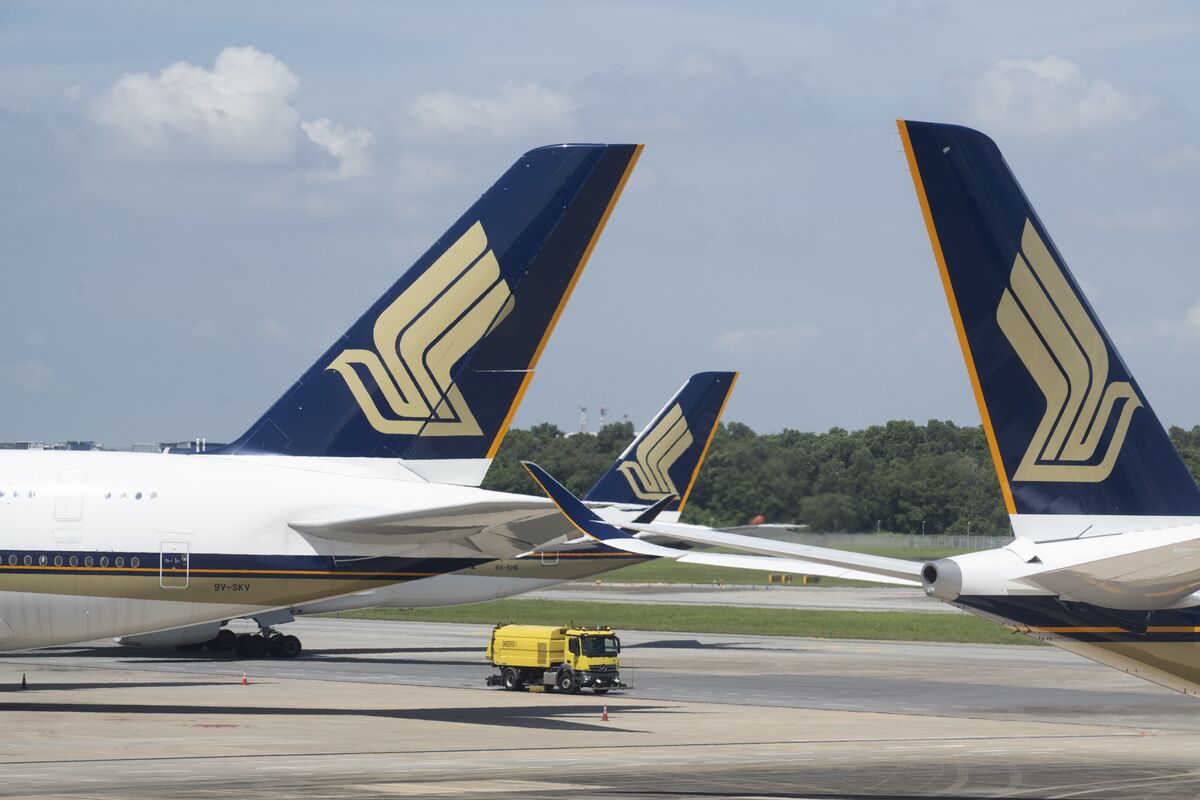
Singapore Airlines reported annual net profit of S$1.18 billion for the year ended March 31, down as widening losses at Air India weighed on associate earnings and the broader aviation outlook. The result still beat analyst estimates of S$1.08 billion, but the headline was dampened by losses linked to its 25.1% stake in Air India and war-related disruption in the industry. The update is modestly negative for sentiment, though the earnings beat should cushion the stock reaction.
The key signal is not the headline profit print but the quality of earnings deterioration: group profitability is increasingly hostage to a minority stake where Singapore Airlines has no operational control and limited ability to force margin repair. That creates a classic “hidden operating leverage” problem for the equity — the core airline can look stable while associate losses amplify volatility in reported net income, which tends to compress the valuation multiple over time. The market should also be thinking about whether this is a one-off drag or the start of a longer re-rating as geopolitical risk embeds a structural premium into aviation costs and route planning. Second-order, the pressure is likely to be felt unevenly across the region. Carriers with cleaner balance sheets and less associate exposure should outperform on relative basis if investors rotate toward simpler, more transparent earnings streams; meanwhile, airlines with Middle East exposure, fuel hedging gaps, or weak alliance structures may face a broader de-rating even if their own operational metrics hold up. The bigger issue is that war-related disruptions can persist well beyond the immediate news flow: rerouting and insurance costs hit margins quickly, but schedule normalization and yield recovery can take quarters, not weeks. The contrarian take is that the market may be overfocusing on the associate loss and underestimating the resilience of premium demand and capacity discipline. If global travel remains tight on supply, pricing power can offset some of the geopolitically driven cost inflation, especially for premium-heavy network carriers. But until there is visibility on both Air India’s loss trajectory and the duration of route disruptions, this is more likely a multiple headwind than an immediate earnings collapse.
AI-powered research, real-time alerts, and portfolio analytics for institutional investors.
Request DemoOverall Sentiment
mildly negative
Sentiment Score
-0.15
