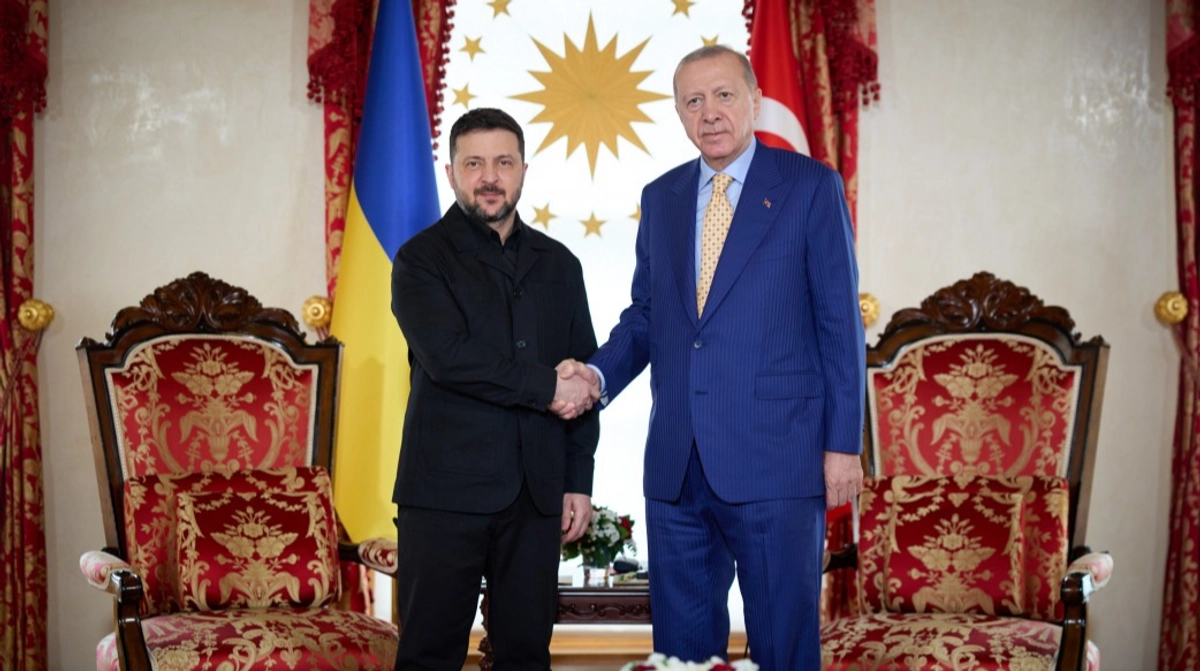
Türkiye offered to host the next round of negotiations between Ukraine, the United States and Russia, with President Erdoğan proposing Istanbul and President Zelenskyy indicating willingness to attend. This is a constructive diplomatic development that could modestly lower geopolitical tail-risk if talks proceed, but remains highly uncertain and unlikely to move markets materially in the near term; monitor confirmation of delegation visits and any agreed agenda or timelines.
Türkiye offering itself as a venue is a low-cost, high-visibility way for Ankara to convert diplomatic capital into measurable market effects: a credible run of mediated talks reduces the war-risk premium priced into Turkish sovereign and equity markets, and increases the likelihood of incremental FX inflows and tourism/infrastructure activity. Mechanism: leader-level diplomacy creates front-page headlines that can compress risk premia quickly (days–weeks) even if substantive concessions take months; expect TRY to move on sentiment first, real economic rebalancing later.
A plausible second-order winner is Turkish domestic cyclicals tied to services and infrastructure (airlines, airports, construction suppliers) as short windows of perceived stability drive bookings and procurement; conversely, parts of the global defense supply chain are exposed to a downside re-rating if the market begins to price a non-zero chance of de-escalation. Quantitatively, if markets assign a 20–30% chance to meaningful talks over 3 months, defense sector caps could underperform broad indices by 5–12% in that window while Turkey equities could outperform EM by a similar band.
Key risks and timing: the setup is binary and headline-driven—progress is measured in weeks (delegation visits) but outcomes take months. The trade reverses if talks falter or are perceived as Turkish-led theatrics: that would increase political risk premia for Ankara and could widen TRY volatility >15% within days. Watch U.S. delegation timing and any leader-level meeting announcements as short-term catalysts.
AI-powered research, real-time alerts, and portfolio analytics for institutional investors.
Request DemoOverall Sentiment
neutral
Sentiment Score
0.10
