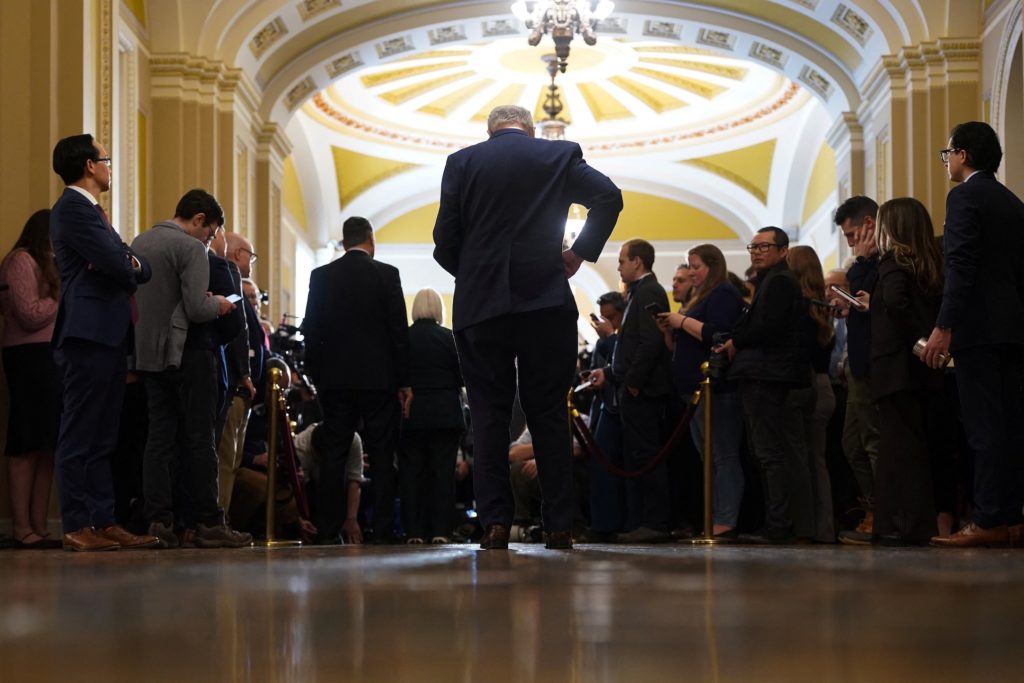
Heightened tensions over immigration enforcement are complicating congressional business as senators returned amid the recent killing of Alex Pretti and threats to a lawmaker, ahead of a Friday deadline to fund the Department of Homeland Security and other major agencies. The standoff increases the risk of a partial government shutdown and raises short-term policy uncertainty for sectors exposed to federal contracting and DHS-related operations.
Market structure: A near-term U.S. funding fight centered on DHS skews winners toward defensive assets and homeland-security vendors. Direct beneficiaries if enforcement rhetoric translates to budgets: Palantir (PLTR), L3Harris (LHX) and private-prison names (GEO, CXW); losers include travel/leisure (JETS, AAL) and small-cap cyclicals facing liquidity hits. Cross-asset: expect a knee-jerk bid in long-duration Treasuries (TLT) and gold, and a short-lived spike in volatility (VIX/VXX) if a shutdown probability moves above ~25–35% over the next 72 hours.
Risk assessment: Tail risks include a protracted shutdown (>10 days) shaving 0.2–0.5% off quarterly GDP, delayed contractor payments and disrupted federal permits for energy/infrastructure projects; regulatory backlash (ESG-driven divestments) is a medium tail for private prisons. Time horizons: immediate (0–7 days) volatility; short-term (1–3 months) cash-flow timing risk for government vendors; long-term (6–18 months) policy-driven reallocation of homeland security budgets. Hidden dependencies: state-level border spending, DOJ investigations, and contract cadence can amplify or mute corporate upside.
Trade implications: Bias portfolios toward 1–3% tactical hedges: long TLT (2–3%) and a 2-week VIX call spread (buy 18 / sell 30) sized 0.5–1% for event insurance; initiate 1–2% strategic long in PLTR and 0.5–1% in LHX on 3–12 month view if DHS appropriations tilt toward enforcement. Short small, liquid exposure to JETS or AAL (0.5–1%) if shutdown extends >3 days and travel bookings show a 5%+ sequential decline; exit rules: trim TLT if 10yr yield rises >25bp or close VIX spread if VIX >30.
Contrarian angles: Markets underprice the structural reallocation risk to homeland-security tech — a 12–24 month funding shift could rerate PLTR/LHX by +15–30% if new programs are funded. The private-prison rally is socially contested and likely capped by litigation/regulatory risk, so any long should be sized <1% and paired with downside protection. Historical parallel: 2013 shutdown created short-lived volatility but left defense/homeland names intact; if you own them, prefer staggered entries over 3 months to avoid headline timing risk.
AI-powered research, real-time alerts, and portfolio analytics for institutional investors.
Request DemoOverall Sentiment
mildly negative
Sentiment Score
-0.30
