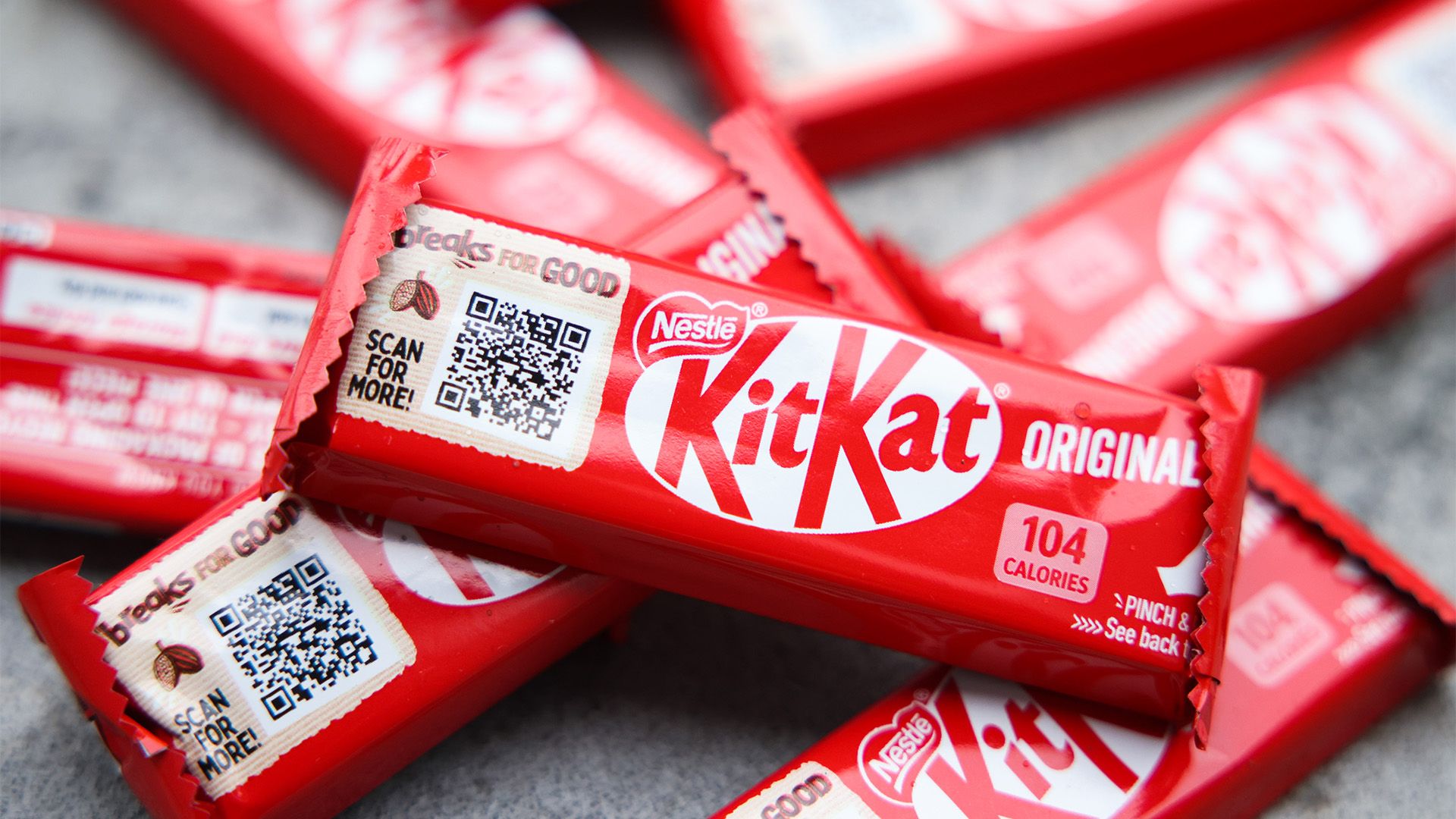
12 tonnes of KitKat products (reported as 413,793 units) were stolen in Europe; KitKat launched a Stolen KitKat Tracker that uses batch codes to identify stolen bars and request public help. The brand stated the theft will not affect KitKat stock, and the interactive, humorous response is positioned as a marketing win with negligible expected market impact.
This episode is less about lost inventory economics and more about operational optics and acceleration of item-level traceability demand. A visible, interactive response converts a supply-chain failure into marketing equity; that can translate into a measurable short-term uplift in velocity and retail shelf pull-through over the next 4–12 weeks as consumers reward perceived transparency.
Second-order winners are technology and tag suppliers that enable batch- or item-level provenance; any sustained chatter about theft and counterfeit risk raises procurement discussions at CPG buyers and large retailers, creating a 6–24 month procurement cycle for pilots and rollouts. Conversely, logistics operators and regional contract manufacturers with legacy security practices face margin pressure to upgrade or lose shelf-share, a slow bleed rather than immediate credit shock.
Tail risks: copycat thefts or a misstep in the public campaign (e.g., privacy pushback on tracking or a botched reward mechanism) could convert goodwill into regulatory scrutiny or consumer backlash within weeks. Reversal catalysts include a lack of measurable uplift in Nielsen/IRI data after 2–3 months, which would reveal the move as PR-only and put pressure on any short-lived supplier beneficiaries.
From a strategy standpoint, treat this as a micro catalyst for tech-adjacent suppliers and a branding soft catalyst for the manufacturer. The immediate trading window is 0–3 months for brand sentiment trades, and 6–24 months for supply-chain tech exposure where revenue recognition and pilot-to-scale dynamics will drive realized returns.
AI-powered research, real-time alerts, and portfolio analytics for institutional investors.
Overall Sentiment
mildly positive
Sentiment Score
0.15
