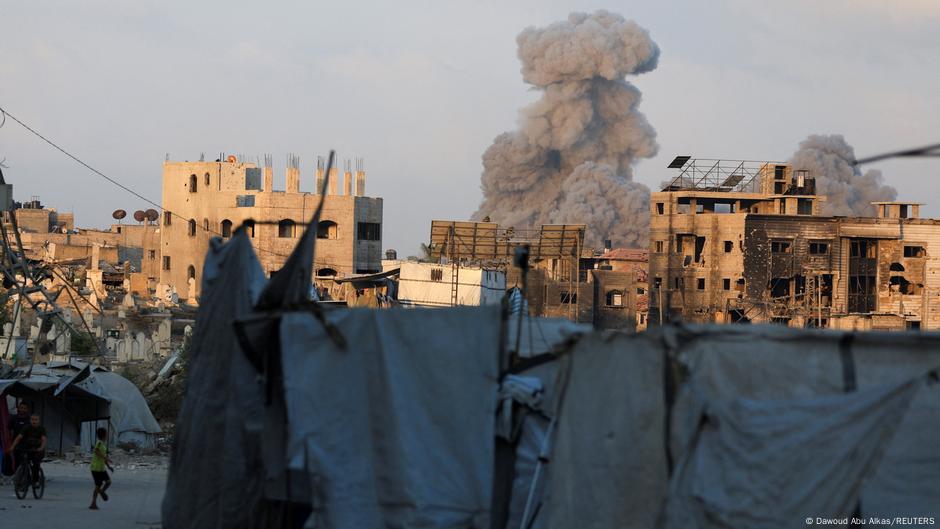
Israel has commenced a major ground offensive in Gaza City, calling up 60,000 reservists, as Prime Minister Netanyahu simultaneously seeks hostage negotiations and a war end on Israeli terms. This escalation intensifies an already severe humanitarian crisis, with a media investigation reporting 83% civilian casualties among 53,000 Palestinian deaths and UN agencies warning of widespread malnutrition and unsafe displacement. The offensive further heightens regional tensions, evidenced by Turkey's reported requirement for ships to declare no arms for Israel and Iran's naval exercises, signaling sustained geopolitical risk and humanitarian pressures.
The commencement of a major Israeli ground offensive in Gaza City, supported by the call-up of 60,000 reservists, signals a significant escalation and protraction of the conflict. This military action occurs alongside a seemingly contradictory directive from Prime Minister Netanyahu to immediately begin negotiations for hostage release and a conditional end to the war, creating ambiguity around the potential for a near-term ceasefire. The humanitarian impact is severe and quantifiable, with a media investigation citing Israeli military data that suggests 83% of the 53,000 fatalities in Gaza were civilians, a figure that starkly contrasts with Israeli government claims. UN officials have reinforced the gravity of the crisis, warning that the malnourished population cannot withstand further displacement and describing the situation as a "manufactured and fabricated famine." Regional tensions are concurrently heightening, as evidenced by Turkey's reported de facto block on arms shipments to Israel through its ports and Iran's demonstrative naval exercises. These developments, reflected in the extremely negative sentiment score (-0.9) and high market impact score (0.8), point toward sustained geopolitical instability and significant tail risk for regional assets and supply chains.
AI-powered research, real-time alerts, and portfolio analytics for institutional investors.
Request DemoOverall Sentiment
extremely negative
Sentiment Score
-0.90
