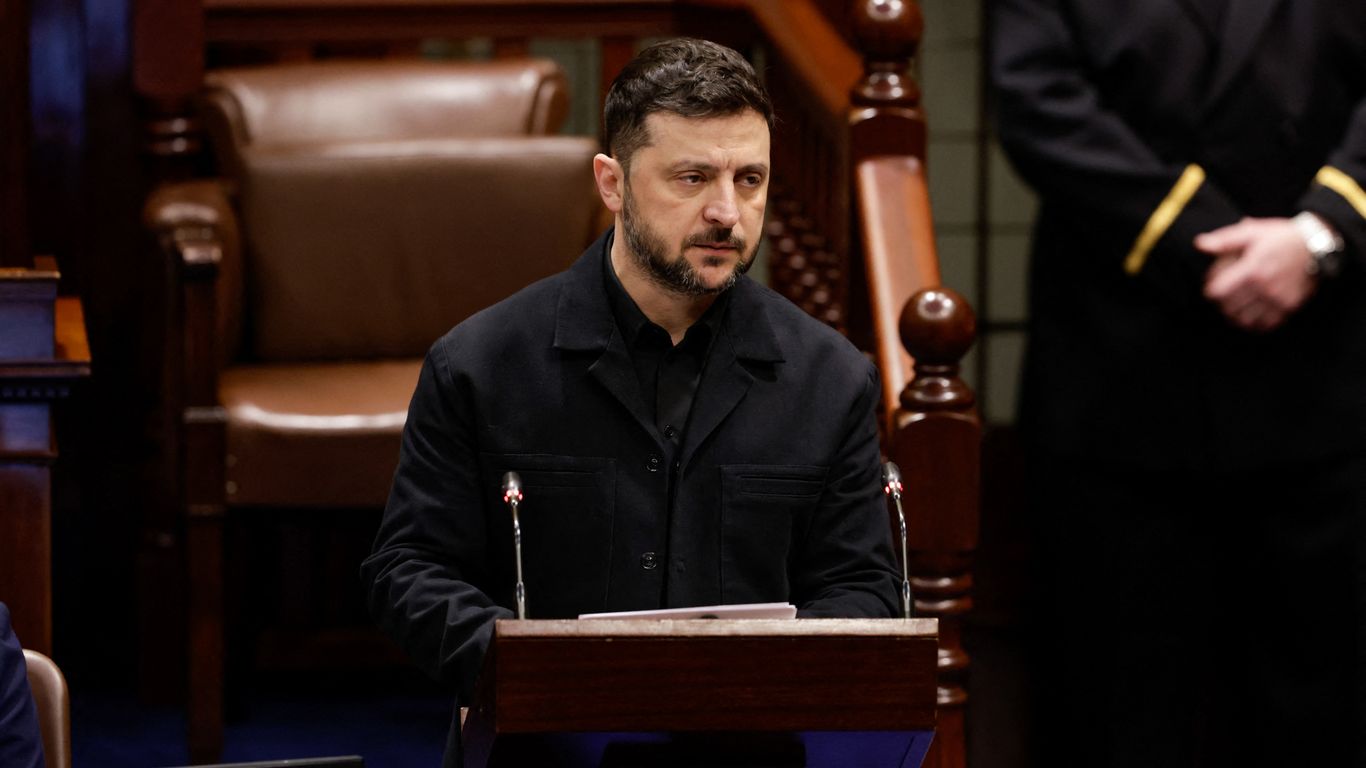
Ukrainian President Volodymyr Zelensky held a two-hour call with Trump advisers Steve Witkoff and Jared Kushner following multi-day negotiations in Miami and a prior meeting between the advisers and Vladimir Putin, centering on territorial arrangements in Donbas and proposed U.S. security guarantees. Ukrainian and U.S. officials said significant progress was made on draft security assurances, but territorial issues remain difficult and further meetings are planned; Ukrainian envoys will brief Zelensky in London. For investors, constructive but preliminary private diplomacy reduces tail-risk if it leads to durable ceasefire terms, but outcomes remain uncertain and any market impact will hinge on whether talks produce a concrete, verifiable agreement.
Market structure: A credible near-term negotiated pause between Kyiv and Moscow would favor European energy and cyclical sectors (natural gas/TTF risk premium falling ~10–25% within 1–3 months), compress gold and sovereign risk premia, and remove a portion of the wartime uplift priced into US/European defense names. Winners: European utilities, pipeline operators, construction/materials for reconstruction; Losers: short-term demand for tactical weapons suppliers. Cross-asset: expect EM/Ukraine sovereign CDS to tighten materially (hundreds of bps), RUB to appreciate vs EUR/USD if sanctions ease, and oil down modestly (2–6%) on reduced geopolitical risk.
Risk assessment: Tail risks remain large — failed talks, sudden escalation, or politicized US Congressional rejection could snap risk premia wider; treat probability of a durable deal within 3 months as low-to-moderate. Immediate horizon (days): headline-driven volatility spikes; short-term (weeks–months): directional repricings in gas, gold, and defense; long-term (quarters–years): reconstruction-driven demand for steel, heavy equipment, and energy infrastructure. Hidden dependencies: deal credibility tied to formal sanction-rollbacks and US internal politics (Trump-driven plan), not private envoys — monitor legal/political approvals as gating items.
Trade implications: Tactical portfolio moves: (a) Hedge/trim defense exposure — reduce net long in LMT/RTX/NOC by 2–4% of portfolio or buy 3-month 7–12% OTM put spreads sized to cover 2% positions. (b) Short natural gas via UNG Jul 2025 1–1.5% notional put spread (example: buy 20/15 put spread) to capture expected 10–25% downside on a credible ceasefire. (c) Small asymmetric punt (0.5–1% portfolio) long RSX (Russia ETF) conditional on concrete sanction-relief triggers; hard stop at -30% and exit if no sanction progress in 90 days.
AI-powered research, real-time alerts, and portfolio analytics for institutional investors.
Request DemoOverall Sentiment
mildly positive
Sentiment Score
0.25
Contrarian angles: The market may underprice reconstruction winners (NUE, CAT) that could see multiyear revenue upside if territory stabilizes — consider a 1–2% thematic exposure via NUE/CAT with 12–36 month horizon. Conversely, consensus defense exuberance could be overdone; selective hedging is cheaper than outright shorting. Historical parallels (Minsk/previous ceasefires) show stop–start outcomes; price moves are reversible — use option structures and tight trigger-based sizing rather than large directional bets.
