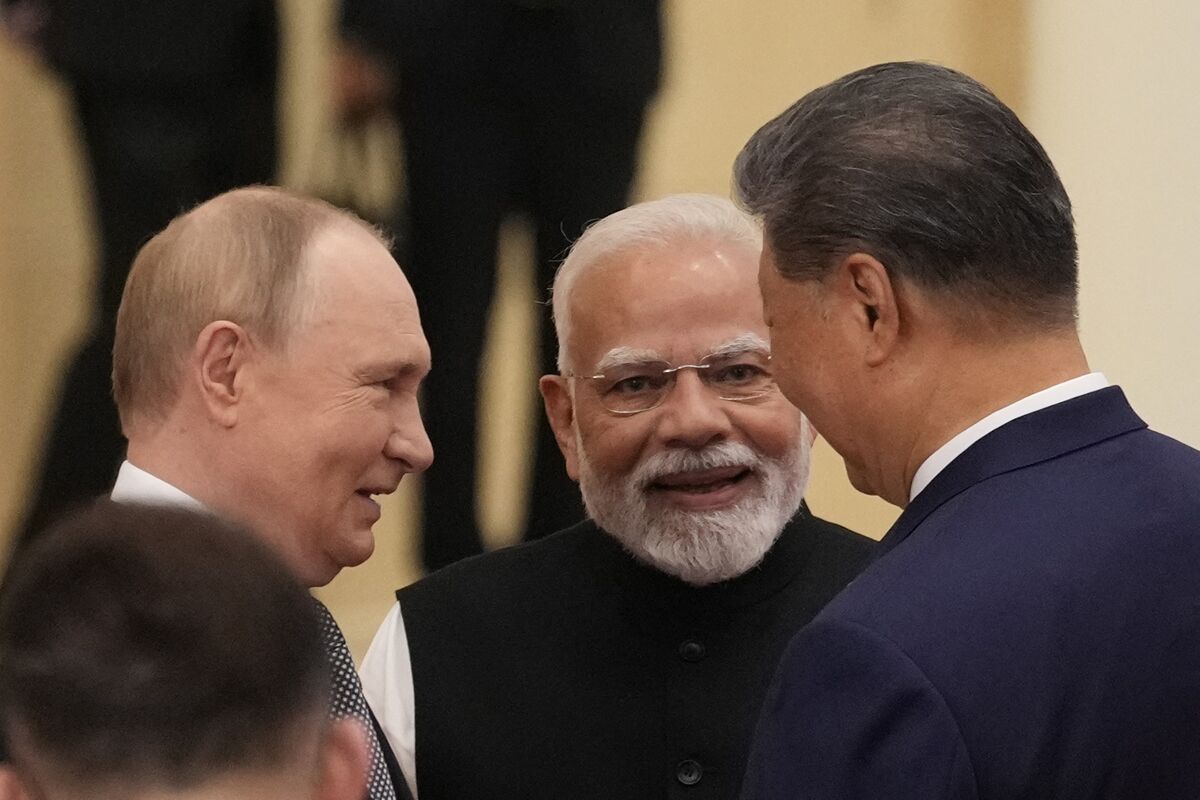
The article argues that Indian Prime Minister Modi's recent public display of cordiality with Chinese President Xi Jinping at the SCO summit is a temporary, optics-driven gesture rather than a genuine shift in policy. Despite this apparent rapprochement, the author contends that Beijing will not permit a sustained détente, given the recent history of border conflicts and India's strategic pivot towards the Indo-Pacific and away from a China-dominated Eurasia, suggesting any significant, enduring improvement in bilateral relations remains unlikely.
Recent displays of cordiality between Indian Prime Minister Modi and Chinese President Xi at the Shanghai Cooperation Organisation summit are being interpreted as a superficial, optics-driven maneuver rather than a substantive policy shift. This skepticism, reflected in the moderately negative sentiment, is rooted in recent history. Just five years ago, fatal clashes occurred between Indian and Chinese soldiers along their disputed Himalayan border, which was followed by a significant strategic pivot from New Delhi. This pivot included measures of economic decoupling, such as banning Chinese investment and popular apps like TikTok, and a diplomatic reorientation away from a China-dominated 'Eurasia' toward a US-inclusive 'Indo-Pacific' framework. The article posits that this recent bonhomie is a deliberate, but likely temporary, gesture, and historical precedent suggests Beijing's strategic interests will not permit a lasting détente, making any assumption of a long-term rapprochement a high-risk proposition.
AI-powered research, real-time alerts, and portfolio analytics for institutional investors.
Request DemoOverall Sentiment
moderately negative
Sentiment Score
-0.50
