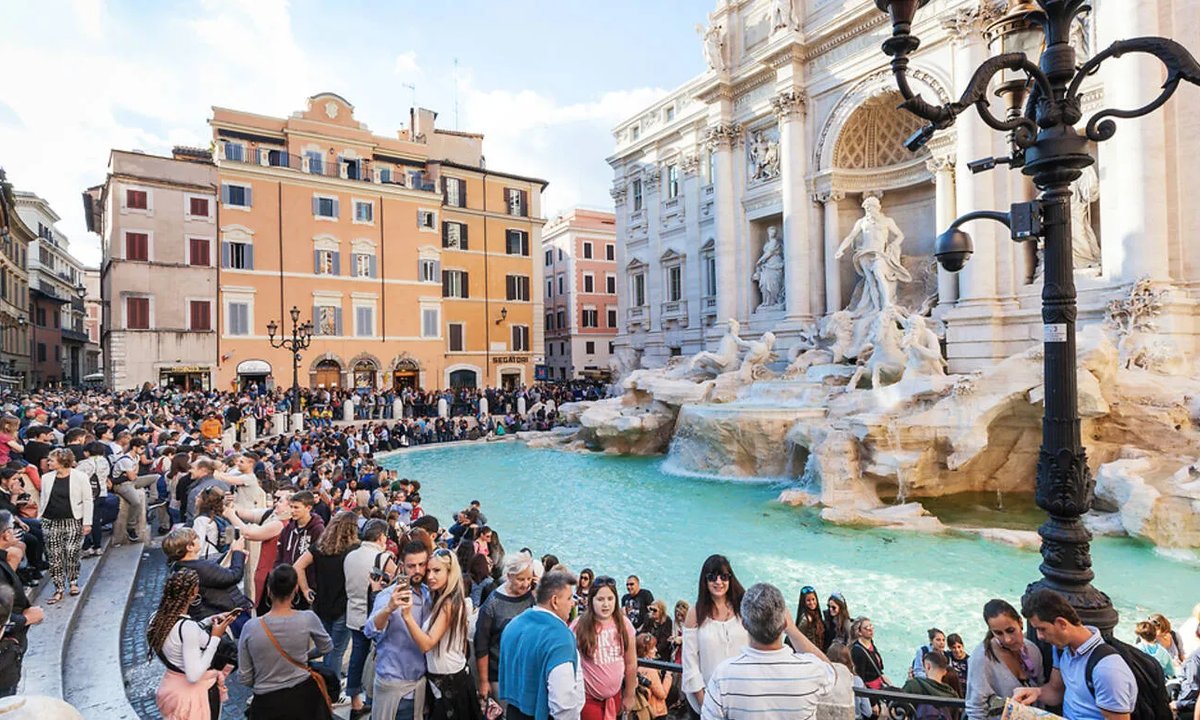
Rome has introduced a €2 entrance fee for closer access to the Trevi Fountain and a €5 Roma Mic tourist ticket covering some civic museums, with residents exempt, aiming to reduce congestion and fund preservation. City authorities forecast €6.5m of annual revenue to invest in the fountain and other monuments; the Trevi recently underwent a €300,000 conservation and will remain viewable for free from a distance and free after 10pm daily.
Market structure: The €2 Trevi fee (forecast €6.5m/yr) is economically immaterial at national scale but creates a micro-market for paid close-access experiences and timed-entry inventory; beneficiaries are platform sellers of skip‑the‑line/tiered access and local restoration contractors, losers are low‑margin street vendors and ad‑hoc tour operators. Competitive dynamics shift marginal pricing power from informal free access to municipal gatekeepers and private experience providers, likely increasing ARPU for online travel agents (OTAs) that can bundle access. Supply/demand: capped footfall improves the quality of experience (reduced congestion) raising willingness‑to‑pay among premium tourists; overall visitor volumes unlikely to move materially unless other cities follow. Cross‑asset: negligible direct impact on EUR or BTPs (<1bp), but a broad EU roll‑out could be a positive signal for municipal balance sheets and credit spreads in stressed issuers over 6–24 months.
Risk assessment: Tail risks include protests, legal/UNESCO challenges, or an unexpected tourist deterrent (e.g., travel advisories) producing a >5% QoQ drop in Rome arrivals; operational risk exists in enforcement and fraud. Immediate (days): minimal market moves; short (weeks–months): measurable uplift in paid‑experience revenues and ticketing data; long (quarters–years): template adoption by 5–10 major cities could create a new recurring revenue class for OTAs and experience platforms. Hidden dependencies: resident exemptions create fraud/verification costs and push premium demand to private guided tours, raising margins for licensed operators. Catalysts include summer 2026 travel season, official adoption by 2+ EU capitals within 90 days, or OTA product launches bundling access.
Trade implications: Direct plays—favor platforms that monetize experiences: Booking Holdings (BKNG), Tripadvisor (TRIP), and Airbnb (ABNB) as 6–12 month longs (small positions) because each can upsell timed access; position size initial 1–2% each, scale to 3–4% if >3 cities copy the model. Buy 3–6 month call spreads on TRIP (aggressive) to capture near‑term product monetization with defined risk. Consider modest long on Marriott (MAR) / Hilton (HLT) 0.5–1% for luxury/hotel ADR capture in Rome during H2 2026. Pair trade: long BKNG (+1.5%) / short Ryanair (RYAAY) (-1%) as premiumization favors full‑service pricing vs ultra‑low‑cost carriers.
AI-powered research, real-time alerts, and portfolio analytics for institutional investors.
Request DemoOverall Sentiment
neutral
Sentiment Score
0.05
Contrarian angles: Consensus will treat this as symbolic; miss is the repeatability — if 5% of major heritage sites levy €1–€5, EU tourism monetization could be a >€500m recurring revenue pool for platforms and licensed operators within 3 years. Reaction is underdone for experience‑selling OTAs and overdone to the extent investors expect immediate macro impact on Italy sovereigns. Historical parallels: Venice entry/turnstile discussions show small fees change tourist behavior and willingness to buy premium access. Unintended consequence: displacement benefits peripheral destinations and regional airlines/hotels—monitor secondary city volumes as a leading indicator.
