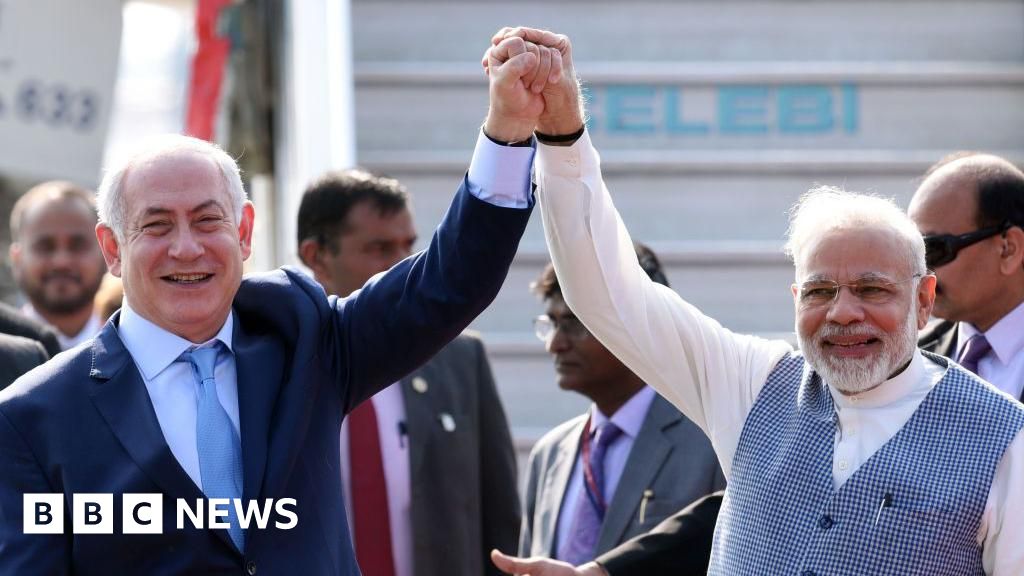
Prime Minister Narendra Modi is undertaking a two-day visit to Israel—his first since the Gaza war began—to address the Knesset and meet senior Israeli leaders, with no scheduled meetings with Palestinian officials. The trip is aimed at deepening defence, technology and trade ties and underscores India's ongoing procurement relationship with Israeli arms and advanced tech, while testing Delhi's diplomatic balancing with Iran and other Middle Eastern partners amid heightened regional tensions and a significant recent US military buildup. For investors, the visit reinforces strategic defence and technology cooperation that could benefit related suppliers, but also carries geopolitical downside risk to energy and regional stability if broader escalation occurs.
Market structure: The immediate winners are defence-tech vendors and integrators tied to Israel-India cooperation (Elbit Systems, ESLT; broader aerospace & defence index ITA), and commodity exporters if regional risk lifts oil prices. Direct losers include regionally exposed travel/airline names (JETS, IAG, UAL) and EM Gulf sovereign credit if sanctions/escalation risk returns; pricing power shifts toward specialized ISR (intelligence, surveillance, recon) firms where order lead-times and margin expansion can reach +200–300bps over baseline within 12–24 months.
Risk assessment: Tail risks include a US–Iran kinetic exchange that spikes Brent +20% and triggers a >5% drawdown in global equities within days; probability low (<10%) but high impact. Immediate (days) volatility will trade in energy and FX, short-term (weeks–months) revolves around contract announcements and export controls, long-term (years) is structural — sustained India-Israel defense procurement pipelines and tech transfer. Hidden dependency: India’s need for Gulf energy (20–30% of imports) constrains overt geopolitical moves and could delay deals; catalysts include US military moves, Knesset-level contract ratifications, or Indian parliamentary decisions.
Trade implications: Tactical longs in prime defence exposures with convex option hedges are attractive (3–12 month horizon); oil and gold option structures are efficient for hedging a 1–3 month regional flare-up. Expect flight-to-quality into 7–10y Treasuries (IEF/TLT) and gold (GLD) if oil moves >8% in 7 days. Volatility will present mean-reversion opportunities in airlines and EM credit within 2–6 weeks after any de-escalation.
Contrarian angles: The market may overstate India’s diplomatic shift—procurement is slow and politically mediated so near-term wins are binary and often delayed 6–18 months; consensus underprices procedural risk (judicial controversies in Israel, Indian domestic backlash). Historical parallel: Modi’s 2017 visit deepened ties without market-moving shocks — this time prices already embed modest risk, so the best alpha is in volatility capture and relative-value defence vs cyclical shorts, not binary M&A bets.
AI-powered research, real-time alerts, and portfolio analytics for institutional investors.
Request DemoOverall Sentiment
neutral
Sentiment Score
0.00
