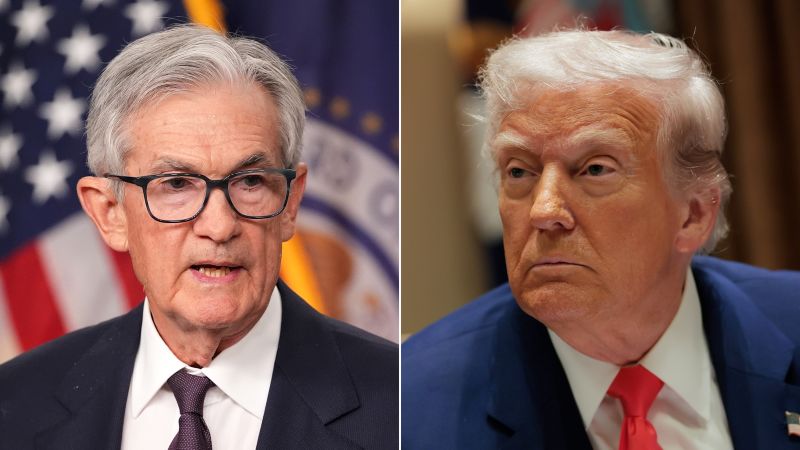
U.S. federal interest payments are projected to reach nearly $1 trillion this fiscal year and exceed $1 trillion next year, becoming the second-largest federal spending category. Former President Trump attributes these escalating costs to the Federal Reserve's high interest rates, advocating for significant cuts. However, experts contend that even substantial Fed rate reductions may not significantly alleviate the overall interest payment burden on the diverse federal debt portfolio, and could potentially increase longer-term rates. They emphasize that the more effective solution to rising interest costs is through fiscal policies aimed at reducing the annual deficit, rather than solely relying on monetary policy.
The US fiscal position is under significant strain, with federal interest payments projected to approach $1 trillion this fiscal year, a sharp increase from $346 billion in fiscal 2020. This escalation has made interest costs the second-largest category of federal spending, surpassing defense and Medicare, and consuming 18 cents of every tax revenue dollar. While political rhetoric, particularly from former President Trump, blames the Federal Reserve's rate policy for these costs, expert analysis presented in the article suggests this view is overly simplistic. Economists argue that the Fed's influence is primarily on short-term debt, and aggressive rate cuts could paradoxically increase long-term borrowing costs by stoking inflation or shifting investor demand. The core issue identified is the expanding national debt, exacerbated by policies projected to add over $3 trillion to the deficit. This structural problem was recently highlighted by Moody's downgrade of US debt, which cited rising government debt and interest payment ratios as key concerns. Therefore, the consensus among experts cited is that a sustainable solution lies in deficit-reducing fiscal policy, not solely in monetary policy adjustments which may have limited or even counterproductive effects on the total interest burden.
AI-powered research, real-time alerts, and portfolio analytics for institutional investors.
Overall Sentiment
strongly negative
Sentiment Score
-0.70
Ticker Sentiment
