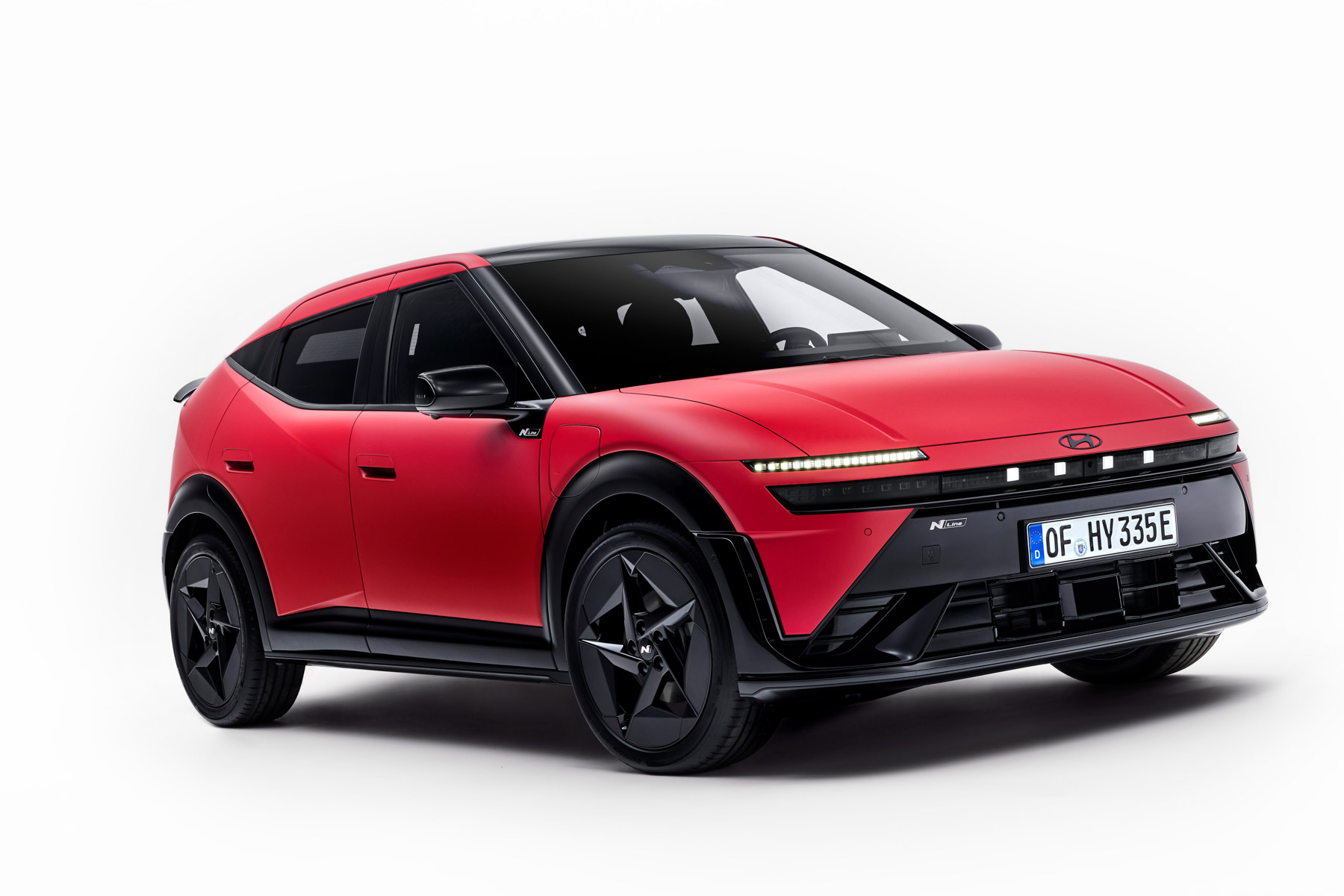
Hyundai’s Ioniq 3 is positioned as a more aerodynamic and more efficient compact EV than the Kia EV2, with WLTP range of 334 km to 496 km, a 42.2 kWh or 61 kWh battery, and 29/30-minute 10-80% DC charging. The model adds practical advantages including a 4.15 m body, up to 441 litres of stated boot space, Android Automotive-based Pleos Connect, and advanced driver-assistance features. Pricing has not yet been announced, limiting near-term financial impact.
Hyundai is signaling that the next phase of EV competition is not about headline horsepower or bigger packs, but about extracting more usable range from the same 400V architecture. That matters because it narrows the gap between “affordable” and “aspirational” EVs without forcing a cost reset in the drivetrain supply chain; suppliers of motors, inverters, and cell packs should see less mix risk than OEMs betting on proprietary hardware. The real competitive pressure is on brands that have sold compact EVs on design or software alone — if Hyundai can deliver materially better efficiency at similar hardware cost, peers will need to answer with either margin sacrifice or lower specs. The more interesting second-order effect is channel economics. A compact EV with nearly 500 km WLTP range and faster AC charging reduces the need for oversizing battery packs to win showroom comparisons, which can compress battery revenue per vehicle across the segment over the next 12-24 months. That is negative for low-end battery suppliers and for OEMs with weaker software stacks, because the new battleground shifts toward efficiency, digital integration, and financing convenience rather than raw range. For Tesla, the implication is indirect but relevant: this is another proof point that mainstream buyers are becoming accustomed to a more software-defined cabin and seamless charging experience, which raises the baseline expectation for entry-level EVs. However, the article also shows that non-Tesla OEMs are converging on the same UX primitives, so Tesla’s moat is less about novelty and more about ecosystem stickiness. The move is mildly positive for EV adoption broadly, but not enough to justify chasing the whole EV beta here unless price elasticity in Europe confirms that buyers will pay up for efficiency and software. Contrarian take: consensus may overestimate how quickly this translates into market share. European compact EV buyers remain extremely price sensitive, and if Hyundai’s final pricing creeps materially above the Kia benchmark, the superior spec sheet may not matter. The key catalyst is not the reveal, but the order book in the first 8-12 weeks after launch; if take-rate on the larger pack or 22 kW charger is weak, the efficiency story becomes a margin story instead of a volume story.
AI-powered research, real-time alerts, and portfolio analytics for institutional investors.
Request DemoOverall Sentiment
mildly positive
Sentiment Score
0.25
Ticker Sentiment
