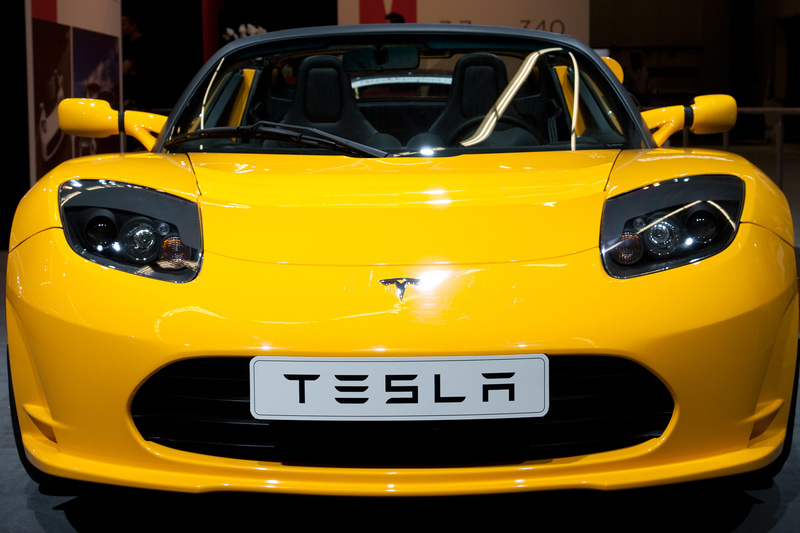
Daiwa upgraded JinkoSolar (NYSE:JKS) to Buy with a $28.50 price target versus the current $23.91 share price (market cap $1.24B), implying roughly 19% upside. The upgrade rests on expected patent revenue from Tesla’s planned 100 GW of U.S. TOPCon capacity; Daiwa values JinkoSolar’s patent business at $0.7B (2026), assumes a CNY0.06/W patent fee and forecasts JKS-A net profit of CNY3B annually for 2030-35. Valuation assumptions include a 2x P/E for 2030, 5% WACC and a 0.35x P/B on non-patent assets (company currently trades at 0.5x P/B); Daiwa warns downside risk if Tesla produces materially less than 100 GW by 2030.
JinkoSolar’s patent position in TOPCon can shift its earnings mix from cyclical module manufacturing to recurring, high-margin royalties — a structural change that justifies a re-rating if cash flows are enforceable and visible. The key second-order lever is enforceability: cross-border IP licensing depends on clear contracts, U.S. patent validity under challenge, and a path to convert subsidiary earnings into parent free cash flow; any friction in those channels materially compresses the implied multiple uplift.
Royalty economics are sensitive to two moving parts: the premium paid for U.S.-sited modules versus Chinese-sited modules, and the pace at which large OEMs (not just Tesla) adopt TOPCon at scale. Narrowing price differentials or faster technology substitution (e.g., heterojunction or perovskite hybrids) would halve the royalty pool within 2–4 years, whereas multi-year exclusive licensing deals would create a sticky annuity and justify multiples well above current comps.
Competitively, a confirmed licensing stream forces Western buyers to internalize non-price costs (royalties, litigation risk), benefiting licensors and patent-rich suppliers while pressuring commodity-focused players that lack IP. However, governance and minority control of the patent-holding vehicle create extraction risk — the market should only award a sustained premium once audited cash flows and intercompany agreements are transparent.
AI-powered research, real-time alerts, and portfolio analytics for institutional investors.
Overall Sentiment
moderately positive
Sentiment Score
0.40
Ticker Sentiment
