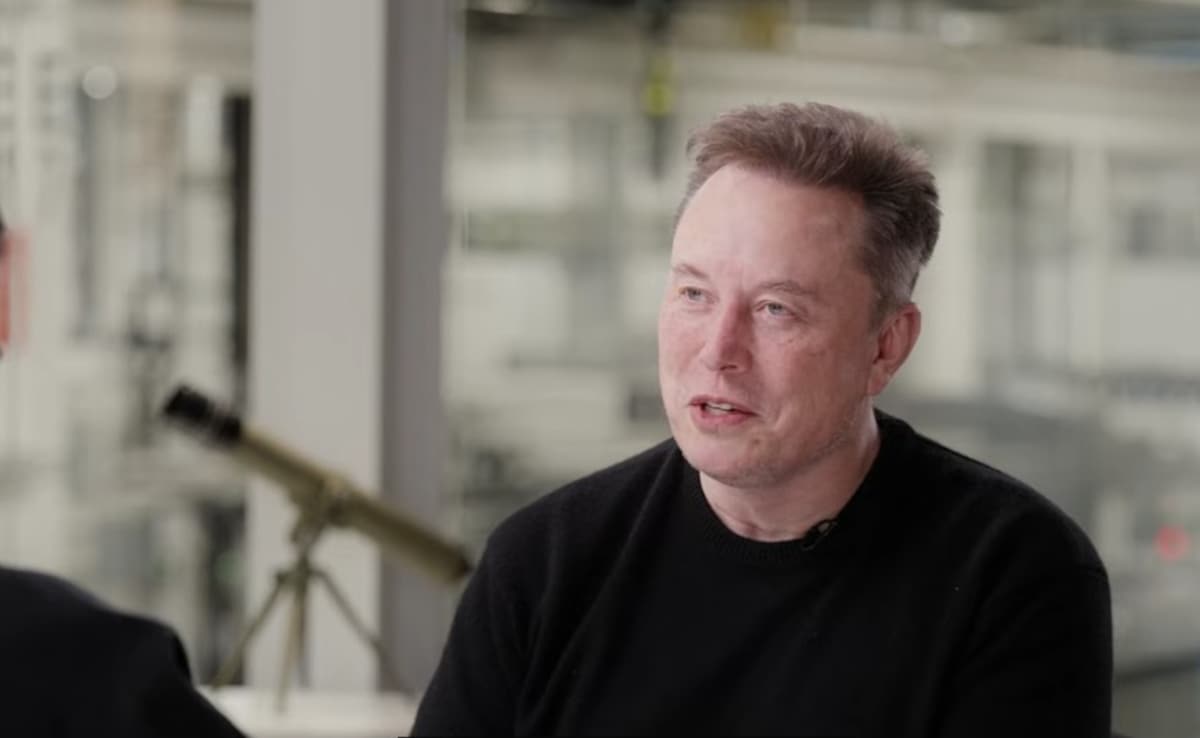
Elon Musk predicted on a podcast that advances in AI and robotics could make work optional within 10–20 years, arguing that ubiquitous automation would allow people to obtain any goods or services and could eventually render money irrelevant, with power generation becoming a de facto currency. He reiterated prior comments that AI and humanoid robots could eliminate poverty and cited his xAI chatbot Grok while noting a long-term saturation point for tasks that make humans happy; the remarks are speculative but highlight sectors to monitor (AI, robotics, energy, and consumer demand shifts) rather than an imminent market-moving event.
Market structure: The near-term winners are AI compute and industrial-automation capital owners — think NVDA, LRCX, KLAC and ASML — because productivity gains accrue to firms that own compute/robotics platforms; losers are labor-intensive SMEs, low-margin retail and staffing firms where wage-cost share compresses. Expect higher demand for semiconductors and precision equipment (capex up 10–30% over baseline in a multi-year AI buildout) and temporarily stronger commodity demand for copper, lithium and silicon; consumer demand patterns may shift but not collapse.
Risk assessment: Tail risks include fast regulatory clampdowns (EU/US AI safety rules, 20–40% fines or forced model restrictions), systemic chip-supply shocks (TSMC/ASML outages) and concentrated counterparty risk (NVDA/TSMC). Immediate (days) effect = sentiment swings; short-term (1–6 months) = earnings re-rating and capex guidance revisions; long-term (3–10 years) = structural income distribution, potential tax/UBI responses that could compress corporate free cash flow. Hidden dependencies: grid capacity, critical minerals, and software safety/regulation are gating factors.
Trade implications: Favor overweight in top-tier AI-capex beneficiaries (NVDA + LRCX/ASML) and renewable/battery stocks (ENPH) with 6–18 month horizons; hedge concentration with options or pair trades into legacy incumbents. Tactical options: buy 3–6 month NVDA call spreads to capture asymmetric upside; sell premium on richly priced TSLA short-dated vol if IV >60%.
Contrarian angles: The consensus underestimates deployment friction — energy/metal bottlenecks and political backlash can delay widespread automation by 5–10 years, making current multiples vulnerable. Valuation risk is real: if NVDA or LRCX report capex guidance misses of >15%, expect 25–40% drawdowns; use that to build long-term positions on weakness rather than chase froth now.
AI-powered research, real-time alerts, and portfolio analytics for institutional investors.
Request DemoOverall Sentiment
neutral
Sentiment Score
0.10
Ticker Sentiment
