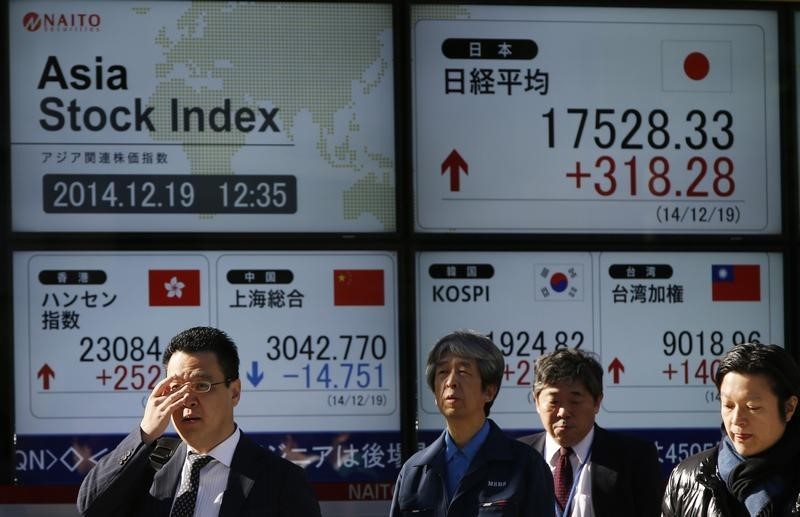
Asian stock markets were largely subdued on Friday, with Hong Kong and South Korea leading significant declines (Hang Seng -1.2%, KOSPI -1.6%) after U.S. President Trump announced new, unilateral export tariffs ranging from 20% to 30% would be imposed on trading partners as early as Friday. This signals a return to aggressive protectionism, sparking fears of disrupted supply chains and adverse impacts on export-driven economies, particularly in Asia. Reduced expectations for a Federal Reserve rate cut following strong U.S. jobs data also contributed to the broader market weakness.
A significant shift in U.S. trade policy is pressuring Asian equity markets, driven by President Trump's announcement to unilaterally impose flat tariff rates of 20-30% on trading partners. This move is perceived as a return to an aggressive protectionist stance that threatens to disrupt global supply chains and dampen corporate earnings for export-oriented economies. The market reaction has been most severe in regions with high trade exposure, evidenced by a 1.6% slump in South Korea’s KOSPI and a 1.2% drop in Hong Kong’s Hang Seng index, with chip and auto sectors leading the losses. Compounding this geopolitical pressure is a macroeconomic headwind from the U.S., where a stronger-than-expected jobs report has scaled back market expectations for a Federal Reserve rate cut, reinforcing a 'higher-for-longer' interest rate outlook that adds to the weakness in Asian markets. While some markets like China's Shanghai Composite showed minor gains of 0.2%, the overarching sentiment is one of caution ahead of the formal tariff letters.
AI-powered research, real-time alerts, and portfolio analytics for institutional investors.
Request DemoOverall Sentiment
strongly negative
Sentiment Score
-0.60
