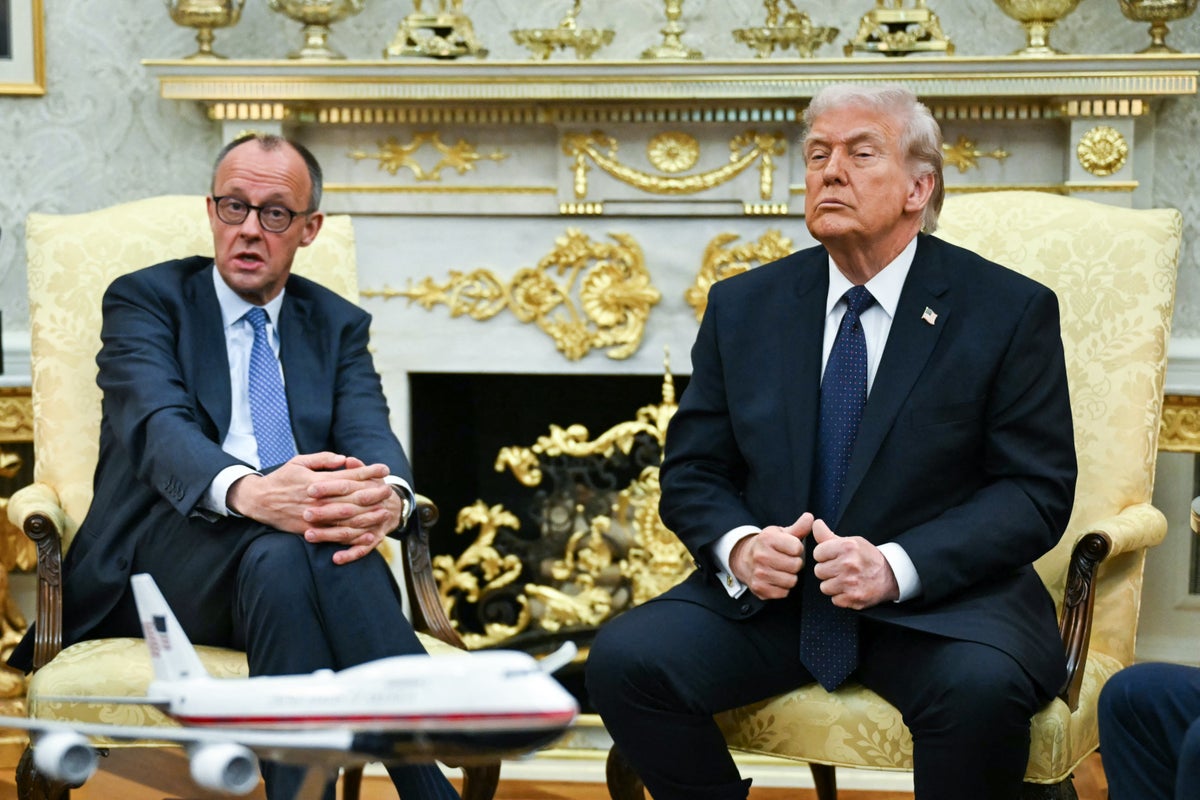
Trump said the U.S. is reviewing a possible reduction of troops in Germany, escalating tensions with Berlin over the Iran war and NATO burden-sharing. The article also highlights sharper U.S.-European friction over Iran, including criticism of the UK and France for not supporting efforts to secure the Strait of Hormuz. The tone is risk-off for European defense/security relations and could have broad geopolitical implications.
This is less about the headline troop count than about the premium markets should assign to European strategic autonomy risk. Even a modest U.S. drawdown in Germany would force faster capex and procurement decisions across NATO, benefiting European defense primes with the cleanest exposure to ground systems, air defense, and munitions replenishment; the first-order winners are the manufacturers with multi-year backlog visibility, but the second-order winners are the logistics, sensors, and secure communications suppliers that sit deeper in the chain. The loser is the notion that Europe can continue underinvesting while relying on U.S. basing as a low-cost deterrent substitute. The bigger tradeable effect is on energy-security assets rather than defense alone. Any sustained widening of U.S.-Europe political friction around Iran and shipping lanes raises the probability of a higher-for-longer European risk premium, which supports defense budgets but also keeps industrial power costs elevated if maritime insurance and transit risk rise. That is a subtle negative for European cyclicals, airlines, and chemical producers, while aiding names exposed to sovereign procurement and grid hardening. The time horizon matters: over days, this is mostly noise unless followed by formal basing reviews or NATO language changes; over months, it can reprice expectations for European fiscal allocation into defense from welfare and industrial subsidies. The contrarian view is that the U.S. may use troop rhetoric as leverage rather than execute a material reduction, meaning the move could fade if Germany and allies offer visible concessions on defense spending or Iran policy. If that happens, the best entries will be on pullbacks rather than chasing an initial gap move. The market is likely underestimating the signaling value to allied procurement cycles. Once politicians believe U.S. reassurance is less reliable, they tend to buy air defense, ammunition, and domestic production capacity faster than consensus models assume, creating a multi-quarter earnings tailwind for selected defense names even if the troop announcement never becomes operationally meaningful.
AI-powered research, real-time alerts, and portfolio analytics for institutional investors.
Request DemoOverall Sentiment
mildly negative
Sentiment Score
-0.20
