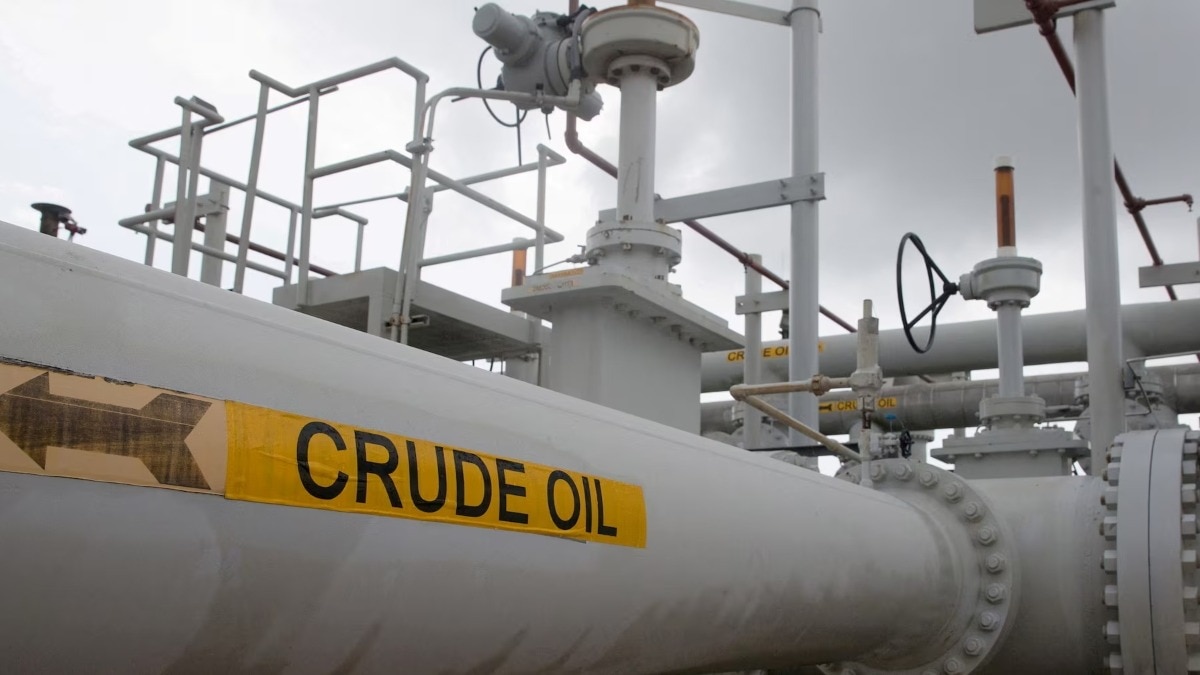
Brent crude has risen roughly 50–60% in weeks to near $110/bbl, with the IEA estimating 8–10 million barrels per day disrupted and ~20% of global crude trade transiting the Strait of Hormuz. Tanker rerouting, higher shipping and insurance costs, and IEA strategic releases are cushioning the shock short-term, but damage to Gulf facilities and constrained OPEC spare capacity mean full supply restoration could take months to years. Expect sustained upward pressure on transport, fertilizer and food costs, wider trade deficits and currency pressure for oil importers (e.g., India), and a prolonged period of higher oil-driven inflation and slower growth globally.
The market move is being sustained by a change in the plumbing of seaborne oil rather than a single short-lived supply shock: longer voyage legs, higher insurance and idle tanker days are functionally reducing available daily barrels well beyond production outages. Roughly speaking, rerouting that adds a week to voyages ties up 10-20% more tonnage for the same volume and transfers $1.5–4/bbl of cost onto delivered crude — a structural margin that favors owners of shipping and storage capacity for as long as route uncertainty persists.
Repairing downstream and midstream damage is a multi-year project with front-loaded capex demand for specialized services (pipeline welding, valve repair, platform integrity) and parts that have long lead times; expect tier-1 oilfield service firms to see an outsized 6–18 month revenue tail as operators prioritize restoration over brownfield expansions. Because spare export capacity is geographically concentrated, marginal barrels will flow from those hubs that can both produce and physically move crude, increasing regional price dispersion and making localized arbitrage strategies (storage-to-refinery, pipeline-connected refiners) profitable.
Macro second-order effects will amplify the price persistence: higher transport/energy input costs raise food and fertilizer bills, pressuring EM current accounts and forcing more aggressive FX and rate responses in 3–12 months. Corporate winners are those with pricing power or hedges on fuel consumption; losers are those with rolling exposure (airlines, container shipping operators with short-term charters) whose hedges expire into a higher cost base. Volatility will remain regime-elevated until either logistics normalise or demand visibly collapses; this favours convex exposures and carry trades in physical transport/storage rather than pure directional oil futures.
Key catalysts to watch that would reverse the trend are rapid reopening of secure chokepoints (material fall in route detours), a coordinated strategic reserve program materially larger than current releases, or a demand-shock recession; absent any of these, a multi-quarter elevated price path driven by logistics friction is the base case.
AI-powered research, real-time alerts, and portfolio analytics for institutional investors.
Request DemoOverall Sentiment
moderately negative
Sentiment Score
-0.45
