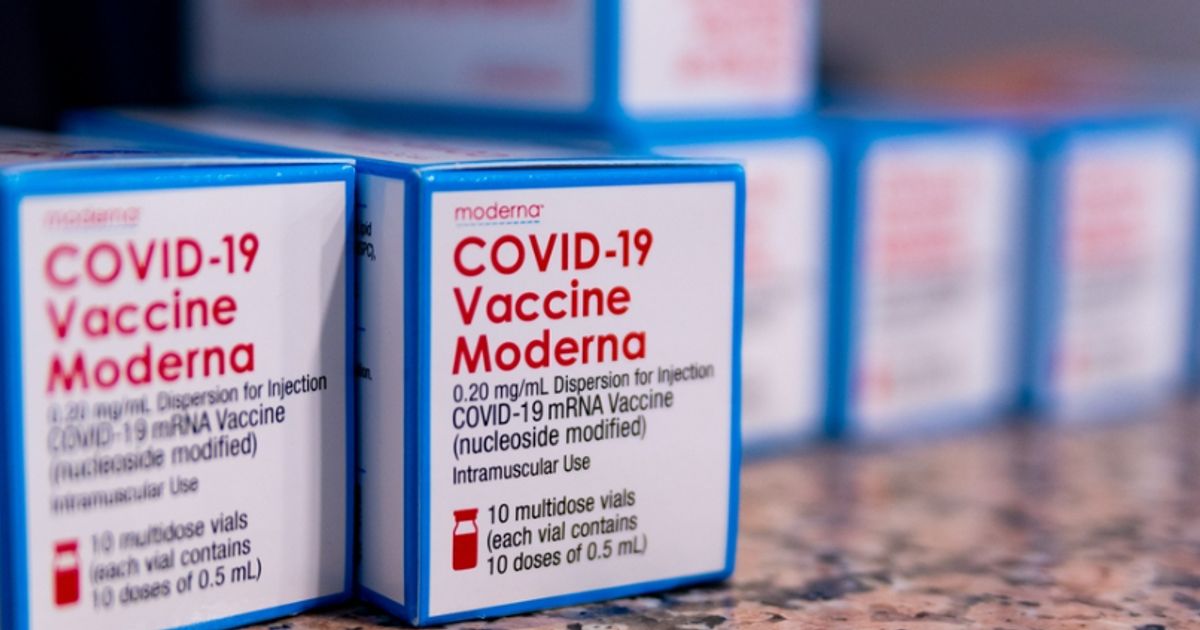
Moderna reported Q4 2025 revenue of $678 million and a GAAP net loss of $2.11 per share, beating consensus loss expectations of $2.60 and revenue near $660 million; shares rose roughly 11% on the print. Q4 sales were driven by COVID-19 vaccines ($264M US, $381M international), while full-year 2025 revenue totaled $1.9 billion with a GAAP net loss of $2.8 billion ($7.26/share). Management reiterated 2026 guidance targeting up to 10% revenue growth, outlined cost assumptions (cost of sales ~$0.9B, R&D ~$3B, SG&A ~$1B), capex of $0.2–0.3B and year-end cash/investments of $5.5–6.0B, and highlighted $2.2B of annual operating expense reductions in 2025.
Market structure: Moderna (MRNA) gains near-term pricing power on improved guidance and an 11% pop, while contract manufacturers (e.g., CTLT, Lonza/LZAGY) and raw‑material suppliers stand to benefit from three new international sites coming online. Competitors with large COVID franchises (PFE, BNTX) face renewed share pressure in certain markets; Moderna’s guidance for up to +10% revenue growth and an even US/international split implies demand stabilization, not expansion, and incremental supply capacity suggests supply-side constraints will ease. Cross-asset: reduced equity tail risk should tighten MRNA credit spreads (positive for IG/hybrid paper) and compress equity implied volatility; FX exposure matters as ~50% revenue international could move EPS by several percent per 5% USD move.
Risk assessment: Tail risks include regulatory safety actions or a government demand drawdown (low probability, high impact) and manufacturing stoppages at new sites. Time horizons differ: immediate (days) momentum and IV compression; short-term (weeks–months) dependent on procurement announcements and seasonal booster cycles; long-term (quarters–years) driven by pipeline readouts and R&D execution vs. the planned ~$3B R&D spend. Hidden dependencies include government procurement cadence, inventory buildups, and potential equity funding needs if new products underperform. Key catalysts: public procurement decisions and any Phase II/III readouts in next 6–12 months.
Trade implications: Direct: consider a 2–3% long position in MRNA (dollar-weighted) targeting +30–50% upside in 6–12 months, stop-loss -25% from entry; augment with Dec 2026 LEAP calls 30–40% OTM sized 0.5–1% of portfolio for asymmetric upside. Pair trade: long MRNA vs short BNTX (equal notional 1:1) to express firm-specific share gains while hedging broad vaccine-cycle risk. Options/hedge: sell 4–8 week covered calls if initiating stock long to harvest premium; buy a 3‑month 15–25% OTM put spread (cost-limited) sized 0.5% as tail protection. Rotate +1–2% allocation into mid-cap biotech at expense of large-cap defensive pharma over the next 1–3 months.
Contrarian angles: The market may be underpricing pipeline execution risk — guidance masks continued GAAP losses ($2.8B 2025) and heavy R&D ($~3B planned) that can force dilution if new product revenue lags. The 11% rally could be overdone given a 30% YoY revenue decline; historical post‑pandemic vaccine rebounds show rallies that faded when procurement slowed. Unintended consequences: cost reductions may have trimmed optionality in early research, raising binary risk on late‑stage programs. Tactical approach: scale into exposure over 4–8 weeks and trim by half if no new government purchase agreements or favorable readouts within 60 days.
AI-powered research, real-time alerts, and portfolio analytics for institutional investors.
Request DemoOverall Sentiment
moderately positive
Sentiment Score
0.45
Ticker Sentiment
