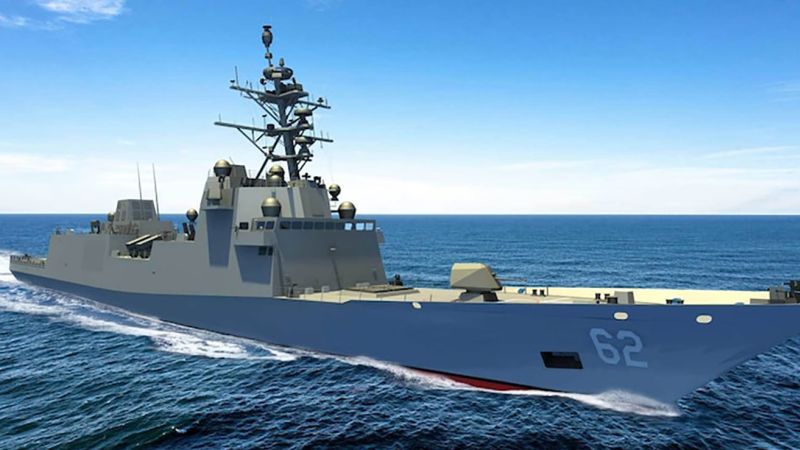
Navy Secretary John Phelan announced the cancellation of plans to continue buying Constellation-class frigates, a multibillion-dollar program for which Fincantieri Marine Group already holds contracts for six ships and that had been planned for ~20 ships at about $1.1 billion each. The program suffered extensive modification-driven cost growth and schedule slips (USS Constellation pushed from 2026 to 2029), and the Navy is shifting strategy to accelerate other ship construction while keeping the two ships already under construction under review; Fincantieri said it will transition its workforce to other programs. The move underscores broader US shipbuilding challenges, concerns about the defense industrial base, and strategic pressure from China’s larger fleet (~400 hulls vs. ~240 US ships).
Market structure: Cancellation directly benefits large integrated defense primes and established US destroyer yards (GD, HII, LMT, NOC) that can absorb re-competes and scale Arleigh Burke production; it hurts Fincantieri (FCT.MI) and niche suppliers tied to Constellation modules and small US yards dependent on that schedule. Pricing power shifts toward firms with existing production slots and qualified workforce; expect 6–24 month revenue reallocation rather than immediate fleet-size change. Commodities: modest negative demand shock for specialty naval steel (think X, NUE, -3–7% demand), positive optionality for Korean yards if US law shifts (KRW appreciation risk vs USD). Bonds/FX: diplomatic/political risk could raise term premium on Treasuries if Congress responds with surge funding; expect muted near-term macro impact.
Risk assessment: Tail risks include Congressional pushback or emergency re-funding (high-impact, low-probability) that would spike suppliers’ shares +30–50% in weeks, or legal/Buy-American constraints preventing foreign substitution leading to capacity crunch and cost inflation. Time horizons: immediate (days) — equity repricing and headlines; short (1–6 months) — contract re-awards and backlog reshuffles; long (1–4 years) — fleet composition and industrial-base investment. Hidden dependencies: workforce retention clauses, supplier long-lead items, and FEMA-style surge funding that could abruptly reverse market moves. Catalysts: Pentagon budget hearings (next 60–120 days), Congressional amendments, GAO/Congressional reports.
Trade implications: Establish 2–3% long positions in GD and HII (each) via 12–18 month ATM LEAP calls (target +20–30% in 6–12 months; stop-loss 15%). Open a 1–2% short or buy 3–6 month put spread on FCT.MI (or Fincantieri-equivalent) targeting 25–40% downside if order book falls; pair trade: long GD, short FCT.MI sized 2:1 to capture re-compete. Reduce cyclical small-ship suppliers and specialty steel exposure by 50% vs benchmark; rotate 1–3% into defense primes (LMT/NOC) as ballast. Enter within 2–6 weeks; re-evaluate after DoD budget hearings and any Congressional amendments (thresholds: reinstatement language or >$2bn rescission triggers reassessment).
Contrarian angles: The market underestimates that cancellation of Constellation can accelerate simpler, modular hull programs — an upside for mid-tier yards and electronics/weapon integrators (L3H, RTX components) not on Constellation supply chain lists. Reaction may be overdone on Fincantieri given only two hulls are in US build pipeline; a negotiated settlement or subcontract wins could limit downside. Historical parallels (Zumwalt/LCS) show procurement resets often reallocate work to incumbents, benefiting GD/HII over 12–36 months; the key risk is political reinstatement which would produce sharp mean reversion in affected names.
AI-powered research, real-time alerts, and portfolio analytics for institutional investors.
Request DemoOverall Sentiment
moderately negative
Sentiment Score
-0.50
