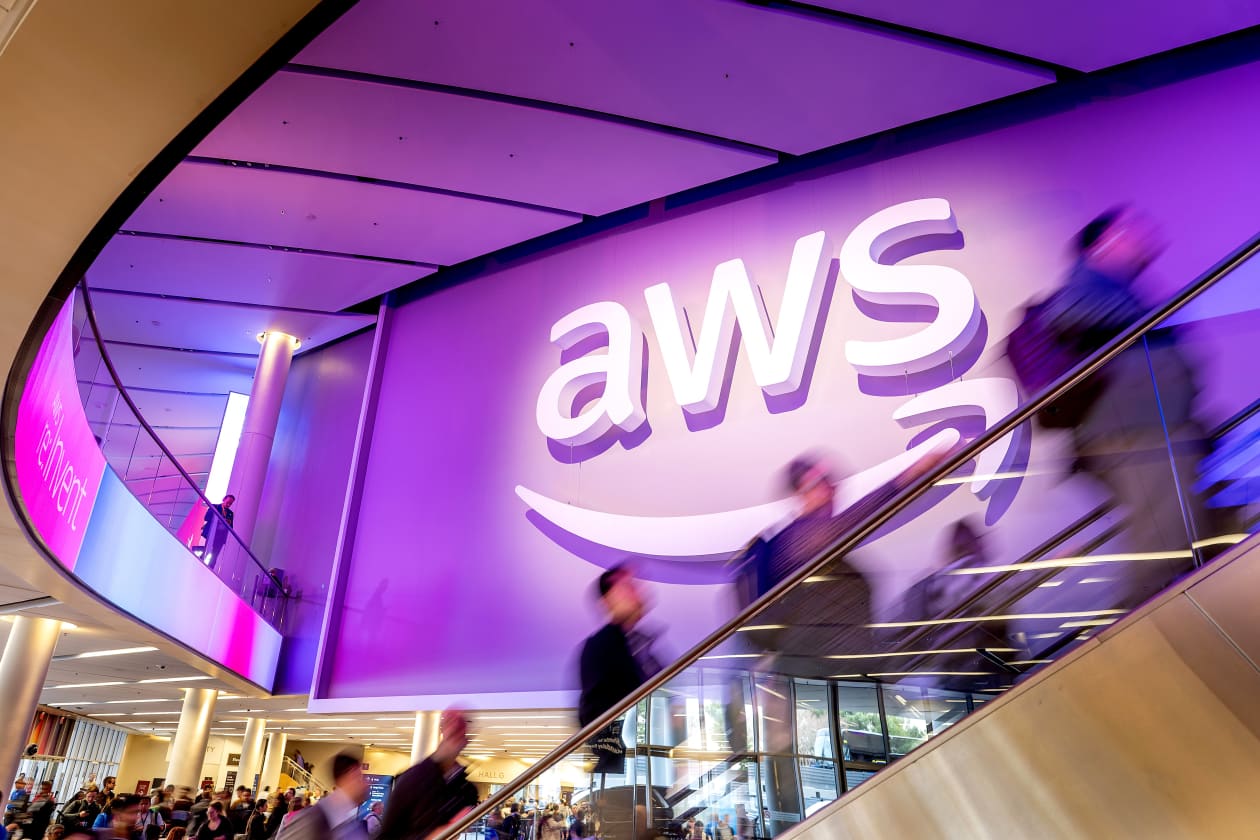
Jefferies argues Amazon could rally ~46% from current levels despite $200B in planned AI spending that has weighed on the stock. Shares are down 11% in 2026 and are at valuation levels not seen since 2008, but the analyst cites rising data-center capacity and strong retail performance as evidence fundamentals remain intact. Brent Thill calls the market negativity "extreme" and describes the shares as "mispriced, not broken."
Think of the current weakness as a timing mismatch between near-term margin optics and multi-year infrastructure lead-taking. Heavy investment in specialized AI infra will create a stepped-up replacement cycle for GPUs/CPUs, storage and networking over 12–36 months, boosting revenue for equipment suppliers and colo landlords while compressing the buyer’s free cash flow in the interim. That dynamic also raises variable opex (power, cooling, fiber) and lifts adjacent capex in logistics and fulfillment as compute-enabled commerce features (real-time personalization, visual search) increase throughput and returns per customer over the medium term.
Leading indicators to watch are order pacing and vendor backlog for datacenter components (quarterly spending at LRCX/AMAT, server ODM bookings), colo utilization rates, and AWS product telemetry (new AI-managed services monetization, inference v. training mix). Near-term catalysts that would re-rate the stock are visible margin improvement or accelerating ARR from AI services within 2–4 quarters; conversely, missed efficiency targets or sustained unit-cost increases for inference would force multiple compression over 6–12 months. Regulatory or partner friction (enterprise reluctance to port models, antitrust interventions) represent multi-year tail risks that would materially slow payback on this investment.
Consensus underestimates the optionality: front-loaded capex can erect durable moat advantages if Amazon converts that infrastructure into differentiated, high-margin managed AI services and sticky enterprise contracts. That path is binary — if monetization works, upside is large; if it doesn’t, the market is already pricing some of that downside. Trade books should express asymmetric exposure: capture upside from mean-reversion in sentiment and structural cloud dominance while limiting blunt exposure to execution or macro shocks.
AI-powered research, real-time alerts, and portfolio analytics for institutional investors.
Request DemoOverall Sentiment
mildly positive
Sentiment Score
0.25
Ticker Sentiment
