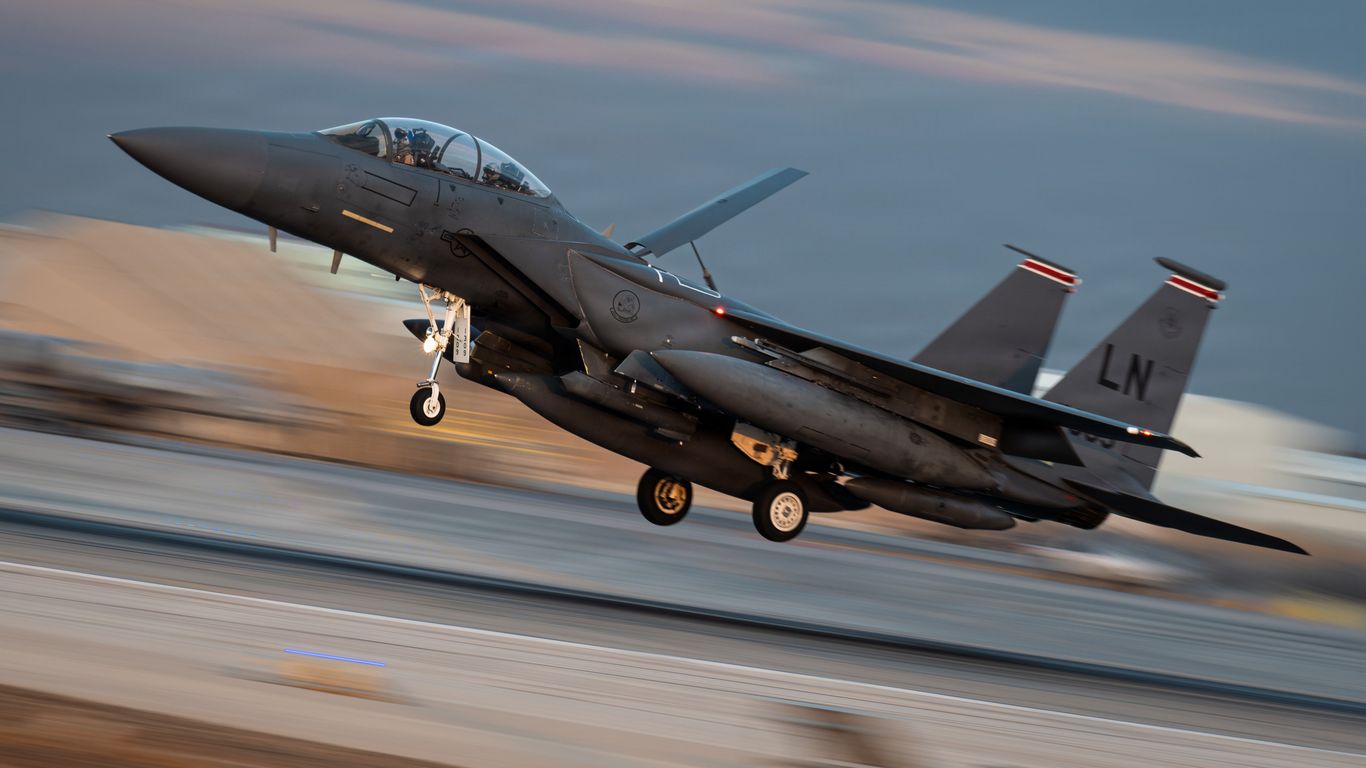
176 aircraft and hundreds of personnel were deployed to rescue the crew of a downed Air Force F-15E deep inside Iran; President Trump said 155 aircraft specifically aided recovery of the weapon-system officer. The two crew (callsigns Dude 44A and Dude 44B) were extracted and threats eliminated, and the F-15E was described as the first manned U.S. aircraft downed during Operation Epic Fury. Implication for portfolios: the successful but escalatory operation raises short-term geopolitical risk—likely supportive for defense contractors while increasing downside risk for risk assets and tightening energy/EM risk premia; monitor defense names and oil/FX volatility.
The operation’s scale and reliance on heterogeneous air assets (manned, unmanned, tankers, helicopters, EW platforms) accelerates demand for layered survivability upgrades, stand-off ISR and aerial refueling capacity over a 12–36 month procurement cycle. That favors companies that provide electronic warfare, C2/ISR integration and tanker sustainment more than pure airframe manufacturers — the near-term revenue cadence will come from retrofit kits, avionics and spares rather than new fighters.
Second-order supply effects: sustained attrition or perceived vulnerability of high-value manned platforms will push procurement toward attritable unmanned systems and modular weapon pods, creating a wave of orders for sensors, datalinks and smaller propulsion systems; expect lead times and pricing power for specialized semiconductors and RF components to widen over 9–18 months. Escalation risk creates correlated macro exposure—an oil-price shock or wider regional disruption would compress airline earnings and lift defense contractor equities and commodity suppliers unevenly.
Key catalysts to monitor are (1) US budget amendments or supplemental requests in the next 3–6 months, (2) congressional hearings that prioritize survivability retrofits, and (3) export license approvals for drones and EW gear which can materially re-rate small/mid-cap suppliers. The main reversal paths are rapid de‑escalation via diplomacy or evidence that losses are idiosyncratic to tactics rather than platform vulnerability; either would compress upside for defense-equity theta over 1–3 quarters.
AI-powered research, real-time alerts, and portfolio analytics for institutional investors.
Request DemoOverall Sentiment
neutral
Sentiment Score
0.00
