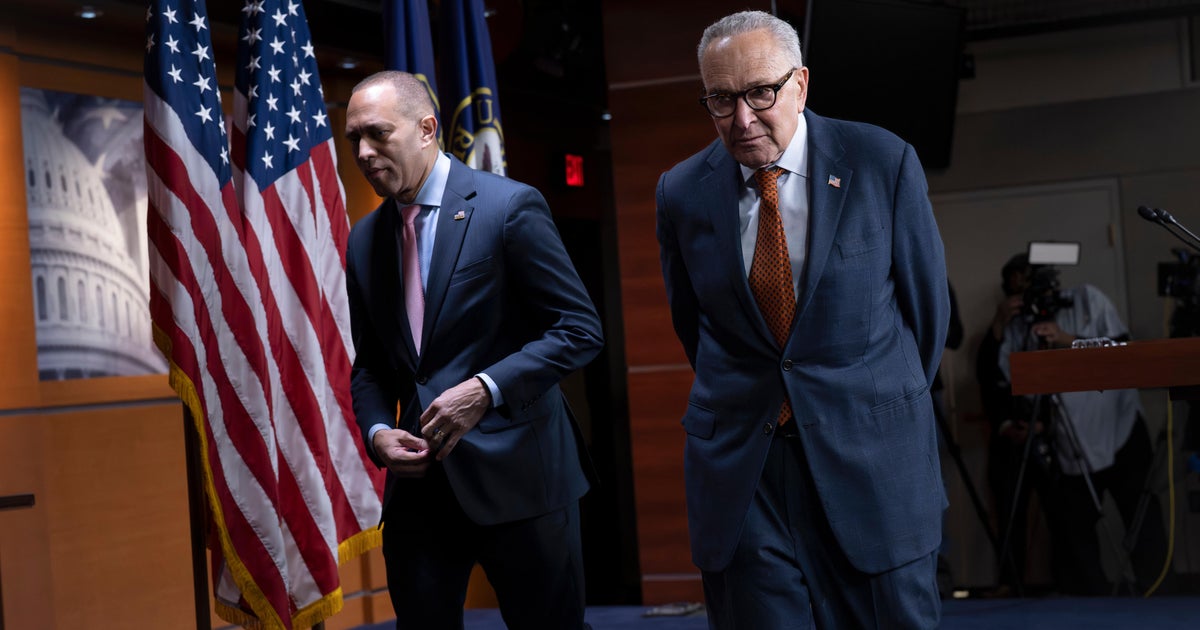
Senate Democratic leader Chuck Schumer and House Democratic leader Hakeem Jeffries rejected a White House counterproposal on ICE and federal law-enforcement reforms as "incomplete and insufficient," pressing for judicial-warrant requirements, officer identification, stricter use-of-force standards and bans on racial profiling. Congress separated Homeland Security funding with a short extension through Feb. 13, and failure to reach agreement could shutter DHS components including TSA, FEMA and the Coast Guard as early as Saturday, creating near-term operational risk for travel and emergency response and adding political uncertainty that could influence market sentiment.
Market structure: A near-term DHS funding standoff (deadline Feb 13) creates concentrated downside for travel and airport-exposed equities (airlines AAL/DAL/UAL, airport REITs XRS/PK) from TSA staffing disruptions and travel-schedule chaos; a multi-day shutdown could remove 3-7% of seat capacity in peak hubs temporarily, pressuring revenues. Conversely, defense/security contractors (LHX, NOC) and cybersecurity vendors could see defensive bid if political risk re‑prices ‘security spend’ as higher priority; procurement timing volatility will create idiosyncratic wins/losses across suppliers.
Risk assessment: Tail scenarios include (A) prolonged DHS shutdown >2 weeks causing material travel disruptions and a 1-3% US GDP monthly drag in affected metro areas, (B) legislative curbs on ICE contracting reducing certain contractor revenues by 5-10% over 12–24 months. Immediate risk window is days (Feb 10–13); short-term volatility concentrated in weeks (Feb–Mar); long-term policy changes play out over quarters. Hidden dependency: FEMA/Coast Guard funding gaps amplify regional disaster risk and insurance losses if storms occur while funding is frozen.
Trade implications: Tactical hedges: buy short-dated downside protection on airlines and travel names now (1–2 week expiries around Feb 21) and size to 1–2% portfolio downside risk; buy VIX 2-week call-spreads if shutdown probability >30%. Rotate 1–2% into defense contractors (LHX/NOC) on >3% pullbacks with 3–6 month horizon and add Treasuries (IEF) as a 1–2% safe-haven if equities fall >1.5%.
Contrarian angles: Markets likely overprice systemic damage — Congress historically punts with short extensions; a brief spike in travel volatility should mean fast mean reversion. If reforms pass, they may shift spend from enforcement to tech/oversight — look for winners in electronic monitoring, identity and compliance vendors (small-cap surveillance/cyber names) that could re‑rate under a 6–12 month procurement pivot.
AI-powered research, real-time alerts, and portfolio analytics for institutional investors.
Request DemoOverall Sentiment
moderately negative
Sentiment Score
-0.40
