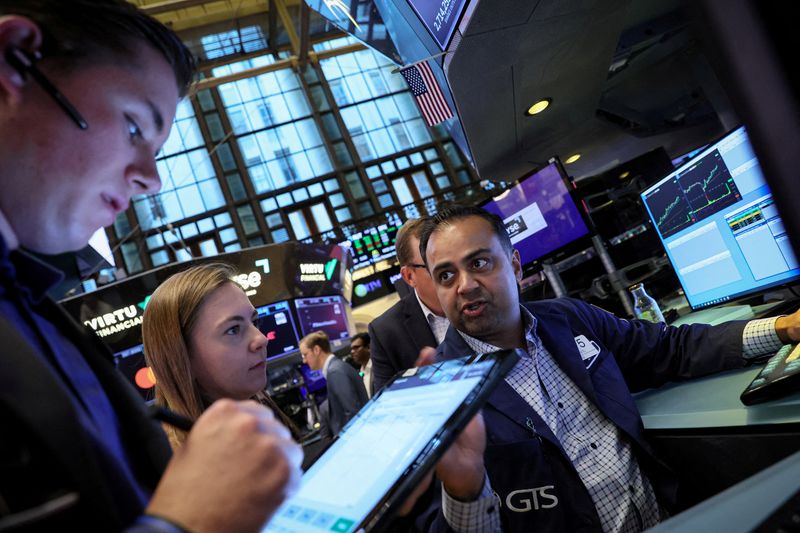
U.S. futures were slightly lower, with S&P 500 Futures down 0.1%, Nasdaq 100 Futures down 0.15%, and Dow Futures down 0.1% as markets weighed Iran peace-deal hopes against record highs in equities. The article highlights a 19% jump in AMD and a 4.5% surge in the Philadelphia Semiconductor Index after strong earnings and upbeat AI-driven demand commentary. A pause in the Strait of Hormuz reopening operation helped pressure oil prices, while nonfarm payrolls on Friday could influence interest-rate expectations.
The immediate market read is that geopolitical risk premium is being unwound faster than the underlying situation can actually be resolved. That matters because the first-order beneficiary is risk assets broadly, but the second-order winners are the parts of the market most levered to lower input costs and easier financial conditions: semis, transport, cyclicals, and rate-sensitive growth. If the Strait of Hormuz stays effectively de-risked for even a few weeks, crude weakness can bleed into inflation expectations, giving the Fed more flexibility and extending the rally in long-duration equities.
The chip complex looks strong, but the market is likely underestimating how much of the move is a multiple expansion trade rather than a pure earnings revision trade. AMD’s print validates AI capex, yet it also raises the bar for adjacent names: suppliers with exposure to data-center buildouts should outperform, while names whose AI story is still mostly optionality may lag as investors rotate toward proven beneficiaries. SMCI and APP should see sympathy bids, but both remain vulnerable to mean reversion if the market starts demanding cleaner execution and less narrative premium.
The contrarian risk is that the current setup is a classic “good news too fast” regime. A détente headline, or even just no escalation, can keep pulling forward returns in energy-sensitive assets, but any relapse in Hormuz rhetoric would hit the market through oil, inflation breakevens, and downside in high-beta growth in one tape. On the macro side, the payrolls release is the near-term circuit breaker: a strong labor print could reprice rate cuts and cap the broad index melt-up even if geopolitics stay benign.
Net: this is less a clean bullish event than a cross-asset rotation opportunity. The best trade is to own the beneficiaries of lower oil and lower volatility while fading the most extended “peace + AI” expressions where sentiment is now ahead of fundamentals.
AI-powered research, real-time alerts, and portfolio analytics for institutional investors.
Request DemoOverall Sentiment
mildly positive
Sentiment Score
0.20
Ticker Sentiment
