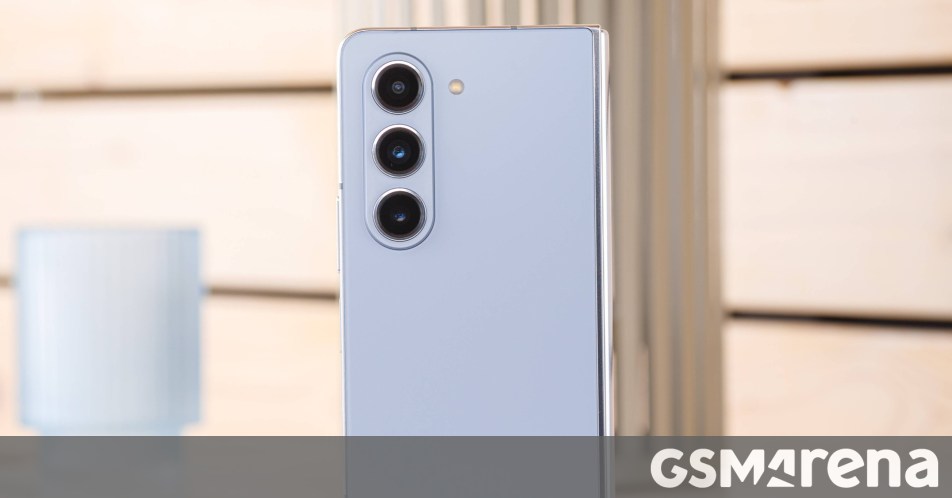
Samsung has started rolling out the stable One UI 8.5 update to four additional devices: Galaxy A36, Galaxy A56, Galaxy Z Fold5, and Galaxy Z Flip5. The update is currently available in South Korea, with the A36 firmware identified as A366NKSU6CZDA while the others have undisclosed firmware versions. The news is routine product/software update coverage and is unlikely to have a material market impact.
This is a classic “distribution completion” event rather than a feature surprise: once a stable OS version propagates from flagships into mid-tier and older foldables, the monetization upside shifts from headline-driven hardware demand to retention, accessory attach, and ecosystem stickiness. The second-order effect is that Samsung reduces the risk of install-base fragmentation, which matters for developer support and enterprise fleet adoption; that tends to support higher replacement propensity over the next 2-4 quarters even if it does little for immediate unit sales. The beneficiaries are less the phones themselves and more the broader Android premium stack. A smoother, more consistent update cadence weakens Apple’s relative advantage in long-tail software support, especially in markets where Samsung already has brand leverage; it also improves the odds that users defer upgrades, which can actually be positive for Samsung’s service and wearables attach, but a modest headwind for near-term handset ASPs if replacement cycles elongate. Contrarian read: the market often overestimates the revenue impact of OS rollouts and underestimates the ops signal. A stable rollout across multiple SKUs implies Samsung’s software pipeline and QA are functioning better than the street may assume, which lowers execution risk around future AI/UX releases. The key risk is that a broader rollout exposes bugs at scale; if that happens, sentiment can reverse quickly within days, but the fundamental impact would likely be measured in brand damage and return costs rather than large P&L hits. From a positioning standpoint, this is more relevant as a relative-quality signal than a direct earnings catalyst. If Samsung can keep update velocity high without support issues, it modestly improves the case for premium Android share gains over a 6-12 month horizon, while keeping the downside limited unless there is a public failure in the next rollout wave.
AI-powered research, real-time alerts, and portfolio analytics for institutional investors.
Request DemoOverall Sentiment
neutral
Sentiment Score
0.10
