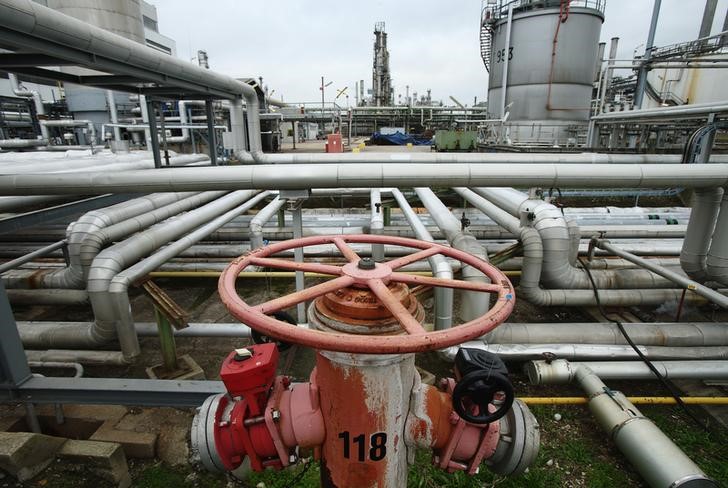
Eni restarted lifting Venezuelan crude in April under a payment-in-kind deal tied to gas sales, allowing it to recover part of its long-standing receivables from PDVSA. The company said easing U.S. sanctions since January has enabled continued operations in Venezuela and could support a medium-term expansion of activities there. Eni was owed about $3.3 billion by PDVSA at year-end, including roughly $1 billion in accrued interest.
This is less a Venezuela credit story than a sanctions-proxy on European upstream optionality. If payment-in-kind becomes a repeatable settlement rail, it reduces hard-cash leakage and effectively turns trapped receivables into barrel-linked recovery, which improves near-term liquidity without requiring a full political normalization. The second-order winner is not just the operator but any European company with legacy Latin American exposure and a willingness to accept commodity settlement over fiat; that lowers working-capital drag and can quietly re-rate otherwise stranded assets. The more important market implication is that Washington is signaling selective flexibility when energy balance and corporate recoveries align. That creates a template for incremental license-based relief, which can tighten spreads in sanctioned crude grades and support arbitrage flows into non-sanctioned refiners willing to process blendstock. Competitively, refiners with access to discounted heavy sour barrels gain margin tailwinds, while Atlantic Basin light-sweet benchmarks may see less direct benefit unless the easing broadens materially. Consensus is likely underestimating how asymmetric this is for balance-sheet repair versus production growth. The cash recovery can matter more than incremental volumes in the next 2-4 quarters because it reduces impairment risk and improves capital allocation flexibility; however, the upside is capped if Treasury policy reverses or if Caracas uses shipments as leverage to delay repayments. The real risk is not operational failure but regulatory whiplash: a single enforcement action could freeze the mechanism and send the market back to pricing in stranded-receivable discounts.
AI-powered research, real-time alerts, and portfolio analytics for institutional investors.
Overall Sentiment
mildly positive
Sentiment Score
0.25
