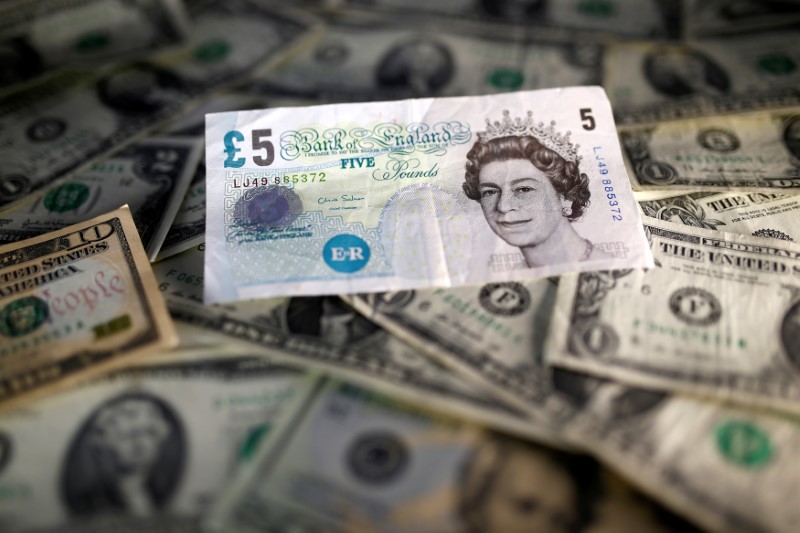
Sterling remains under pressure, with GBP/USD up just 0.52% to 1.3394 after a bruising selloff, as UK political uncertainty and the US-Iran conflict keep sentiment fragile. US Treasury yields rose to 4.6310% on the 10-year and 4.1020% on the 2-year, while markets now price in nearly three Bank of England hikes this year and more than a 50% chance of a Fed hike by December. Rising energy prices and stalled Strait of Hormuz negotiations are intensifying inflation fears and driving a global bond selloff.
The market is repricing a classic stagflation impulse: higher energy feeds both inflation and growth scares, which is why the broader signal is more bearish for cyclicals and duration-sensitive equities than for plain-vanilla inflation beneficiaries. The most interesting second-order effect is that the shock is not just raising rates; it is also compressing policy flexibility, so central banks become hawkish even as real activity weakens. That combination typically hurts domestic levered balance sheets, UK retailers, homebuilders, airlines, and any business with short pricing lag and imported input exposure.
Sterling is being hit less by the political headline itself than by the timing compression it creates into an already fragile macro setup. Once a leadership transition is pulled forward, FX markets start discounting not just fiscal slippage but also a wider UK risk premium across gilt curves and bank funding costs. That argues the cleaner expression is not a naked GBP short alone, but a relative short versus economies with less imported-energy sensitivity and better policy credibility.
For the U.S., the key risk is that higher Treasury yields are now feeding the equity multiple correction channel at the same time as oil inflation boosts consumer-input costs. If the conflict around the Strait of Hormuz lingers into the next few weeks, the probability of a broader risk-off tape rises materially; if it resolves quickly, the move likely retraces in FX faster than in rates, because the market has already built in a meaningful probability of persistent policy tightening. The contrarian angle is that the sterling selloff may be close to the first-order panic phase, while the real medium-term damage may show up in UK credit spreads and domestic equities after FX volatility cools.
AI-powered research, real-time alerts, and portfolio analytics for institutional investors.
Request DemoOverall Sentiment
strongly negative
Sentiment Score
-0.55
Ticker Sentiment
