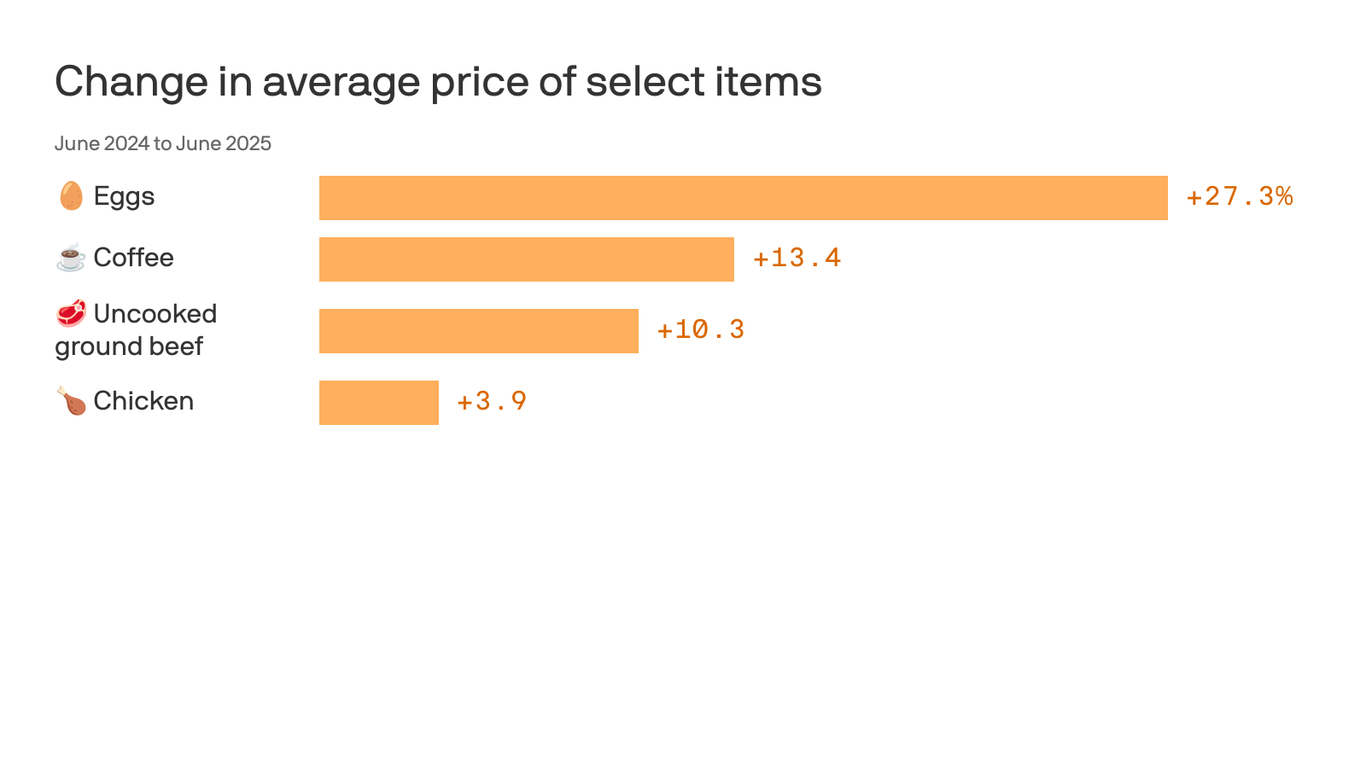
U.S. grocery prices have climbed 3% over the last year, with specific staples like coffee up 13.4% and ground beef up 10.3%, primarily driven by climate change-induced extreme weather impacting global agricultural supply chains. This trend is evident in significant international price shocks, such as a 50% rise in EU olive oil prices due to drought and a nearly 300% surge in global cocoa prices following West African heatwaves. While bird flu also contributed to a 27.3% increase in egg prices, the broader implication is that extreme weather will continue to drive food price volatility and higher costs worldwide.
The latest Consumer Price Index data reveals a 3% year-over-year increase in overall grocery prices, a headline figure that conceals significant underlying volatility and structural cost pressures within the food supply chain. Specific staple goods have seen much larger price hikes, with coffee rising 13.4%, uncooked ground beef up 10.3%, and eggs surging 27.3%. The primary driver identified is climate change-induced extreme weather, which is creating global supply shocks and increasing price unpredictability. This is exemplified by international events, such as a 50% increase in EU olive oil prices following droughts in Spain and a nearly 300% spike in global cocoa prices due to heatwaves in West Africa. While idiosyncratic events like the avian flu contributed to the sharp rise in egg prices, the broader and more persistent threat stems from systemic climate risk, a factor that is expected to continue fueling food inflation and disrupting crop and livestock productivity worldwide. Potential U.S. tariff policies are also noted as a latent risk that could exacerbate future price increases.
AI-powered research, real-time alerts, and portfolio analytics for institutional investors.
Overall Sentiment
strongly negative
Sentiment Score
-0.75
