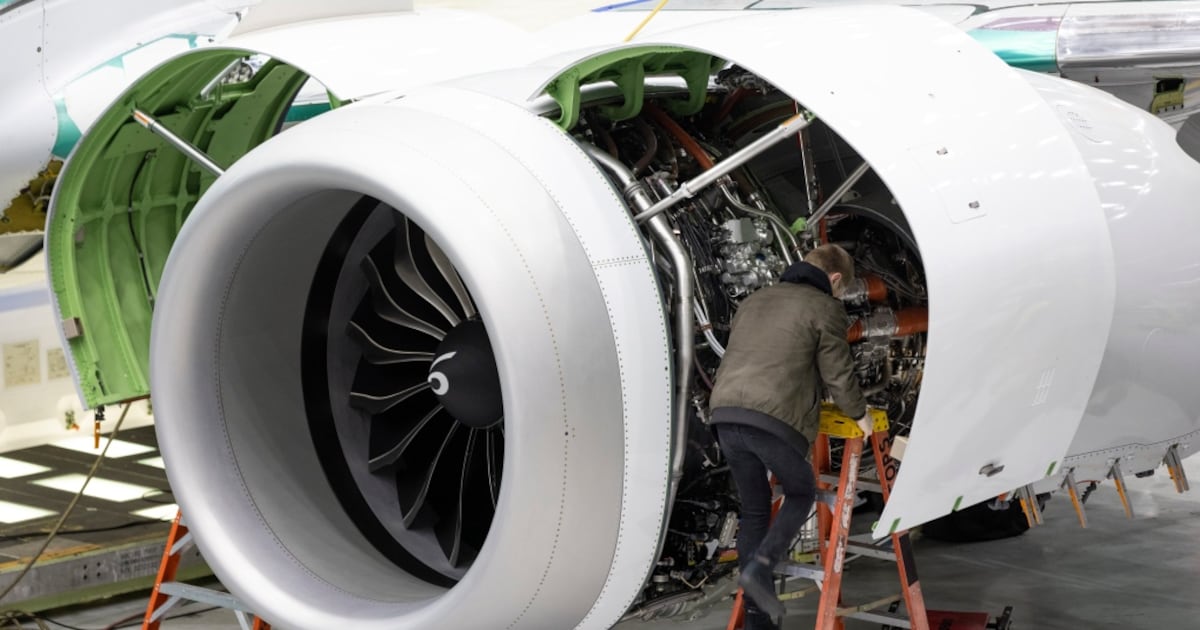
RBC Capital Markets analyst Ken Herbert highlights aerospace and defence upside driven by commercial aviation recovery and elevated defence restocking, naming Safran, RTX and small supplier Loar as top picks. Key facts: Safran derives ~80% of sales from commercial aerospace and expects a doubling of equipment defence sales in Europe; Safran is a 50/50 partner in CFM International (narrowbody engines powering ~60% of A320neo and ~100% of 737 Max). RTX is roughly 50/50 commercial/defence, owns Pratt & Whitney and Collins, and reported a defence book-to-bill above 2x as the largest US missile supplier; Loar is ~70% commercial with ~25% business-jet revenue and a near-term acquisition intended to accelerate consolidation-led growth.
Market structure: Winners are prime engine and missile suppliers (RTX, CFM partners/Safran exposure, aftermarket-focused suppliers like LOAR) because durable backlogs (RTX book-to-bill >2x) and aftermarket revenue (high-margin, recurring) expand pricing power over the next 2–4 years. Losers are small, single-program OEM suppliers and airlines if narrowbody OEM production slows; smaller suppliers face margin pressure absent scale, accelerating M&A. Cross-asset: persistent defence spending is likely to raise fiscal deficits and upward pressure on real yields over 12–36 months, strengthen USD on safe‑haven flows during crises, and push up selected industrial metals used in engines (titanium, nickel) by a low double-digit percentage if production ramps sharply.
Risk assessment: Tail risks include sudden program cancellations or export-control sanctions (probability low but P&L‑critical), major engine technical groundings, or an election-driven U.S. budget rollback that trims defence capex >10% year-over-year. Timeframes: expect knee-jerk volatility in days around budget votes/contract awards, meaningful revenue recognition shifts in quarters, and structural aftermarket growth over 2–5 years. Hidden dependencies: single-source suppliers, FX exposure (EUR/USD), and OEM production cadence conversion rates; catalysts to watch are FY2026 OEM guidance, U.S. defence appropriations timing, and announced M&A closings.
Trade implications: Direct plays — establish a tactical 2–3% long in RTX (fundamentals + backlog) and 1–2% long in LOAR for M&A/upside; avoid or underweight GD relative to RTX (pair trade below). Options — buy 12–18 month LEAP calls on RTX 10–15% OTM sized to 1–2% portfolio risk, or buy LOAR stock with 3‑6 month 15% OTM protective puts to cap downside if acquisition falters. Entry/exit — initiate within 2–6 weeks ahead of budget votes and Q4/FY2025 guidance; take profits on +20% appreciations or if RTX book-to-bill falls below 1.2.
Contrarian angles: Consensus underestimates conversion risk from orders to aftermarket revenue — if narrowbody OEM cadence is cut by >5% YoY, aftermarket growth could slow materially and compress multiples. LOAR’s upside is binary — priced for multiple bolt‑on deals; failure to close the announced acquisition within 60–90 days is a trigger to exit. Historical parallel: 2015–2018 defence lifts faded when political focus shifted; don’t assume permanent multiple expansion without multi-year order visibility. Unintended consequences: rapid consolidation raises antitrust and supplier concentration risk that can reverse expected margin gains.
AI-powered research, real-time alerts, and portfolio analytics for institutional investors.
Request DemoOverall Sentiment
moderately positive
Sentiment Score
0.45
Ticker Sentiment
