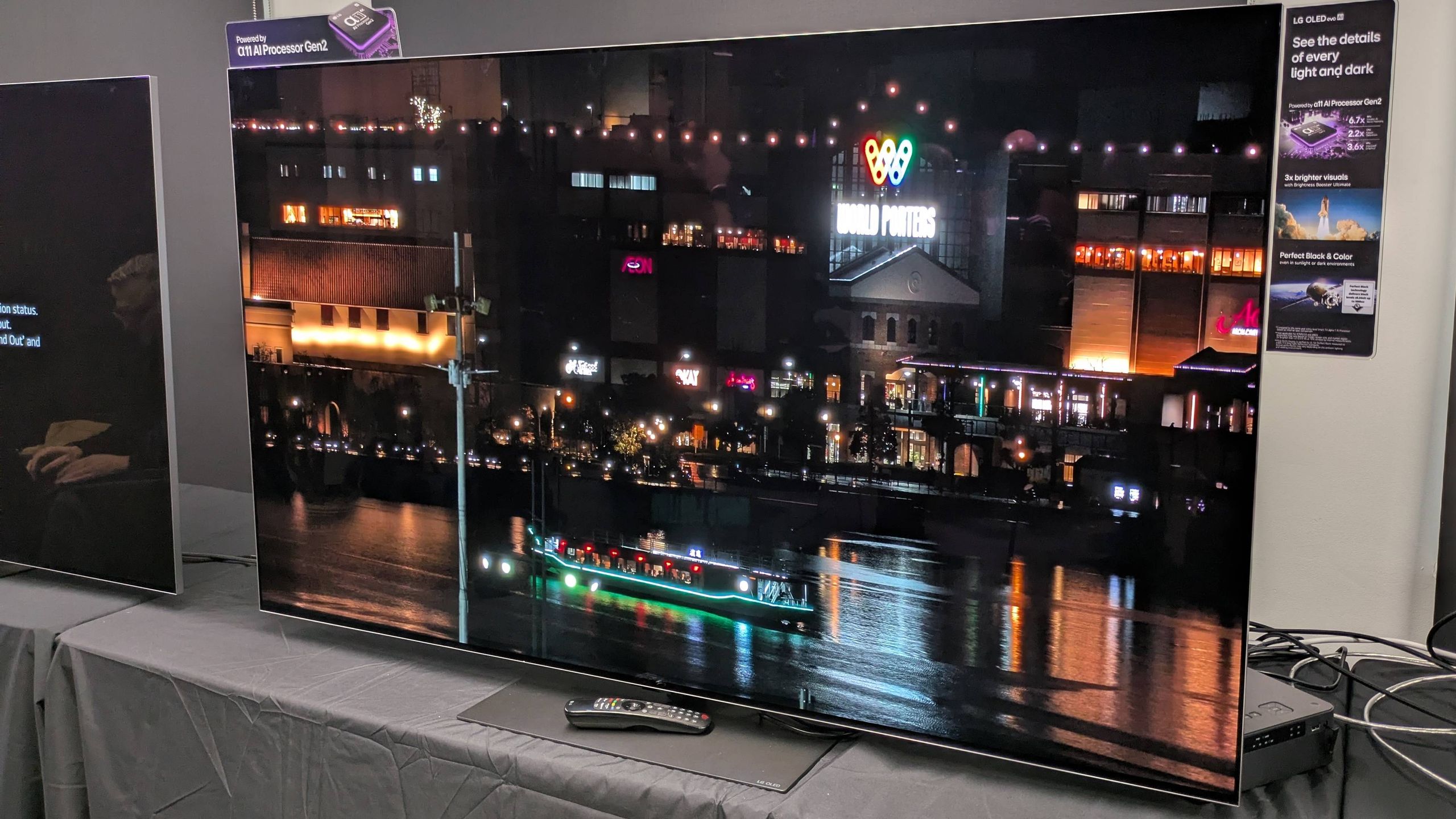
Leaked marketing materials ahead of CES 2026 indicate LG's 2026 flagship G-series OLED, the G6 Evo AI, will feature a new RGB Tandem WOLED panel with 'Brightness Booster Ultra' (claimed peak brightness up to 3,300 nits), an updated anti-reflection layer, and screen sizes from 48 to 97 inches. The G6 reportedly includes a third-generation Alpha 11 AI processor with 5.6x neural performance, four HDMI 2.1 ports, 165Hz mode and 4K@120Hz support; the leaks also show a W6 'Wallpaper' OLED in 77- and 83-inch sizes (99mm profile) using the same brightness tech and AI chip, signaling a potential premium product push for LG at CES 2026.
Market structure: LG’s leaked G6/W6 push (3,300 nits, 48–97") disproportionately benefits panel and premium-TV OEMs—LG Display (panel supplier) and LG Electronics (brand/retail) gain pricing power on premium OLED where ASPs can rise 5–15% for flagship lines. Losers are mid/low-tier TV makers and middleware-only streaming aggregators that rely on preinstalled OS distribution (Roku) as OEMs push webOS/Zero Connect; gaming/cloud partners gain upside from 4K@120Hz and 165Hz modes.
Risk assessment: Near-term catalyst window is CES 2026 (days–2 weeks) with shipping/preorder effects over 1–3 months; structural demand shifts play out over 3–24 months. Tail risks: panel yield or capex overruns, rapid margin compression from cheaper Chinese WOLED/miniLED entrants, and measurement risk (peak-nit claims failing independent tests) that could collapse premium pricing. Hidden dependencies include supply of tandem WOLED materials, driver ICs and AI SoCs—monitor supplier lead times and LG Display gross-margin movement (>+200bp = confirmation).
Trade implications: Direct plays — establish modest long exposure to LG Display (034220.KS) and LG Electronics (066570.KS) ahead of CES and consider short/hedge exposure to ROKU (ROKU) via puts if Roku guidance/cable-sub growth weakens. Options: buy 1–3 month calls on LG Display sized 1–2% portfolio with 15–30% upside targets; buy 3-month puts on ROKU sized 0.5–1% if Roku MAU or platform revenue guidance misses. Rotate sector weight toward semicap/panel suppliers and underweight pure-ad streaming platforms over next 6–12 months.
Contrarian angles: Consensus will celebrate peak-nits and wallpaper nostalgia, but history (LG W7) shows showpiece products can be low-volume and margin-dilutive; the market may underprice Chinese BOE/Samsung margin erosion—if LG Display can’t convert demo hype into >10% incremental unit volume within 12 months, upside is limited. Watch for OEM OS consolidation risk: if webOS/Zero Connect achieves >20% share of premium TV shipments over 12 months, Roku active-account growth could fall 5–10% over two years, creating mispricings to exploit.
AI-powered research, real-time alerts, and portfolio analytics for institutional investors.
Request DemoOverall Sentiment
mildly positive
Sentiment Score
0.28
Ticker Sentiment
