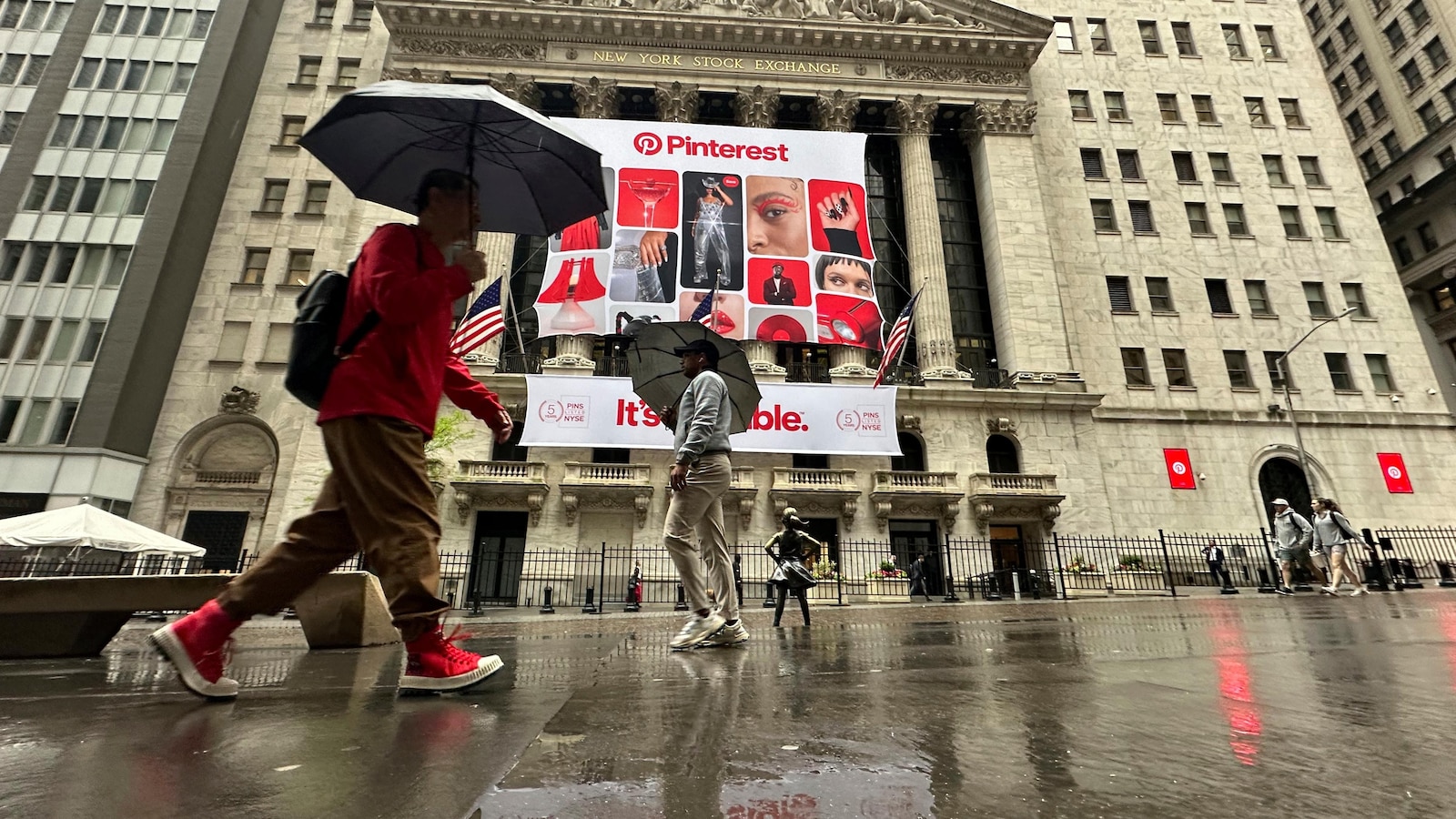
Pinterest will cut under 15% of its workforce — impacting hundreds of employees out of roughly 5,200 staff — as it reallocates resources toward AI-focused roles and AI-powered products, while also trimming office space. The company said the restructuring, to be completed by the end of September, will incur pretax charges of $35 million to $45 million; shares fell more than 9% intraday following the announcement. The move signals a strategic pivot to AI investment at the cost of near-term restructuring charges and workforce reductions, a development investors should weigh against growth prospects for Pinterest's product roadmap.
Market structure: Pinterest’s 15% workforce cut (~≈780 roles on a 5,200 base) and $35–45M one‑time charge signal a near‑term revenue/operating leverage pullback but free up budget for AI and shrink office fixed costs. Winners: cloud/GPU providers (NVIDIA, AWS, Google Cloud) and adtech vendors that power personalization; losers: incumbent ad sales teams, small ad‑dependent platforms if advertisers reallocate spend. Near‑term market reaction (-9% intraday) prices execution risk, not long‑term product-market fit.
Competitive dynamics: Reallocating to AI shifts competition toward visual commerce and personalized shopping — a domain where scale and training data matter and where Meta/Google are deep incumbents. If Pinterest can lift ARPU by +10–30% over 12–24 months via AI personalization, it gains pricing power; failure risks persistent CPM declines as sales teams are reshaped. Expect 6–18 months to see measurable monetization impact.
Supply/demand & cross‑asset: Layoffs increase available AI talent pool for peers; demand for cloud/GPU capacity rises, pressuring cloud service yields and capex for compute-heavy apps. Credit/bond impact is likely idiosyncratic (small), but tech credit spreads could widen if guidance misses; PINS options IV will spike near earnings and product updates, creating asymmetric trade opportunities. FX and commodities minimal direct effect.
Risk & catalysts: Tail risks include regulatory scrutiny of AI personalization, data/privacy fines, or an ad recession hurting ad revenue (-10%+ scenario). Key catalysts: next earnings/guide (30–90 days), user engagement metrics post‑AI features (3–6 months), and advertiser uptake rates. Contrarian: the market may overpenalize small restructuring charges; a >20% post‑announcement selloff would likely present a discounted entry for a 9–18 month recovery if ARPU inflection shows early signs.
AI-powered research, real-time alerts, and portfolio analytics for institutional investors.
Request DemoOverall Sentiment
moderately negative
Sentiment Score
-0.45
Ticker Sentiment
