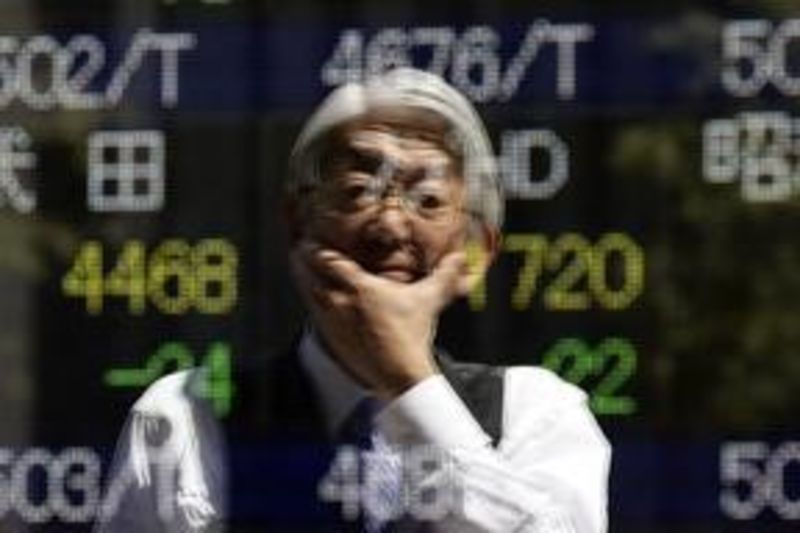
Houthi attacks opening a new front in the Iran-related conflict have pushed Brent higher and raised energy-driven inflation and disruption risk. Asian markets fell broadly: Japan's Nikkei and TOPIX dropped over 3%, KOSPI ~3%, Hang Seng ~1%, Samsung -2.5%, SK Hynix -4.8%, ASX -0.8% and India's Nifty -0.8% amid risk-off flows and AI-related profit-taking. BOJ Governor Ueda warned that a weak yen and rising import costs could prompt further rate hikes, increasing local monetary policy risk. Expect sustained volatility, upward pressure on oil and downside pressure on tech and cyclicals if the Gulf conflict escalates.
The widening of Red Sea/Gulf-area hostilities creates a persistent risk premium in freight, insurance and crude pricing that can persist for months even absent sustained production outages; markets tend to price a 6–12 week shipping disruption premium into Brent and refined product spreads, which mechanically lifts upstream cashflows while compressing margins at refined product-dependent industrials and consumer sectors. Energy producers with flexible production and low lifting costs can convert price shocks to free cash flow quickly — expect meaningful relative FCF divergence between fast-cycle US E&P and integrated majors over the next 1–3 quarters.
The AI stack repricing from algorithmic improvements is a multi-quarter structural adjustment: if model compression reduces memory demand per inference by 10–30%, DRAM order trajectories could slip 12–24 months, shifting capex toward accelerators and interconnects. That creates a two-way trade: memory names face earnings risk while large cloud-scale software owners and algorithm providers capture durable marginal cost declines, improving operating leverage for software but potentially lowering hardware capex revenue upstream.
Monetary policy signaling out of Japan injects an asymmetric FX risk: a policy shift toward normalization is likely to be phased and data-dependent, but the expectation alone raises JPY volatility and creates a tail risk for large FX-exposed exporters if the yen re-strengthens over a 3–9 month horizon. The intersection of higher energy prices and rising local rates creates a stagflation-like squeeze in importers and emerging market carry plays, so position sizing and optionality should be used to manage convex downside in equities and FX.
AI-powered research, real-time alerts, and portfolio analytics for institutional investors.
Request DemoOverall Sentiment
moderately negative
Sentiment Score
-0.45
Ticker Sentiment
