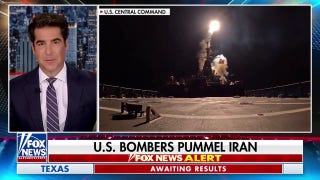
Iran has launched waves of low-cost Shahed attack drones across the Middle East, including strikes that killed six U.S. service members and hit U.S.-linked facilities from Kuwait to Dubai and Riyadh, while footage purporting to show underground stockpiles of thousands of drones has circulated. Defense analysts warn the asymmetric campaign will force expensive use of ground-based interceptors, strain allied stockpiles, raise demand for air‑defense and munitions, and prolong regional instability with attendant market volatility and potential geopolitical spillovers, including concerns about diversion of drone production to partners such as Russia.
Market structure: The immediate winners are large defense primes (Lockheed LMT, Raytheon/RTX, Northrop NOC) and C‑UAS/ISR specialists (small-cap plays like DPRO) as governments substitute expensive interceptors with layered, cheaper countermeasures; expect 6–18 month revenue uplifts but multi-quarter order‑to‑revenue lags. Oil and gold are positive tailwinds—Brent >$90 likely drives +5–10% energy basket outperformance (XOM/CVX) in 0–3 months; equities likely see flight‑to‑quality into defense/energy while airlines (AAL, UAL) underperform. Bonds/FX: near‑term safe‑haven bid into USTs (2–10y yields test -10–30bps), USD strength vs EM oil‑importers; volatility across options will spike 20–40% implied vol over days.
Risk assessment: Tail risks include full regional escalation (low probability, high impact) that could lift Brent >$120, trigger >10% S&P drawdown, and impose sanctions disrupting defense supply chains; stockpile depletion of interceptors within 30–90 days is a material operational risk. Time horizons: days—spike in volatility and tactical flows; weeks/months—supplemental defense funding decisions (Congress 30–60 days) will set capex; 12–36 months—structural procurement and production scale‑up. Hidden dependencies: semiconductor/machining bottlenecks, export controls, and allied munition commitments will cap how fast revenues convert.
Trade implications: Favor 1–3% long positions in LMT and RTX (target 6–12 month horizon) and a paired short of airlines (sell AAL 1–3% or buy 3–6 month put spreads) to capture asymmetric flows. Use options to express convexity: buy 3‑month RTX call spreads (buy ATM, sell +30% strike) sized 0.5–1% NAV; establish a 0.5–1% speculative long in DPRO with a hard 20% stop and 3‑month review. Commodity hedge: add 1–2% long Brent via USO or long futures if Brent breaches $95; buy VIX 1‑month call calendar as portfolio tail protection.
Contrarian angles: The market may overprice immediate revenue upside—procurement cycle and production lead times mean earnings beat risk is backloaded 6–18 months, so shorting near‑term multiple expansion in mid‑cap defense (or taking profits on initial rallies) can be profitable. DPRO hype is asymmetric: extremely high volatility and execution risk make a small, hedged position appropriate rather than full exposure. Historical parallels (post‑9/11 defense spike then normalization) suggest fade opportunities once supplemental funding is priced; monitor two binary catalysts—Congress approves >$20bn supplemental in 30–60 days or Brent sustains >$95 for two consecutive weeks—to reweight positions.
AI-powered research, real-time alerts, and portfolio analytics for institutional investors.
Request TrialOverall Sentiment
strongly negative
Sentiment Score
-0.70
Ticker Sentiment
