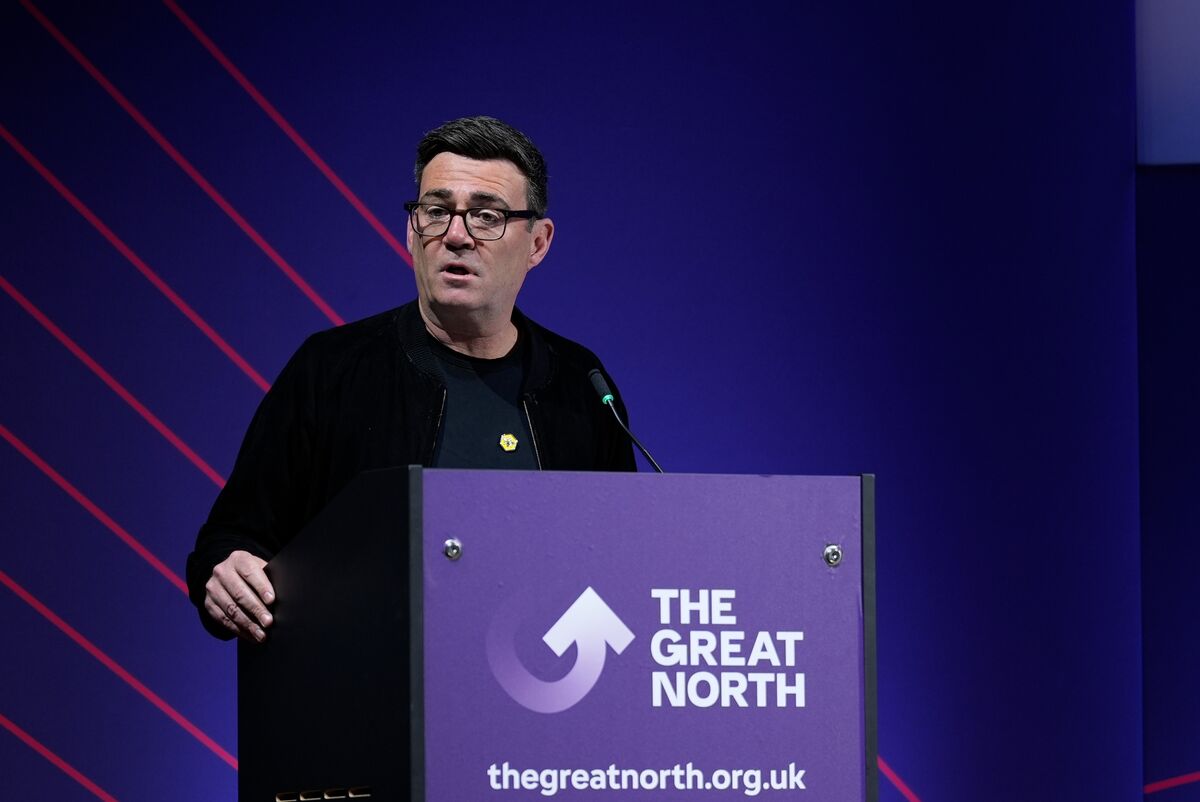
Andy Burnham used an investment summit in Leeds to frame a leadership pitch to Labour, invoking Margaret Thatcher and her legacy in Britain's former industrial heartlands. The article is political in nature and does not report any policy announcement, market-moving proposal, or economic data. Market impact is limited, with the piece mainly relevant as a signal on Labour leadership positioning and voter outreach.
Burnham’s move is less about a single speech than about forcing a repositioning of the entire UK political risk premium. If the market starts assigning even a modestly higher probability to a Labour leadership reset, the first-order impact is not sector rotation but delay: corporates, councils, and infrastructure sponsors tend to push capex decisions out 1-2 quarters when policy visibility drops. That creates a quiet headwind for domestically exposed UK cyclicals, especially those reliant on public procurement, housing activity, and consumer confidence.
The second-order winner is not necessarily Labour itself, but any company or asset class that benefits from higher perceived odds of a looser fiscal/industrial policy mix. That could support UK small-cap domestics if investors believe a more worker-friendly platform means wage support and local demand stabilization, but it also raises the odds of margin pressure for labor-intensive businesses if policy shifts toward higher bargaining power and regulation. The most vulnerable names are those with UK-only revenue and thin operating leverage; they will be repriced fastest if polling starts to imply a leadership change is actionable rather than rhetorical.
The near-term catalyst path is political rather than economic: leadership polling, union endorsements, and media framing over the next several weeks. The tail risk is a sudden credibility jump for Burnham that widens the gap between Westminster policy expectations and current valuations; the reverse is also true, because if this is seen as performative positioning rather than a genuine leadership route, the market will fade it quickly and the impact fades back to noise. The key contrarian point is that the bigger trade may be on volatility itself — not direction — because political uncertainty can compress multiples even when the eventual policy mix is mildly positive for growth.
AI-powered research, real-time alerts, and portfolio analytics for institutional investors.
Request DemoOverall Sentiment
neutral
Sentiment Score
0.00
