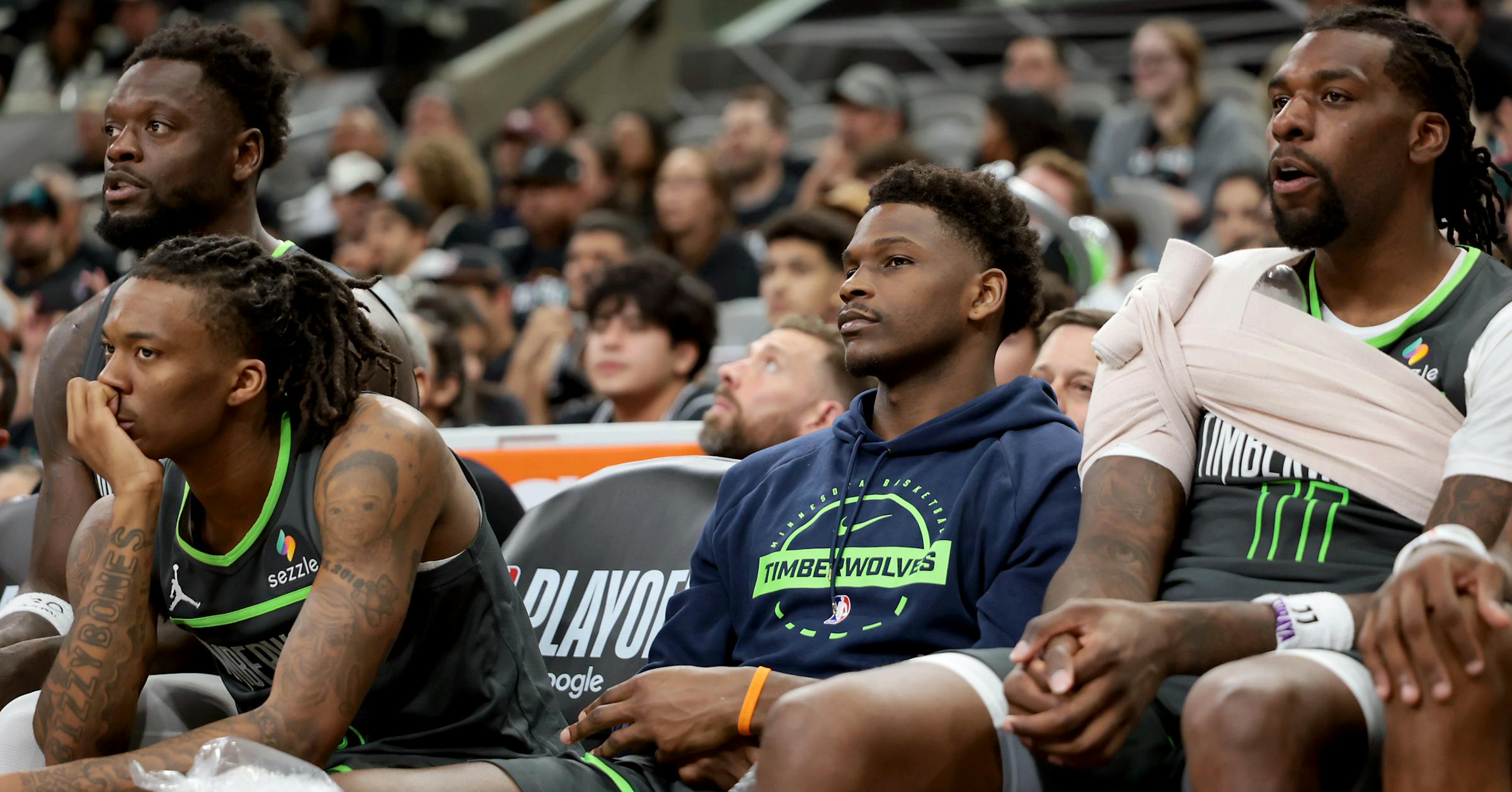
The Spurs defeated the Timberwolves 133-95 in Game 2 of their second-round playoff series, evening the Western Conference semifinal at 1-1. The 38-point margin was the worst loss in Minnesota's 100-game playoff history. Game 3 is scheduled for Friday night at Target Center.
This is a classic volatility reset, not a durable fundamentals shift. In playoff series, a blowout of this magnitude usually says more about short-term shooting, pace, and lineup variance than it does about true team strength; the market-like error is extrapolating one data point into a new baseline. The key signal is that the series has likely moved from a clean favorite/underdog script into a higher-variance coin flip, which should mechanically lift the implied probability of a longer series and a Game 5/6/7 outcome.
The second-order effect is on home-court value and travel compression. A dominant Game 2 away from home typically improves the probability that the next two games split, but it also increases the chance that the losing side responds with tactical adjustments that reduce future scoring volatility. That matters because the most exploitable edge is often in the next 24-48 hours, before bookmakers fully re-anchor to the revised series state.
Contrarian read: the market may overreact to the margin and underreact to regression. Teams that get embarrassed in Game 2 often become more conservative in Game 3, which can suppress pace and create a tighter game than public narrative implies. If the series has already been priced as one-sided after the blowout, the better risk/reward is usually the team that just lost badly, especially if you can get inflated plus-money or series prices before the next tip.
Tail risk is a repeat blowout if the losing team’s shot quality remains poor or if the winning team’s defensive scheme has found a real weakness. But that outcome generally unfolds over multiple games, not one night, so the time horizon for action is immediate: the next game line and live series markets are where the dislocation is most likely to persist.
AI-powered research, real-time alerts, and portfolio analytics for institutional investors.
Request DemoOverall Sentiment
neutral
Sentiment Score
0.00
