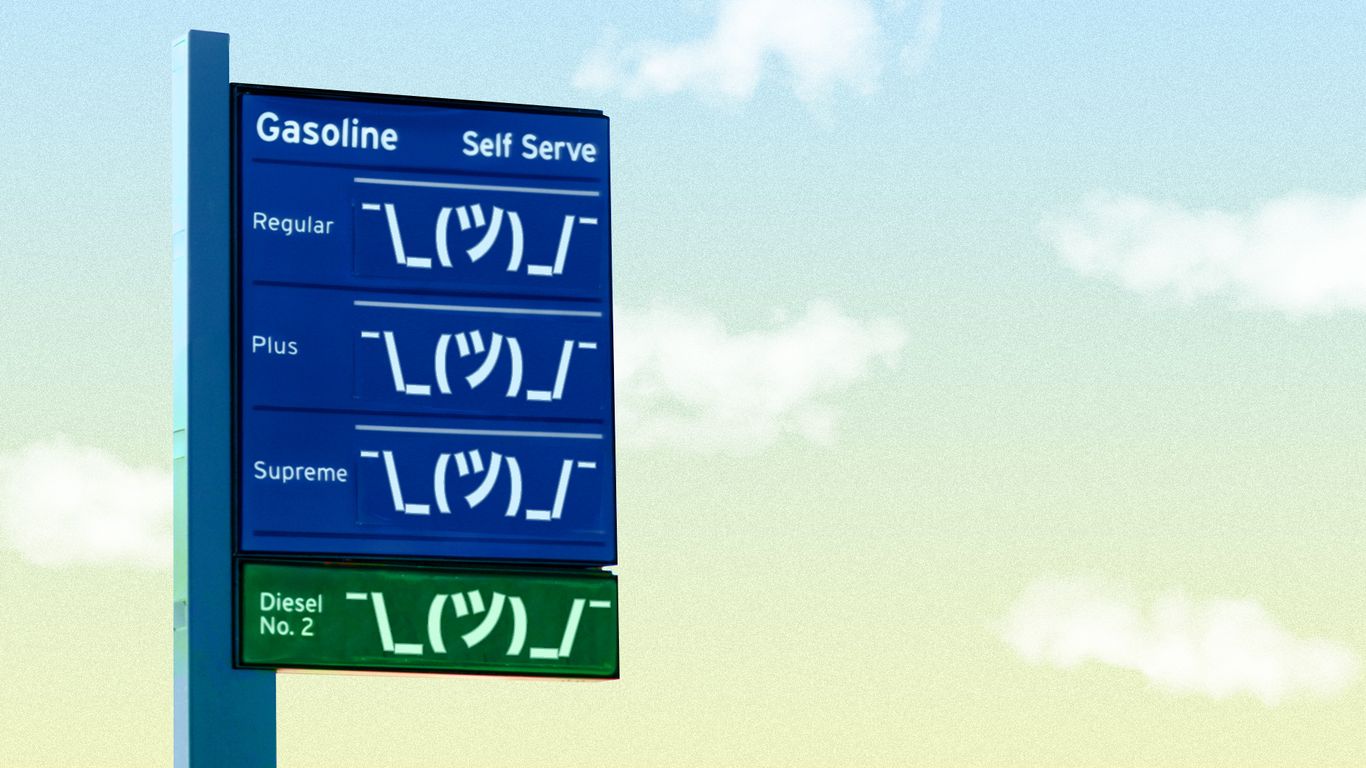
Ohio ranks No. 2 nationally in gas-price burden, with a 15-gallon fill-up costing about 5% of median weekly household income and 16.7% of weekly minimum-wage pay. Cleveland regular gas averaged $4.87 per gallon, up from $3.81 a month ago and $3.17 a year ago. The article highlights renewed political pressure to suspend the federal fuel tax, though Congress has never approved such a move.
The immediate market implication is not just higher household stress, but a sharper squeeze on discretionary spend for lower-income consumers who are far more likely to cut frequency of dining, apparel, auto repair, and other variable purchases first. That is a more relevant read-through than the headline CPI impact because the burden is concentrated in the cohort with the highest marginal propensity to consume, so local retailers, value-oriented chains, and service businesses in the Midwest could see a faster demand wobble over the next 4-8 weeks if pump prices stay elevated. The other second-order effect is political, not macro: fuel relief proposals tend to appear when gasoline becomes visible enough to move polling, but the fiscal tool is weak relative to the magnitude of the move. That mismatch raises the odds of symbolic policy responses that do little for consumers while keeping inflation expectations sticky, which argues against extrapolating a near-term disinflation impulse from legislative chatter alone. For markets, the more important variable is duration. A brief price spike is a tax on consumers; a multi-month plateau becomes a margin event for transportation, delivery, and travel names, while benefiting upstream energy less than investors might assume if crude retraces but refining and distribution constraints persist. The risk is that sentiment overreacts to the gasoline headline and bids up anything tied to energy beta, even though the policy overhang and demand destruction risk make the trade cleaner further out the curve than in spot equities. The contrarian angle is that tax suspension talk may be read as bullish for consumers, but it can actually reinforce the idea that policymakers are behind the curve, which keeps inflation and Fed caution in place. That tends to cap multiples in rate-sensitive consumer names and leaves the better asymmetry in selective shorts where input costs are high and pricing power is weak rather than in a blunt macro long consumer basket.
AI-powered research, real-time alerts, and portfolio analytics for institutional investors.
Overall Sentiment
mildly negative
Sentiment Score
-0.35
