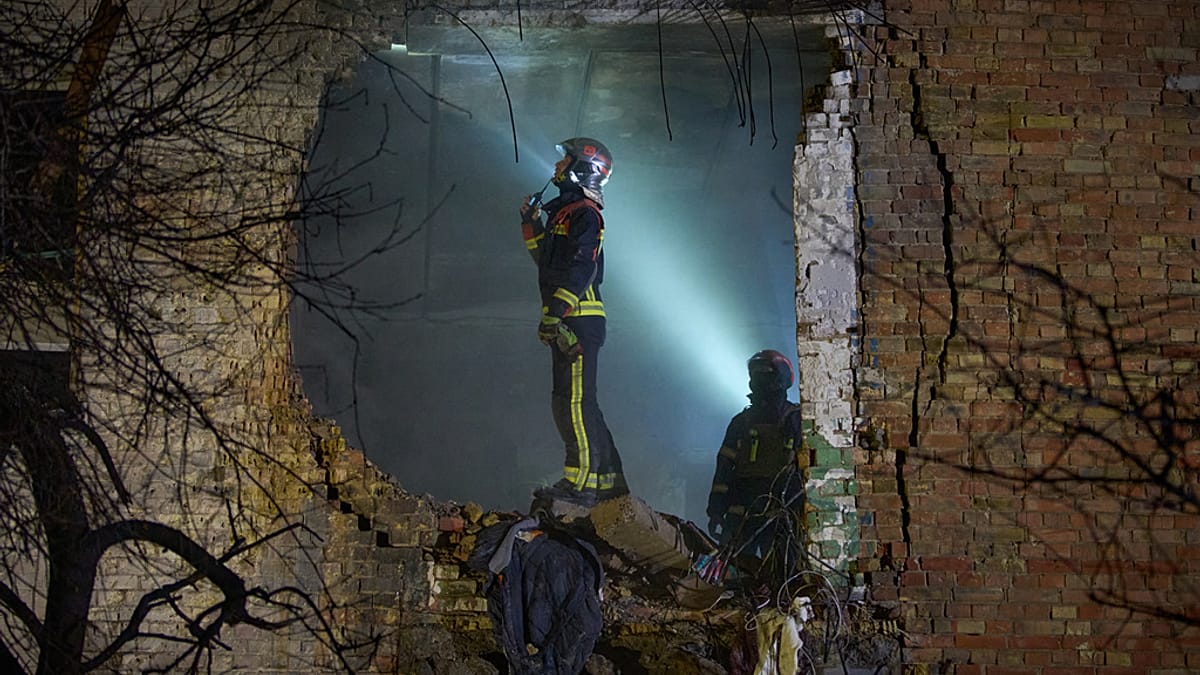
Russian forces launched a large overnight combined drone and missile strike on Kyiv and the Chernihiv region, Ukraine reports at least 165 drones (around 100 Iranian-made Shahed) and unspecified ballistic missiles were used; one patient was killed after a Kyiv hospital with an inpatient ward was struck and evacuated. The barrage damaged residential properties, production facilities and energy infrastructure causing partial power outages in Chernihiv, and President Zelenskyy urged allies to boost air defences and funding for interceptor drone production ahead of a Coalition of the Willing meeting in France. The strikes raise short-term risk-off pressure on regional markets, imply potential uplift in Western defense procurement and could create intermittent local energy supply risks.
Market structure: Overnight mass Shahed/drone strikes tighten demand for air-defence, interceptor drones and hardened energy infrastructure. Direct beneficiaries are large defence primes with integrated missile/air-defence lines (Lockheed Martin LMT, Raytheon RTX, Northrop NOC, Rheinmetall RHM.DE) and specialist drone/interceptor vendors (Kratos KTOS); losers are Ukrainian infrastructure, regional utilities and insurers. Expect immediate risk-off in equities, USD and gold bids, 5-15% swing in regional power/gas spreads if attacks persist beyond one week.
Risk assessment: Tail risks include escalation that draws broader sanctions or NATO support (low-probability near-term ~<5% but high-impact: oil +$10–30/bbl, credit spreads +100–300bps). Near-term (days) = volatility spike; short-term (weeks–months) = procurement decisions and EU funding rounds; long-term (quarters–years) = sustained defence budgets but multi-quarter delivery lags and supply-chain bottlenecks. Hidden dependency: production capacity and microelectronic inputs constrain how fast orderbooks convert to revenue; energy-price sensitivity to weather/LNG flows remains a wildcard.
Trade implications: Tactical plays favor small, staged allocations to defence primes (1–3% positions), modest gold/UST duration for crash protection, and short-dated nat-gas exposure to trade European winter risk. Use options to express asymmetric upside (3–6 month call spreads on LMT/RTX) and pair trades (defence ETF ITA long vs travel/airlines JETS short) to isolate geopolitics beta. Exit/scale rules: lock in profits on +15–25% rallies; cut if strikes subside >14 consecutive days.
Contrarian angles: Market may price an immediate order-to-revenue transfer; reality: typical defence procurement converts to revenue over 6–24 months—names with visible backlogs (RTX, LMT) deserve premium, small cap drone plays (KTOS) face delivery and margin risk. Historical parallel: post-2014 Ukraine led to multi-year re-rating of defence but with intervening drawdowns; asymmetric trades using options and tight position sizing exploit that timing mismatch.
AI-powered research, real-time alerts, and portfolio analytics for institutional investors.
Request DemoOverall Sentiment
strongly negative
Sentiment Score
-0.60
