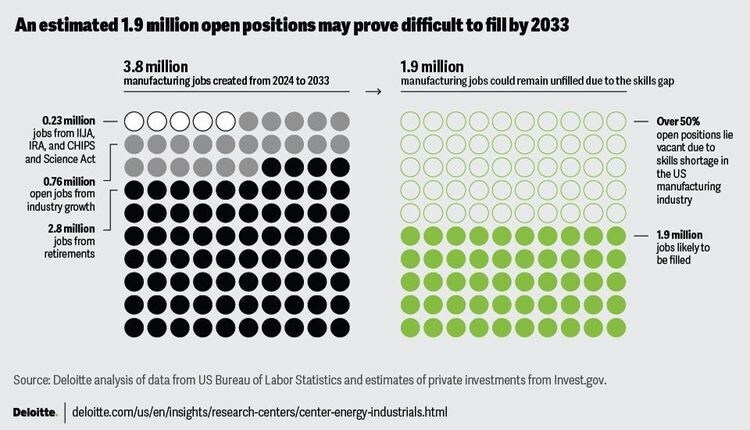
The US has increased steel import tariffs to 50% with the stated aim of bolstering domestic production and creating jobs, yet this initiative faces significant challenges. Historically, previous tariffs led to net job losses in steel-using sectors, and the current US manufacturing sector grapples with a severe talent scarcity, evidenced by 400,000 open jobs and a projected 1.9 million additional jobs that could go unfilled over the next decade. This challenge is compounded by an aging workforce and the critical need to upskill half of all manufacturing workers for evolving technological demands, casting doubt on the feasibility of substantial job growth in the steel sector.
The US government's decision to increase steel import tariffs to 50% is presented as a measure to protect the domestic steel industry and create jobs, but significant structural headwinds cast doubt on its net positive impact. Historical precedent from the 2018 tariffs demonstrates that such measures can lead to net job losses, as cost increases for downstream steel consumers, like automotive and construction manufacturers, outweigh gains in the steel production sector. The primary challenge highlighted is a severe and worsening labor crisis within US manufacturing, characterized by over 400,000 open positions and a projected shortfall of 1.9 million workers over the next decade. This is not merely a labor quantity issue but a skills gap, with one-fifth of plants operating below capacity citing a shortage of skilled workers. The acquisition and planned $11 billion modernization of U.S. Steel (X) by Nippon Steel exemplifies the industry's capital-intensive shift towards advanced technologies, which requires a workforce with new digital and technical competencies. According to the World Economic Forum, half of the manufacturing workforce will need upskilling to manage these changes, suggesting that the true bottleneck for reshoring the remaining 25% of steel consumption is not foreign competition but the domestic availability of qualified talent.
AI-powered research, real-time alerts, and portfolio analytics for institutional investors.
Overall Sentiment
moderately negative
Sentiment Score
-0.45
Ticker Sentiment
