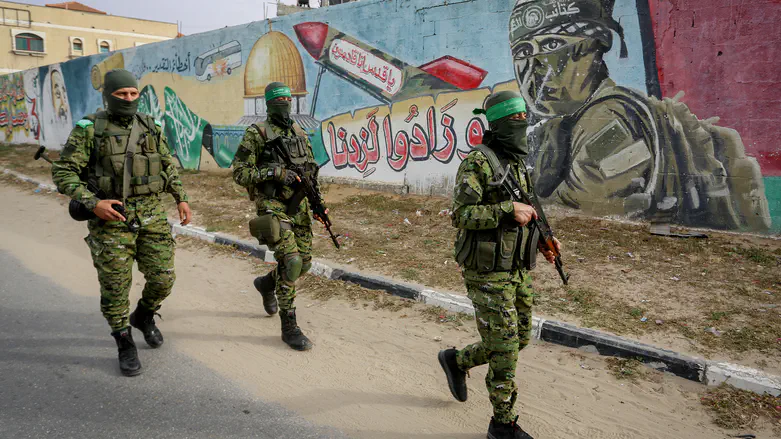
Israeli and Hamas forces are preparing for renewed fighting in Gaza after Hamas refused to disarm, with the IDF drawing up plans for a new ground operation; officials say Hamas has rebuilt cash reserves, supplies, fighters and parts of its tunnel network. Intelligence presented to Israeli security estimates Hamas holds roughly 400 million–1 billion shekels in Gaza, is taxing aid flows (15–25% per truck plus sales taxes) and generating “tens of millions” of shekels daily from roughly 4,200 aid trucks per week, while Qatar conditions continued support on sustained aid flows. The situation raises near-term risks to regional stability, aid/logistics corridors and could affect defense and commodity market positioning if escalation resumes or aid restrictions are implemented.
Market structure: A short, sharp ground operation increases near-term winners—US and international defense primes (RTX, LMT, GD, NOC) and traditional safe-havens (GLD, TLT)—as order visibility and risk premia rise; losers are Israel-exposed equities (EIS), regional tourism/airlines and short-cycle consumer exporters. Expect a 5–15% re-rating uplift for large defense contractors over 3–12 months if hostilities intensify, while Israeli equity indices can see 10–30% downside in a protracted campaign.
Risk assessment: Tail risks include broader Iran/Hezbollah escalation driving Brent +10–25% within days and closure/slowdown of Red Sea/Suez shipping adding $50–150/TEU in freight; immediate (days) risk-off, short-term (weeks–months) higher volatility and supply-chain dislocation, long-term (quarters) potential sustained defense spending increases through 2027. Hidden dependencies: Qatar’s leverage over aid flows and Hamas’ cash reserves blunt pressure from aid reduction—monitor cash-transfer channels and weekly truck counts as early-warning indicators.
Trade implications: Tactical plays—buy 3-month call spreads on RTX/LMT sized 1–3% portfolio to capture asymmetric upside; allocate 1–2% to GLD and 1–2% to TLT as volatility and flight-to-quality hedges; trim Israel exposure (EIS) by 20–30% now and establish a pair trade long LMT/short EIS to capture rotation into defense. Use options (VIX 30–60 day call spreads sized 0.5–1% notional) to hedge sudden spikes; set clear stop-losses tied to Brent (<$80) or VIX (<18) to cut exposure.
Contrarian angle: Consensus assumes prolonged conflict equals permanent defense outperformance; history (2006, 2014) shows market rebounds within 1–3 months if operations are rapid—defense names may be partially priced for worst-case. Mispricings: short-term over-sell of Israeli tech/financials can present buy-on-weakness entry points—consider re-entering EIS after a >20% drawdown or once a 30-day ceasefire is confirmed.
AI-powered research, real-time alerts, and portfolio analytics for institutional investors.
Request DemoOverall Sentiment
moderately negative
Sentiment Score
-0.48
