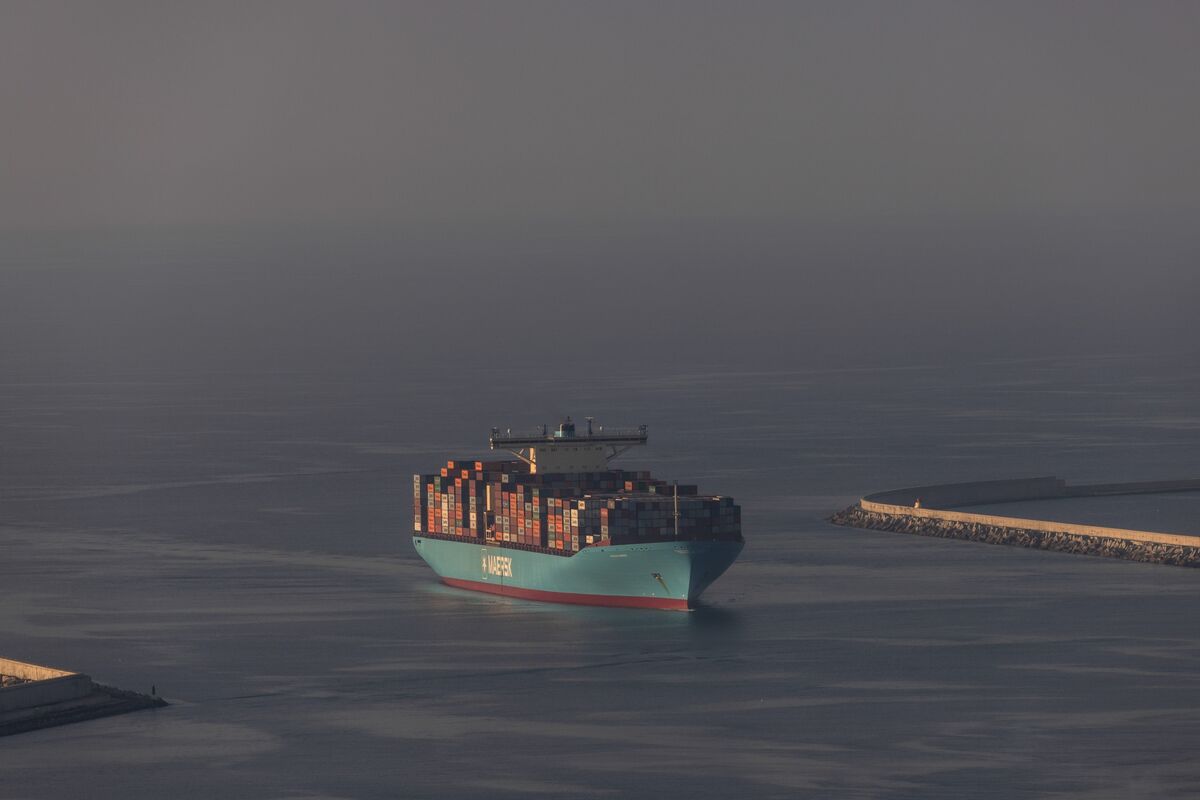
Major shipping lines are building in‑house meteorology and route‑analytics teams to crunch proprietary weather and voyage data and rework ocean routing, enabling operational changes that can save carriers millions. Moving from periodic mariner updates to systematic, data‑driven routing could lift fuel efficiency, schedule reliability and margins, with knock‑on effects for freight rates and broader supply‑chain resilience.
Market structure: carriers that integrate meteorology, routing analytics and scheduling (examples: A.P. Moller - Maersk CPH:MAERSK-B, NYSE:ZIM) are probable winners — we estimate route optimization can cut fuel burn 2–7%, which on carriers with fuel = ~30–40% of opex translates to ~1–3 percentage-point EBIT uplift. Losers: smaller pure-asset, time-charter dry‑bulk and tanker owners (e.g., SBLK/DSX-style profiles) who cannot monetize routing intelligence will face relative margin compression and potential market-share loss. Cross-asset: expect modest downward pressure on spot freight indices (BDI/FBX down 5–15% medium-term) and a few-percent structural reduction in bunker fuel demand; credit spreads on tech-adopting carriers should tighten by 50–150bp if savings are realized.
Risk assessment: tail risks include navigation/automation failures or cyberattacks causing accidents (high-impact, low-probability) and regulatory pushback (safety/emissions rules) that could force less-efficient routes — material within 3–24 months. Immediate (days) effects are limited to PR; short-term (weeks–months) depends on pilot results and firm disclosures; long-term (quarters–years) is structural: incumbents with data moats widen barriers to entry. Hidden dependencies: port/slot availability, canal transit rules and charter-party contract frictions can negate routing gains; catalysts include publicized fleet-wide pilot results, IMO/EU guidance in next 3–9 months, and sustained Brent moves >±10%.
Trade implications: favor long positions in integrated container lines and terminal/IT vendors; underweight pure-play dry-bulk/tanker owners. Use 3–9 month option structures to monetize asymmetric upside around pilot announcements; rotate into ports/terminals (DPW.L style) if throughput improves. Enter selective positions within 2–8 weeks as carriers report quantified savings; exit or hedge if industry-wide fuel savings <1% after pilot wave (90 days).
Contrarian angles: consensus underestimates implementation costs and time — full network effects likely take 6–24 months, so near-term market reaction may be underdone for names already invested. Historical parallel: airlines saved fuel with route tech but retained cyclicality; unintended consequence: lower spot rates could spur volume growth and regulatory scrutiny, reversing some upside for carriers and pressuring refiners of heavy fuel oil.
AI-powered research, real-time alerts, and portfolio analytics for institutional investors.
Request DemoOverall Sentiment
mildly positive
Sentiment Score
0.30
