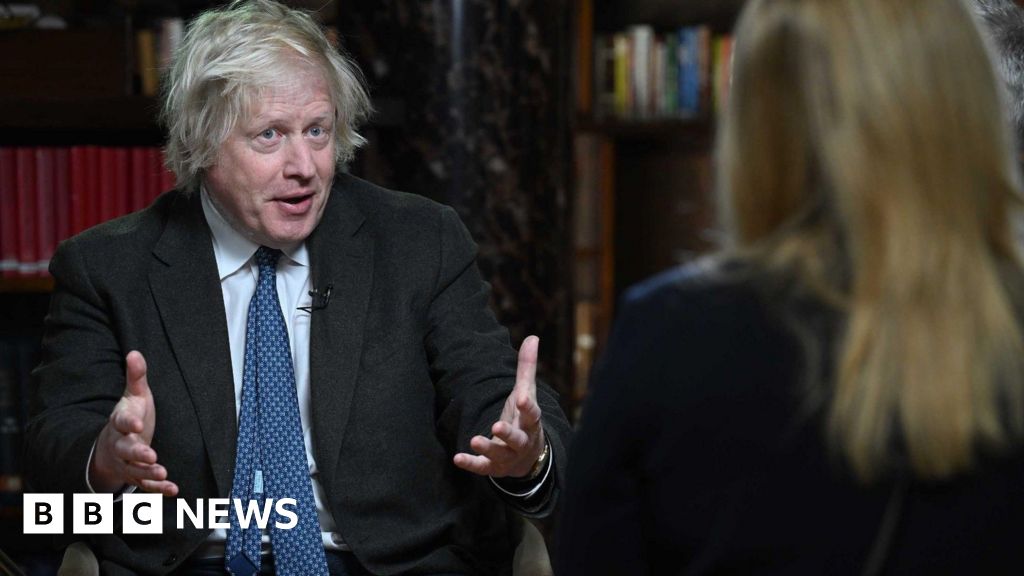
Former UK prime minister Boris Johnson urged the UK and allies to deploy non-combat troops to safe areas of Ukraine immediately to deter Vladimir Putin, arguing such a move would signal stronger Western resolve. The UK government says it is planning a 'coalition of the willing' but only contingent on a peace deal; the Ministry of Defence highlighted recent support including a half-billion-pound air defence package and an accelerated £200m for deployment preparations. Former Chief of the Defence Staff Adm Sir Tony Radakin reiterated the need to honour NATO-linked commitments, including the 3.5% of national income defence spending pledge by 2035, while noting the risks that Russian leadership would view foreign troops as a provocation.
Market structure: A UK/allied push to send “non‑combat” troops or accelerate a coalition materially favors defence primes (Lockheed LMT, RTX, NOC; BAE.L in UK), air‑defence & logistics suppliers, private military contractors, and commodity traders (oil, NG). Expect procurement demand to outstrip current delivery capacity — munitions, air‑defence systems and tactical logistics could be 10–30% above baseline procurement plans over 12–36 months, boosting pricing power for prime contractors and their specialised suppliers.
Risk assessment: Tail risks include a direct NATO–Russia incident (low‑probability, high‑impact) that could spike Brent >30% and risk premia across equities and credit; cyber escalation and broader sanctions layers are realistic second‑order risks. In the next 3–7 days expect volatility shocks on headlines, 1–3 months for policy formation, and 1–3 years for durable defence budget reallocation; hidden dependencies are production lead times (6–24 months) and European energy chokepoints.
Trade implications: Tactical trades: overweight large-cap defence vs European cyclicals, selective energy longs (integrated majors) and buy volatility hedges. Use options to express asymmetric upside (3–9 month calls on primes) and keep portfolio hedges (VIX calls or short‑dated USTs) for headline spikes; entry window is immediate to 4 weeks, hold 3–12 months while monitoring NATO/UK spending confirmations.
Contrarian angles: The consensus of a straight defence rally may be overdone if allies stop short of boots—capital will reallocate to cyber, logistics, and sustainment rather than only headline weapons. Also higher UK defence pledges can weaken GBP and push UK yields up, creating a tactical short‑gilt/long UST opportunity; historical parallel: post‑2014 Crimea saw defence names outperform by 15–40% over 12–24 months, but only after firm procurement commitments.
AI-powered research, real-time alerts, and portfolio analytics for institutional investors.
Request DemoOverall Sentiment
moderately negative
Sentiment Score
-0.35
