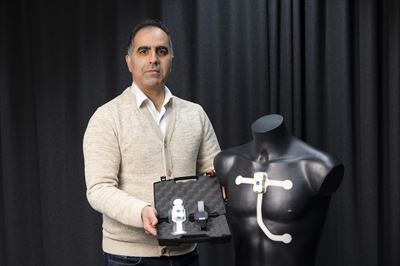
Helsinki University Hospital (HUS) and VTT have begun a field test of VTT-developed wearable sensors to monitor home dialysis, enrolling 36 volunteer patients at a pace of two per week (data collection spanning just over six months). The wirelessly synchronized sensors capture cardiac activity, hemodynamics and oxygen levels before and after dialysis; the project—funded by the Research Council of Finland and cleared with medical/ethical permits—aims to increase safe home dialysis uptake, improve patient outcomes and save an estimated €11 million per year in societal costs.
Market structure: Home-dialysis monitoring strengthens device/software winners (Baxter BAX, Medtronic MDT, Abbott ABT, Philips PHG) by shifting revenue from episodic clinic services to recurring-device + SaaS streams; clinic operators (DaVita DVA, Fresenius FMS) face margin pressure if home adoption rises >10–20% over 3–5 years. Pricing power moves to vendors who own algorithms/data; expect ASP uplift of 5–15% for integrated monitors vs commodity disposables. Credit impact: slower utilization growth could widen dialysis operator credit spreads by 50–150bps over 12–36 months if adoption accelerates.
Risk assessment: Tail risks include regulatory/data-privacy blocks or a cybersecurity incident causing device recalls (one event could wipe 10–30% off a vendor’s market cap). Time buckets: immediate market impact ~nil (pilot small); short-term (3–12 months) catalyst = pilot signals and procurement interest; long-term (1–5 years) = reimbursement code changes and scale manufacturing. Hidden dependencies: EHR integration, adhesive supply, training costs and payor reimbursement timing; these can delay revenue recognition by 6–24 months.
Trade implications: Direct plays favor small, disciplined long exposure to device/SaaS leaders (BAX, MDT, ABT) and thematic ETFs (IHI, XLV) while hedging clinic-operator exposure (DVA, FMS). Use 6–18 month call spreads to capture adoption without paying full premium; consider 9–12 month puts on DVA/FMS as asymmetric tail hedges. Entry: start small now (1–3% positions), scale on pilot readout (~6–9 months) or an EU/US regulatory milestone.
Contrarian angles: Consensus underestimates software/SaaS margins from sensor data—device makers could re-rate +10–30% on predictable recurring revenue, mirroring CGM adoption curves. Conversely, clinic operators may successfully pivot to home-service bundles reducing downside; a pure short of DVA/FMS is risky without signs of persistent unit-share loss. Watch for historical parallels (CGM/insulin pump adoption took 3–7 years) and for litigation/regulatory shocks that could reverse gains quickly.
AI-powered research, real-time alerts, and portfolio analytics for institutional investors.
Request DemoOverall Sentiment
mildly positive
Sentiment Score
0.30
