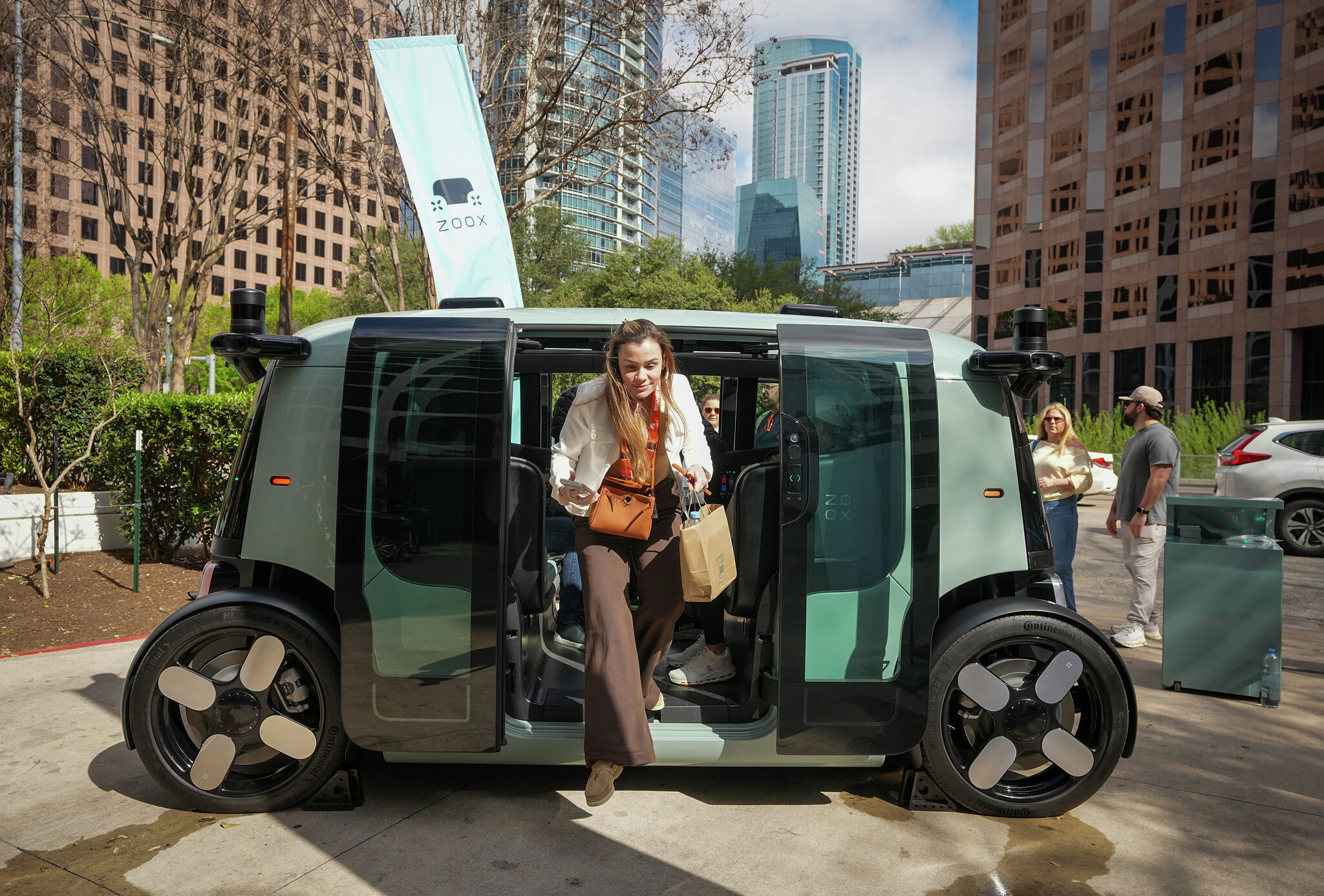
Zoox (an Amazon subsidiary) is beginning testing this week of its purpose-built, double-ended, driverless robotaxi in Austin and plans limited early rides for employees/friends now and a broader waitlist-driven rollout by year-end; Zoox previously launched in Las Vegas and San Francisco and is expanding mapping/testing to Miami, Dallas and Phoenix. The vehicle is bidirectional with no steering wheel/pedals and uses cameras, radar, lidar and ML similar to Waymo; Zoox will operate in central Austin neighborhoods and offers remote-support and QR/code protocols for law enforcement. The move is incremental for the autonomous-vehicle sector but notable as it increases competition with Waymo and Tesla amid local regulatory and safety scrutiny (Waymo ~200 cars/60 crashes since June; Tesla <40 cars/15 crashes since June).
Purpose-built robotaxis materially change the unit-economics debate: bespoke vehicles increase up-front capex and maintenance specialization but reduce per-ride operating complexity (no driver controls, standardized interiors), implying a longer payback horizon but higher lifetime margin if utilization approaches 50-60%. Expect a 2-4 year runway before per-vehicle breakeven in dense corridors; until then, deployments will be financed as strategic loss-leaders by platform owners rather than margin-positive standalone operators.
Second-order winners are cloud, mapping, and lidar/compute suppliers whose revenue is sticky and recurring — Amazon/Zoox can repatriate much of that spend into AWS and proprietary telemetry, creating cross-subsidies that competitors without diversified revenue (hardware-first players) will struggle to match. That creates a two-tier competitive landscape: capital-rich, vertically integrated platforms can afford slower unit economics to buy market share, while hardware-centric firms face acute funding and regulatory sensitivity.
Regulatory and reputational catalysts dominate short-term variance: a single high-profile safety incident or adverse NTSB ruling can pause city permits for weeks-to-months, compressing valuation multiples for fleets operating at thin margins. Conversely, regulatory approvals and profitable partnership rollouts (e.g., white-label integration with major ride-hail apps) are 6–18 month positive catalysts that could rapidly de-risk long-term optionality.
Consensus underestimates Amazon’s optionality: investors focus on ride revenue but miss bundled monetization (last-mile logistics, targeted in-vehicle commerce, and AWS telemetry services) that can convert an unprofitable mobility unit into a long-term data/fulfillment asset. That asymmetric monetization potential argues for owning exposure through diversified platforms rather than hardware-pure names.
AI-powered research, real-time alerts, and portfolio analytics for institutional investors.
Request DemoOverall Sentiment
mildly positive
Sentiment Score
0.15
Ticker Sentiment
