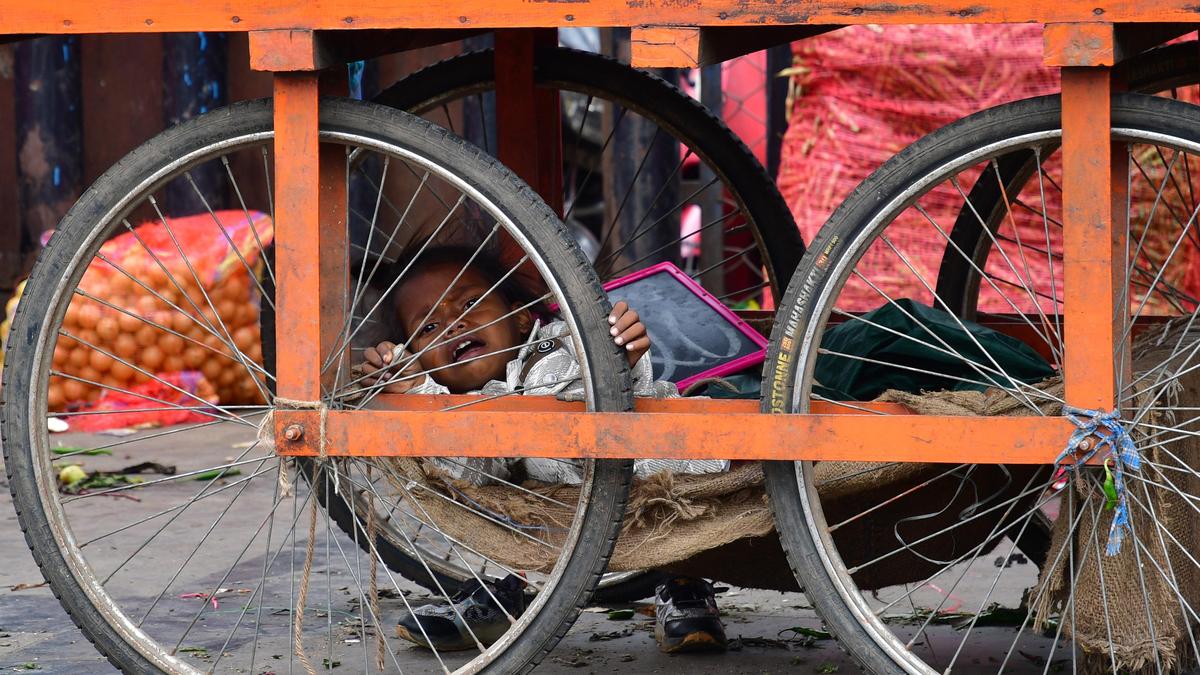
UNICEF’s State of the World’s Children 2025 finds that more than one in five children in low- and middle-income countries—about 400 million globally—are deprived of at least two factors critical to health and development. The report highlights India’s progress, noting roughly 460 million children in the country and that 248 million people were lifted out of multidimensional poverty between 2013–14 and 2022–23 as the national MPI fell from 29.2% to 11.3%, putting India on track to meet SDG 1.2 ahead of 2030. UNICEF urges governments to make ending child poverty a national priority by embedding child rights in policy and budgets, expanding inclusive social protection and ensuring equitable access to quality education, health, nutrition, sanitation and housing, signaling a need for scaled public investment in human capital and caregiver economic security.
UNICEF’s State of the World’s Children 2025 reports that more than one in five children in low- and middle-income countries—around 400 million globally—are deprived of at least two factors critical to health and development, highlighting a sizable chronic welfare shortfall in emerging markets. The report’s publication on November 20, 2025 frames child poverty as both measurable and addressable, reinforcing a policy agenda rather than signaling an immediate market shock.
India-specific data show roughly 460 million children under 18 and a material reduction in multidimensional poverty: Niti Aayog estimates 248 million people escaped such poverty between 2013–14 and 2022–23, with the MPI falling from 29.2% to 11.3%, positioning India to meet SDG 1.2 ahead of 2030. UNICEF and its India representative emphasize embedding child rights in budgets and expanding inclusive social protection, implying sustained public investment in human capital sectors.
The article and accompanying signals classify this as a fiscal-policy and emerging-markets story with a neutral near-term market impact (market_impact_score 0.1). While immediate market reaction is limited, the substance—calls for increased spending on education, healthcare, sanitation, housing and caregiver economic security—creates medium-term demand implications for public budgets, program delivery channels and private providers tied to social-sector implementation.
AI-powered research, real-time alerts, and portfolio analytics for institutional investors.
Request DemoOverall Sentiment
mixed
Sentiment Score
0.00
